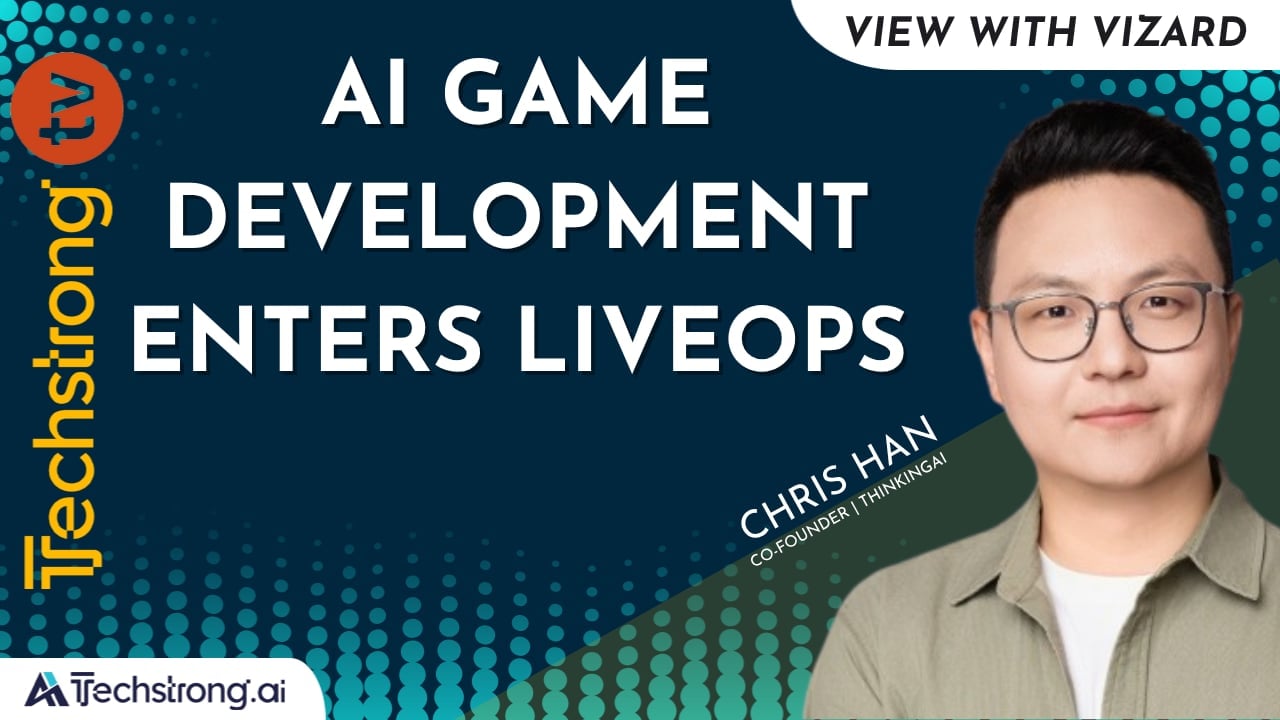
Synopsis: AI game development is starting to change who can build games and how quickly new ideas can reach players. In this Techstrong AI Leadership Insights interview, Mike Vizard talks with Chris Han, co-founder of ThinkingAI, about what prompt-based game creation means for game studios, platforms and live operations teams.
Chris Han explains that AI can make game creation more accessible, but launch is only the beginning. Successful games still depend on post-launch operations, product iteration, player engagement and rapid feedback loops. As more games enter the market, studios will need better systems to understand what players do and respond quickly.
Data Becomes the Foundation for Game Operations
The discussion emphasizes that data collection remains the foundation for better game operations. Game studios need to understand player behavior, preferences, monetization patterns, cohort changes and churn signals. That need becomes even more important as agentic applications and AI systems become part of the game operations process.
AI game development may increase the number of games, but it also raises the operational stakes. Studios could manage many more titles, updates and player segments than before. To keep pace, teams need tools that move beyond dashboards and turn insights into action faster.
LiveOps Requires Faster Action
Han notes that gaming has a very short feedback window. Players may love a game, lose interest or churn quickly. That makes LiveOps different from many other industries, where teams often have more time to analyze results before making changes.
For game companies, the challenge is not only finding insights. It is acting on them fast enough to improve retention, monetization and player experience. AI agents may help close that gap by detecting signals, recommending actions and eventually executing operational responses.
AI Inside Games Raises New Questions
The conversation also looks at AI inside games, including non-player characters and personalized experiences. Han says players still want human connection, but AI can help make game worlds feel richer and more responsive when it is used thoughtfully.
For technology leaders, the takeaway is practical. AI game development is not just a content creation story. It also requires new thinking about tools, processes and organizational culture. Teams will need to define how humans, agents and systems work together before AI-driven game operations can mature.