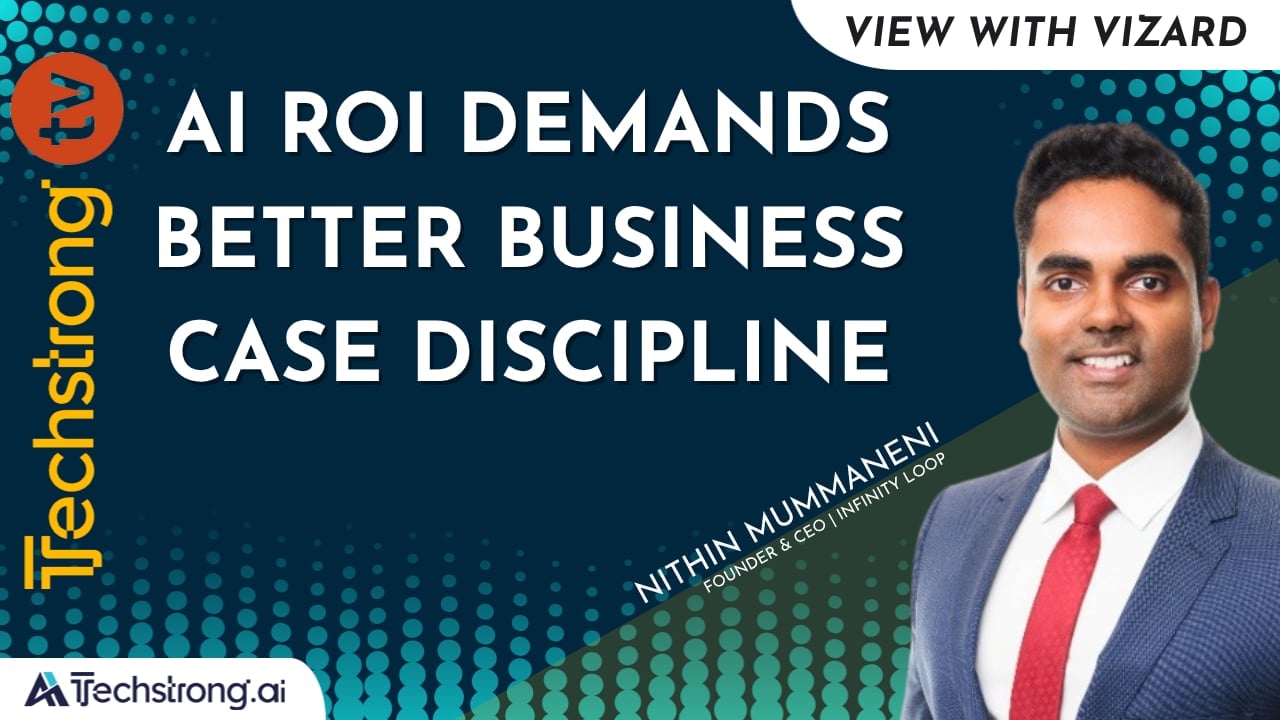
Synopsis: AI ROI is becoming harder to measure as organizations move from broad experimentation to practical deployment. This Techstrong AI Leadership Insights episode features Mike Vizard and Nithin Mummaneni, founder and CEO of Infinity Loop, in a discussion about why enterprises need clearer business cases before they invest more heavily in AI.
Nithin Mummaneni explains that many organizations feel pressure from boards and executive teams to implement AI quickly. That pressure can lead teams to choose the wrong projects or start without a measurable outcome. A stronger approach begins with use case prioritization, business impact and a clear view of what success should look like.
Costs Make Model Choices More Important
The conversation also explores the rising cost of AI usage. Advanced models can deliver stronger results, but they can also increase spend. That makes it important to decide which models belong with which use cases and where a build-versus-buy strategy makes sense.
AI ROI depends on more than access to a powerful model. Enterprises must understand the full cost of the application layer, data access, implementation work and ongoing operations. Specialized providers may help teams move faster when they already have a clear business problem and a measurable target.
Governance and Risk Need More Attention
The episode also looks at open-weight models, AI agents and the risks that come with more autonomous systems. Mummaneni notes that organizations need to evaluate data privacy, security and risk tolerance before choosing how to deploy AI.
AI agents create another layer of uncertainty. They may need access to sensitive systems and data to be useful. That makes governance, predictability and oversight essential as organizations consider broader AI adoption.
People and Data Create the AI Moat
Mummaneni argues that long-term advantage will come from the right people and the right data. Companies need teams that understand their data, business strategy and operational goals. They also need leaders who can connect AI projects to measurable business outcomes.
For technology leaders, the takeaway is direct. AI ROI should not be treated as a generic productivity number. It should be tied to revenue growth, cost savings, risk reduction or another specific business result. Organizations that define those outcomes early will be better positioned to turn AI investment into lasting value.