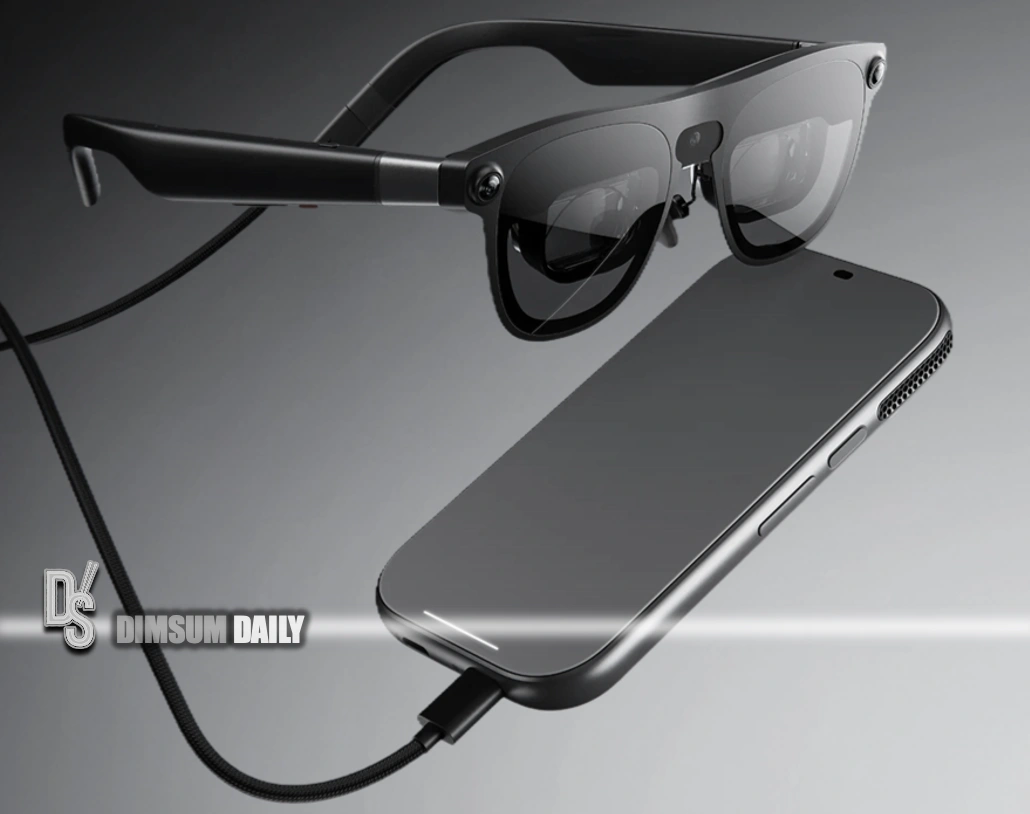
Xreal officially revealed Aura, its first Android XR glasses, at the Augmented World Expo in Long Beach, California. Built with Google and powered by Qualcomm's Snapdragon Reality Elite chip, the lightweight frames (under 95g) offer a 70-degree optical see-through field of view, 6DOF tracking, hand tracking, and Gemini AI assistance via a tethered compute puck. The base model will not exceed $1,500; pre-order reservations are open at $99 (with a $199 launch credit). Xreal is targeting a Fall 2026 launch in the US, UK, Canada, Japan, and South Korea.
What Xreal Announced
Xreal officially unveiled Aura at the Augmented World Expo (AWE) in Long Beach, California, marking the first public commercial debut of an Android XR glasses device from the company. Previously known as Project Aura, the device targets high-end spatial computing in a lightweight glasses form factor - the frames weigh under 95 grams. Pre-order reservations are now open: $99 secures a pair with a $199 launch credit, while a $299 "founder priority pass" includes guaranteed launch-day delivery and limited-edition hardware.
Hardware and Platform
Aura pairs Qualcomm's Snapdragon Reality Elite system-on-chip in a separate compute puck with an XREAL X1S Spatial Coprocessor in the glasses themselves. The design delivers a 70-degree optical see-through field of view, 6DOF tracking, built-in cameras, and hand tracking. Unlike Xreal's current display-only lineup (the One Pro at $650), Aura includes onboard cameras and a fully integrated Android XR software stack with Gemini as its built-in AI assistant. The tethered-puck approach lets the glasses stay lightweight while off compute and battery.
Price and Availability
Xreal confirmed the base retail price will not exceed $1,500 excluding taxes, though the final figure has not been announced. The company targets a Fall 2026 "first wave" launch in the US, UK, Canada, Japan, and South Korea, with European markets following shortly after. The $1,500 ceiling positions Aura well above Xreal's existing lineup but within a distinct category - an integrated Android XR device with compute puck rather than a simple display tether.
Developer and Platform Context
Aura is among the most prominent hardware shipping on Google's Android XR platform, which Samsung's Galaxy XR headset also runs. Qualcomm's Snapdragon Reality Elite was designed to simplify AR and XR development across form factors. For practitioners building spatial computing applications or AI-driven AR experiences, Aura's launch expands the addressable Android XR ecosystem and signals growing commercial momentum for the platform as a counterpart to Apple Vision Pro.
Scoring Rationale #
Notable Android XR hardware announcement backed by strong platform partners - Google, Qualcomm, and Gemini AI - with a confirmed Fall 2026 launch window and pre-order reservation system. Relevant to AR and spatial computing developers, but final pricing is unconfirmed and this is a consumer device reveal, not a platform breakthrough. Score set at 6.5, slightly below the original 6.9, reflecting the still-provisional launch details.
Practice interview problems based on real data
1,500+ SQL & Python problems across 15 industry datasets — the exact type of data you work with.