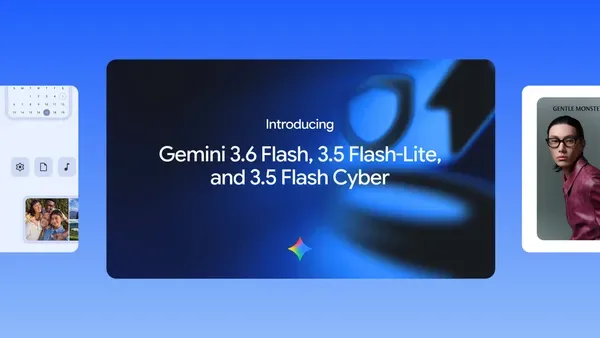
Geminiupdates, notebookLM upgrades, and a handful of enterprise-focused announcements, there's a lot to unpack if you're paying attention to the Google AI ecosystem.
Let me walk you through the key launches and what they mean for real-world workflows. Gemini 2.5 Pro — Expanded Context and Better Reasoning
The biggest headline was the rollout of Gemini 2.5 Pro with expanded context windows and improved chain-of-thought reasoning. Google is pushing this as the model of choice for complex, multi-step tasks, and from my testing, the reasoning improvements are real — not just marketing fluff. The model handles longer prompts without losing coherence, which matters a lot for prompt engineering workflows that involve multi-turn conversations or document analysis.
Gemini 2.5 Flash — Speed at a New Price Point
Alongside the Pro tier, Google announced Gemini 2.5 Flash with lower latency and a more aggressive pricing model. This is the model I'd recommend for anyone building high-throughput pipelines — agents, classification tasks, real-time summarization — where cost-per-token and speed are the bottleneck. The quality drop from Pro is measurable but not catastrophic for most use cases.
NotebookLM Gets Agent-Like Capabilities
NotebookLM received a major upgrade that blurs the line between a research tool and an LLM agent. You can now set it to autonomously cross-reference sources, generate summaries, and even create structured outputs from your uploaded documents. If you've been using it for literature review or internal knowledge management, this is the update that justifies upgrading today.
Imagen 4 — Better Text Rendering and Composition
Google's image generation model Imagen 4 is now available, with notable improvements in text rendering inside images and more coherent scene composition. If you've struggled with AI-generated images that look good but can't spell correctly, this is the version that fixes most of those issues. The practical applications for marketing assets and rapid prototyping are significant.
Project Astra — Real-Time Multimodal Agent
Google also teased deeper integration for Project Astra, their real-time multimodal agent framework. The July demo showed a system that can process live video, audio, and text simultaneously to answer contextual questions about a physical environment. This is still early-stage, but the trajectory suggests we're getting closer to practical ambient AI assistants.
What This Means for Prompt Engineering and AI Workflows
The pattern across these announcements is clear: Google is pushing toward agentic workflows where models don't just respond — they act, iterate, and chain together tasks autonomously. If you're building prompts today, the shift is from single-turn instruction following to designing multi-step agent pipelines where the model manages context, handles errors, and routes subtasks.
The deployment story also got easier. Google's expanded API access and notebookLM's new export options mean you can prototype locally and ship to production with fewer friction points.
I'll be diving deeper into specific prompt templates and agent configurations for Gemini 2.5 in upcoming posts. If you've been testing any of these July updates already, I'd love to hear how they compare to your experience — drop your thoughts below.
Next 1. Analyze the Request: → a guide to making money with AI, with plenty of directly applicable cases.