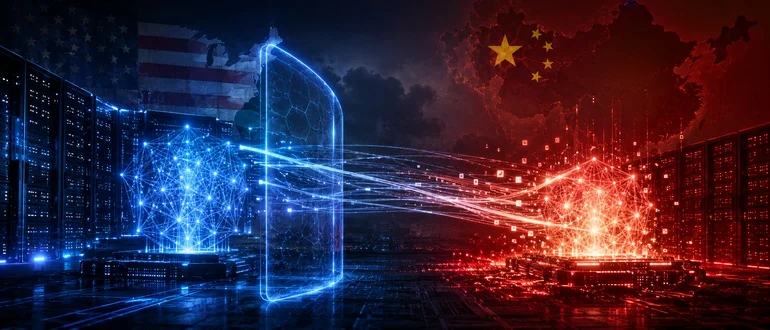
The US government and leading AI developers are considering stronger measures to prevent Chinese companies from using American models to build competing systems, continuing a central dispute in the China vs. US AI competition.
The chief concern is about AI distillation, a process in which the outputs of a next-gen AI model are collected and used to develop another model at a fraction of the cost of creating one from scratch. The method has long been used by researchers to create smaller, more efficient models, but US AI companies argue that some Chinese firms have turned it into a strategic method for gaining ground on top American AI models.
Anthropic and OpenAI have both warned Washington that unauthorized distillation threatens the US lead in frontier AI development. Their concerns have gotten attention inside the Trump administration, where officials have begun examining whether new policy tools are needed to limit the practice.
Anthropic escalated the issue in late June when it sent a letter to federal officials alleging that Alibaba conducted what it described as an industrial-level campaign to extract data from its AI systems. Earlier this year, OpenAI accused Chinese startup DeepSeek of attempting to benefit from its research through unauthorized use of its models. Anthropic has also identified companies including Moonshot AI and MiniMax as part of what it claims are broader efforts to harvest model outputs.
Chinese officials have rejected the allegations. The Chinese Embassy in Washington called the accusations unfounded and characterized them as an attempt to undermine China’s AI industry.
High Level Discussions
Administration officials have discussed the issue in national security meetings, while lawmakers have proposed legislation that would authorize sanctions against organizations engaged in unauthorized AI distillation.
Michael Kratsios, director of the White House Office of Science and Technology Policy, has acknowledged that distillation serves legitimate purposes when developers create smaller, more efficient versions of their own models. But he has also argued that extracting innovations developed by American companies represents a different issue requiring policy attention.
Training frontier systems requires billions of dollars in computing infrastructure and engineering talent. AI companies say that competitors that can reproduce much of that performance through distillation gain an enormous commercial advantage without bearing those development costs.
Anthropic has reported detecting millions of interactions that it believes were tied to coordinated efforts to collect data from its Claude chatbot. Google has also said it has observed a rise in attempts to extract large volumes of model outputs, describing the activity as IP theft. According to the companies, those responsible often use fake accounts and concealed network identities.
US officials have privately estimated that unauthorized distillation costs American AI companies billions of dollars annually. Industry executives also say that widespread copying could shorten the technological gap between US and Chinese frontier models. Reportedly, one source familiar with Anthropic’s position estimated that without distillation, China’s top models could trail leading US systems by far more than they do today.
AI Developers and Copyright
The dispute also exposes an irony for the AI industry. Some top AI companies now seeking stronger protection against model copying continue to defend their own practice of training AI systems on vast amounts of internet content, an approach that has sparked copyright litigation. Legal experts note that both debates ultimately revolve around the same question: where legitimate learning ends and unauthorized copying begins.