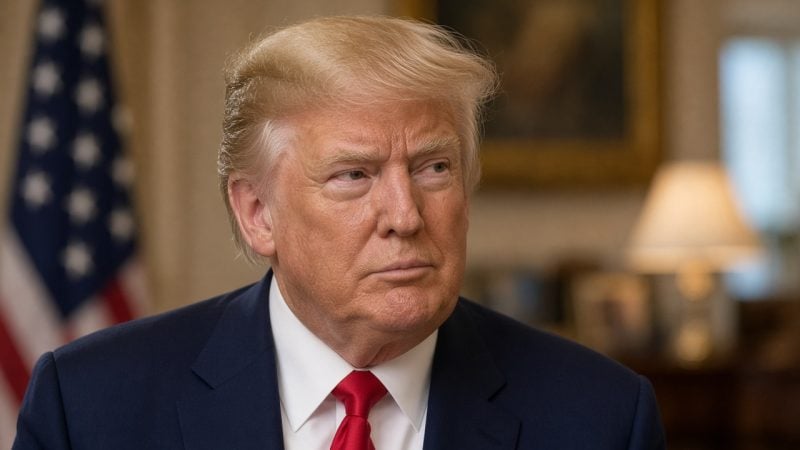
The president declared himself the only guardrail AI needs, rejecting legislative proposals that would create new regulatory bodies
President Trump posted on Truth Social that artificial intelligence requires just one guardrail: “a STRONG AND SMART (High IQ!) PRESIDENT.” Most of Washington treated this as a policy vacuum. It’s actually a consolidation play.
The statement, posted on September 14, 2026, arrived amid a flurry of competing proposals from lawmakers eager to build out a federal AI oversight apparatus. Senator Bernie Sanders wants a full on frontier model development until a new cabinet-level agency exists. Senator John Thune wants an office with the authority to block a model’s release before it ships. Treasury has floated a FINRA-style self-regulatory body for AI that would report to a Treasury official.
Every single one of those proposals has the same structural feature: the person running it would work for the president, and the president could fire them.
The Slaughter ruling changed the game #
That last point matters more than it used to. On June 29, 2026, the Supreme Court decided Trump v. Slaughter, a case that effectively lets presidents remove commissioners of independent agencies without cause. Before that ruling, agencies like the FTC operated with a degree of insulation from the White House. After it, every federal agency except the Federal Reserve answers directly to the executive branch.
So when lawmakers propose a new AI regulator, they’re not proposing an independent watchdog. They’re proposing a new employee for the president. Trump’s post wasn’t anti-regulation so much as a reminder of who would be holding the leash on any regulator Congress creates.
The news moving money, markets, and the world—before your day starts.
Daily. Free. Join 34,000+ readers across crypto, finance, and policy.
The president also claimed the US government already possesses “tremendous CRIMINAL and REGULATORY power” over AI companies. Trump argued that new restrictions would hand an advantage to international rivals who face no comparable regulatory burden.
Anthropic and OpenAI caught in the crossfire #
Trump’s broadside didn’t arrive in a vacuum. It followed public calls from some of Silicon Valley’s most prominent AI executives for more cautious development timelines. Anthropic CEO Dario Amodei and OpenAI’s Sam Altman both advocated for slower development of frontier AI models, citing safety and ethical concerns around increasingly capable systems.
Trump responded by singling out Amodei directly and halting government use of Anthropic’s technology. A federal judge later ruled that move was unlawful, but the message to the industry was clear: vocal support for regulation comes with consequences.
Trump has gone further, labeling AI safety concerns a “HOAX.” David Sacks, the venture capitalist who has served as an informal advisor to Trump on technology policy, has been a key figure shaping the administration’s approach. The president has pointed to advisory input from figures like Sacks as sufficient guidance for navigating AI’s development, rather than creating permanent institutional structures.
Disclosure: This article was edited by Editorial Team. For more information on how we create and review content, see our