The European Union has been preparing for a teen social media ban for months, and the first details from the long-anticipated plan finally dropped on Wednesday.
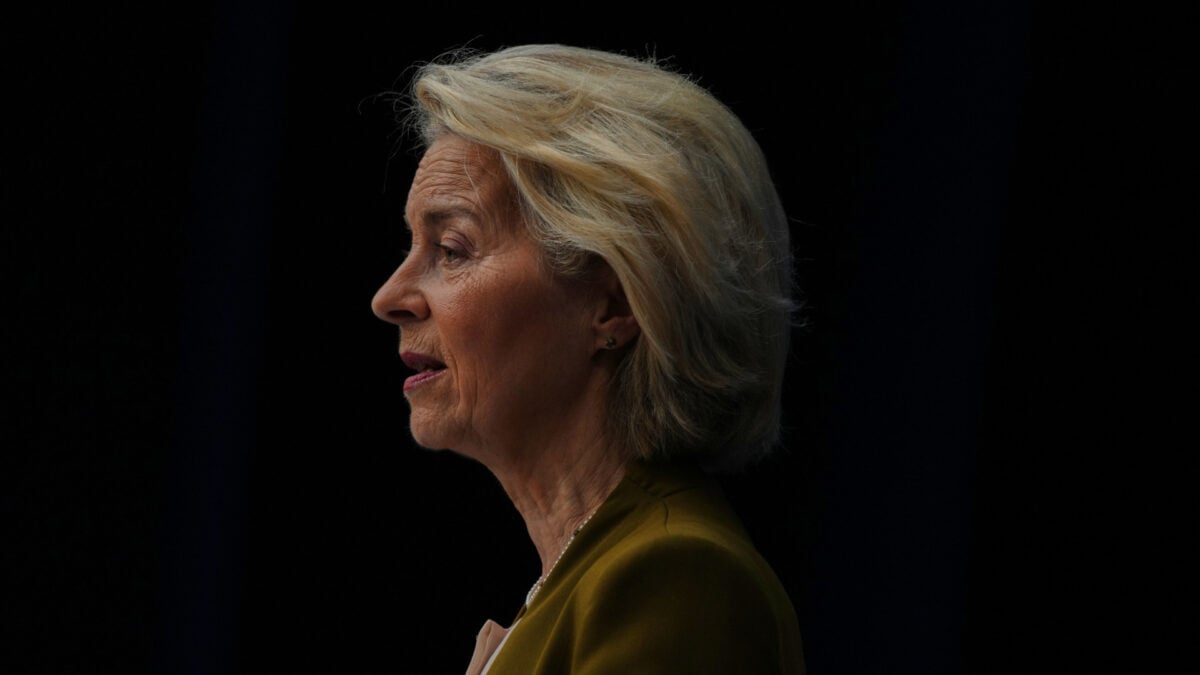
“I convened a Special Panel of experts. We spoke to young people. We looked at Australia and others who have moved ahead. And now it is time for Europe to act,” EU Commission President Ursula von der Leyen said in her State of the Union address on Wednesday. “No social media under the age of 13. No personal account under the age of 15.”
The EU is presenting a tiered, phase-in approach meant to ease teens into social media use rather than plunging them into unrestricted access once the ban lifts. Under the plan, children under 13 will be banned from most social media platforms. Once a child turns 13, they will enter a transitional period until 15, in which they will get restricted access to digital platforms via mini accounts with limited features that will be set up under parental control. These mini accounts will also face time restrictions of up to one hour a day, Von der Leyen said. From 15 to 18, the teens will be able to access social media without parental supervision, but platform operators will still have “safe design obligations.”
Platform operators will be required to disable risky settings by default and set minors’ accounts to private, with unknown users unable to get in contact with them, according to the draft bill as seen by Euro News. While Von der Leyen made the official announcement on Wednesday, the bill will be revealed on Thursday. The bill will also reportedly bring restrictions on algorithmic recommender systems that run these platforms, and the addictive design features like infinite scrolling, which are under significant legal scrutiny in the United States as well. A measure meant to target algorithmic recommender systems is also currently underway in Australia.
According to the Euro News report, the EU ban will also go beyond just social media platforms to impact other online services like some video games and AI chatbots.
The EU’s plan has a similar approach to the United Kingdom’s recently unveiled plan, in which minors under 16 are completely banned from social media while 16- to 18-year-olds face restrictions like online curfews. Tech companies will also have to switch off addictive design features like autoplay and infinite scrolling by default for the age group under the British approach.
Age verification will likely be conducted via the app the EU unveiled earlier this year. All new accounts will be subjected to age verification, but for existing accounts, Euro News reports that proportionate verification will be required based on how long the account has been active and vice versa.
Teens in Australia, which was the first to enact a landmark social media ban on under-16s, have found it easy to skirt the restrictions, especially with the help of VPNs. The EU is reportedly looking for a patch for that workaround.
“But it is not only minors who are at risk. Addictive design, for example, is harming everyone,” Von der Leyen said. “This is why we need a wider framework, the Digital Fairness Act. We will propose it in autumn.”
The Digital Fairness Act is a long-awaited set of rules meant to update online consumer protections, targeting things like addictive design features, manipulative dark patterns and even some AI on social media.
What happens in the EU is rarely confined there. The bloc represents a huge economy and 27 member countries. Previous digital restrictions, like the GDPR and its consent pop-ups, have impacted digital platform users worldwide, as operators found it easier to switch systems as a whole rather than build separate European versions of their sites.