The infrastructure supporting agentic AI is undergoing a structural shift. On June 4, 2026, Solo.io’s open-source agent gateway became the fourth initiative hosted by the Linux Foundation’s Agentic AI Foundation (AAIF). This move, following the project’s initial donation in August 2025, marks a significant milestone: it is the first time an institutional governance body has taken oversight of the gateway layer, distinct from the protocol-layer standards that have dominated the conversation thus far.
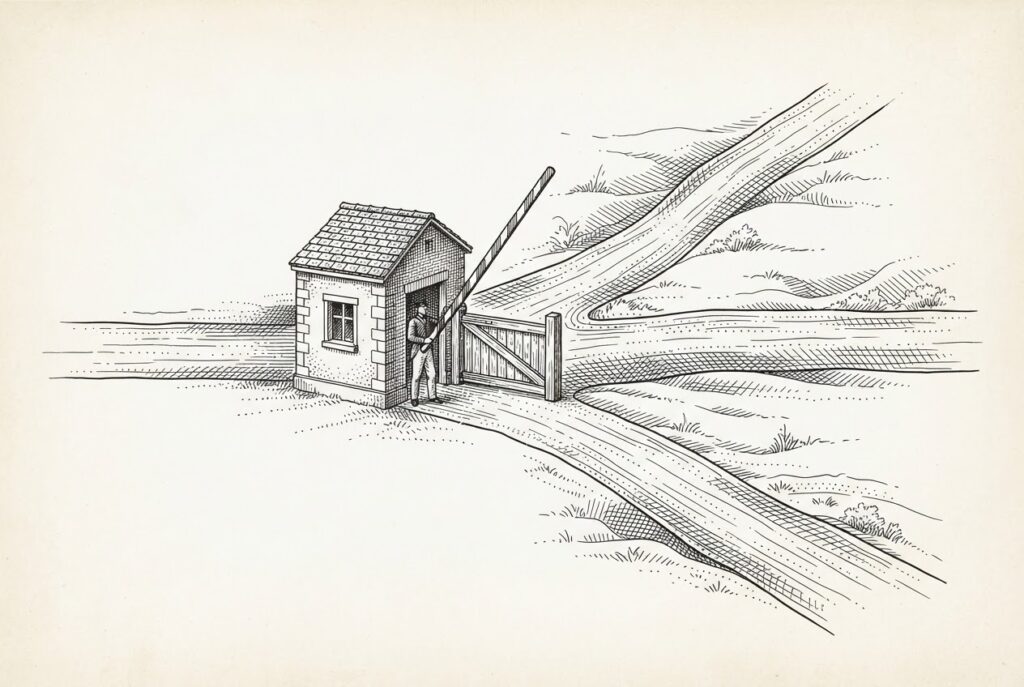
Distinguishing between protocol-layer governance and gateway-layer governance is essential. Initiatives like the Model Context Protocol (MCP) and A2A focus on the languages and handshake mechanisms agents use to communicate. In contrast, the gateway layer acts as the control plane where these protocols converge. It is the infrastructure responsible for routing, security, observability, and cross-protocol coordination. By bringing agentgateway under the AAIF umbrella — alongside existing initiatives like MCP, AGENTS.md, and goose — the industry is signaling that the connective tissue between agents requires the same level of standardized, open-source oversight as the protocols themselves.
The technical capabilities of the agentgateway highlight why this layer is critical for enterprise adoption. It provides a unified management layer for MCP traffic, A2A v0.2.x communication, LLM inference, REST APIs, and gRPC services. Crucially, it implements the Kubernetes Gateway API as a conformance-targeted data plane. Perhaps most importantly for enterprise architects, it integrates Cedar-based authorization. This allows for fine-grained Role-Based Access Control (RBAC), Attribute-Based Access Control (ABAC), and Relationship-Based Access Control (ReBAC) at the tool level — a level of granularity that standard communication protocols do not provide. This capability addresses the security and compliance requirements that often stall agentic projects at the enterprise scale.
The broader ecosystem is responding to these infrastructure challenges. The AAIF has expanded rapidly, growing from 146 members in February 2026 to 247 by August 2026, including 36 Gold members such as Anthropic, OpenAI, Google, Microsoft, AWS, and Salesforce. This growth reflects a collective recognition of the agent orchestration gap, where functional layers lack the necessary connective tissue to operate reliably. Infrastructure — not model quality — has emerged as the primary bottleneck for agentic AI, with Gartner projecting that over 40% of agentic projects could be canceled by the end of 2027 without better orchestration.
For builders, this governance shift provides a clearer path toward stability. With over 300 active contributors across 60 organizations, including major players like Red Hat, Adobe, and Amdocs, the project is moving toward a standardized model for managing agent traffic. This is particularly relevant for organizations like Uber, which has already deployed an MCP gateway managing 800 servers, 5,000 tools, and 60,000 weekly agent executions. As 87% of IT leaders prioritize interoperability for agentic orchestration, the move to formalize the gateway layer under AAIF provides a neutral ground for these complex systems to evolve. Looking ahead, the industry will be watching how this governance model influences the next generation of agentic deployments. The upcoming AGNTCon+MCPCon North America, held October 22–23, 2026, in San Jose, serves as a focal point for these discussions, with Solo.io presenting on the future of these control planes. As the agent economy matures, the focus is shifting from the novelty of individual agents to the reliability of the infrastructure that connects them. The formalization of the gateway layer is a necessary step in moving from experimental prototypes to scalable, enterprise-grade agentic systems.