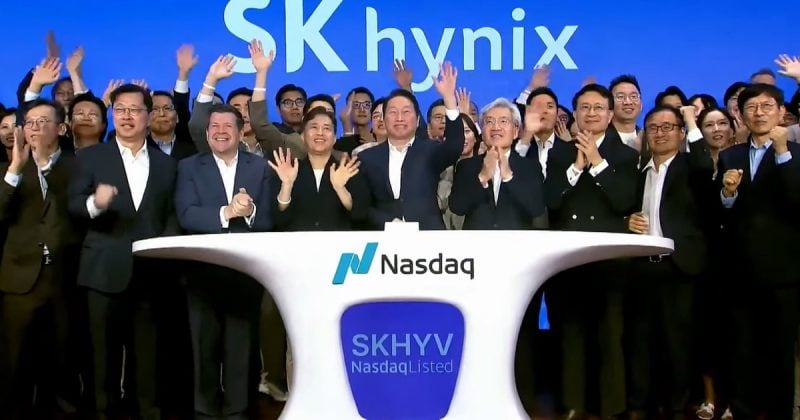
The South Korean chipmaker raised $26.51 billion in the largest-ever US listing by a foreign company, riding the AI memory chip wave straight to Nasdaq.
SK Hynix showed up to Wall Street and did not come to play small. The South Korean semiconductor giant raised $26.51 billion through its Nasdaq debut on July 10, 2026, setting a new record for the largest US listing ever completed by a foreign company.
The company priced 177.9 million American Depositary Receipts at $149 each, and investors immediately pushed the shares higher, with the stock opening around $170 and finishing the day up roughly 13%. The ADR offering was more than seven times oversubscribed.
Why Wall Street wants a piece of the memory chip king #
SK Hynix holds somewhere between 50% and 58% of the global market for high-bandwidth memory, the specialized chip architecture that makes AI accelerators function at the speeds Nvidia’s GPUs require. Nvidia is among the company’s most significant customers, which means SK Hynix sits at the very center of the AI infrastructure buildout.
SK Hynix was already South Korea’s second-most valuable company before this listing, with an existing listing on the Korea Exchange. The ADR structure gives American fund managers a cleaner way to own it without routing capital through the Korea Exchange.
The numbers behind the record #
After the initial surge, some pullback in subsequent sessions was reported, which is typical for any large offering as early flippers take profits.
What this means for crypto and digital asset markets #
Ondo Global Markets, a platform that tokenizes exposure to traditional equities and financial instruments on blockchain rails, has been noted in the context of this listing as a potential vehicle for investors seeking Hynix-adjacent exposure through crypto-native infrastructure.
The more immediate market implication is competitive pressure on other memory and semiconductor names. When SK Hynix commands a valuation premium on the back of its HBM dominance, it puts Micron Technology and Samsung’s memory division in a difficult position. Investors now have a purer HBM play available on US exchanges, which could shift capital allocation within semiconductor ETFs and active portfolios over the coming quarters.
Disclosure: This article was edited by Editorial Team. For more information on how we create and review content, see our