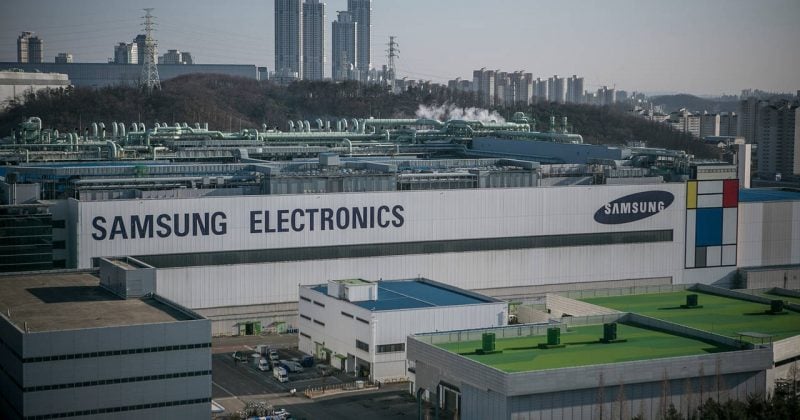
The Korean tech giant is staying put on the Korea Exchange while rival SK Hynix eyes a massive Nasdaq debut worth roughly $29 billion
Samsung Electronics has shut the door on listing shares in the United States or issuing American depositary receipts. The company’s statement lands at a moment when speculation about its US capital market ambitions had been building steadily, and when its biggest rival is doing the exact opposite.
SK Hynix, Samsung’s chief competitor in the memory chip business, is reportedly planning a roughly $29 billion equity listing on Nasdaq via depositary receipts.
What’s driving the speculation #
The chatter around a potential Samsung US listing grew from a Q2 2026 earnings report that showed record profits but still disappointed investors, and the broader frenzy around AI-related semiconductor plays.
Samsung’s shares fell between 7% and 10% following the earnings release. Record profits and a stock drop in the same breath. Investors wanted Samsung to demonstrate it was keeping pace with the AI infrastructure boom, not just participating in it.
The strategic calculus #
Samsung is not exactly strapped for cash. The company’s market capitalization surpassed $1 trillion as of May 2026. It had approximately 6.735 billion shares outstanding at the end of Q1 2026. And it already trades global depositary receipts on the London Stock Exchange, giving international investors a pathway to exposure without requiring a full US listing.
The decision also reflects a philosophical difference between Samsung and SK Hynix. SK Hynix is making a bold bet that tapping Nasdaq investors will provide the war chest needed to expand AI chip manufacturing capacity at the pace the market demands. Samsung is betting that its existing financial infrastructure and balance sheet are sufficient to compete.
The competitive landscape is shifting fast #
SK Hynix’s planned $29 billion Nasdaq listing would rank among the largest equity raises in recent memory. The divergence in strategy between Samsung and SK Hynix creates an interesting natural experiment for investors. One company is doubling down on US market access and aggressive capital deployment. The other is maintaining its established approach, relying on organic cash generation and existing financial channels.
Samsung’s primary listing remains on the Korea Exchange under ticker 005930.
What this means for investors #
For US-based investors hoping to get direct Samsung exposure through an ADR, this is a clear signal to look elsewhere. The London-listed GDRs remain an option, as does buying shares directly on the Korea Exchange through brokerages that offer international market access. Samsung’s stance suggests confidence that it can self-fund its AI semiconductor ambitions without diluting shareholders or subjecting itself to additional regulatory regimes. That’s a reasonable position for a company worth more than $1 trillion.
But the market’s reaction to Samsung’s Q2 earnings tells a different story. Investors are not rewarding restraint right now. Record profits meant nothing when the narrative was about whether Samsung was moving fast enough.
Disclosure: This article was edited by Editorial Team. For more information on how we create and review content, see our