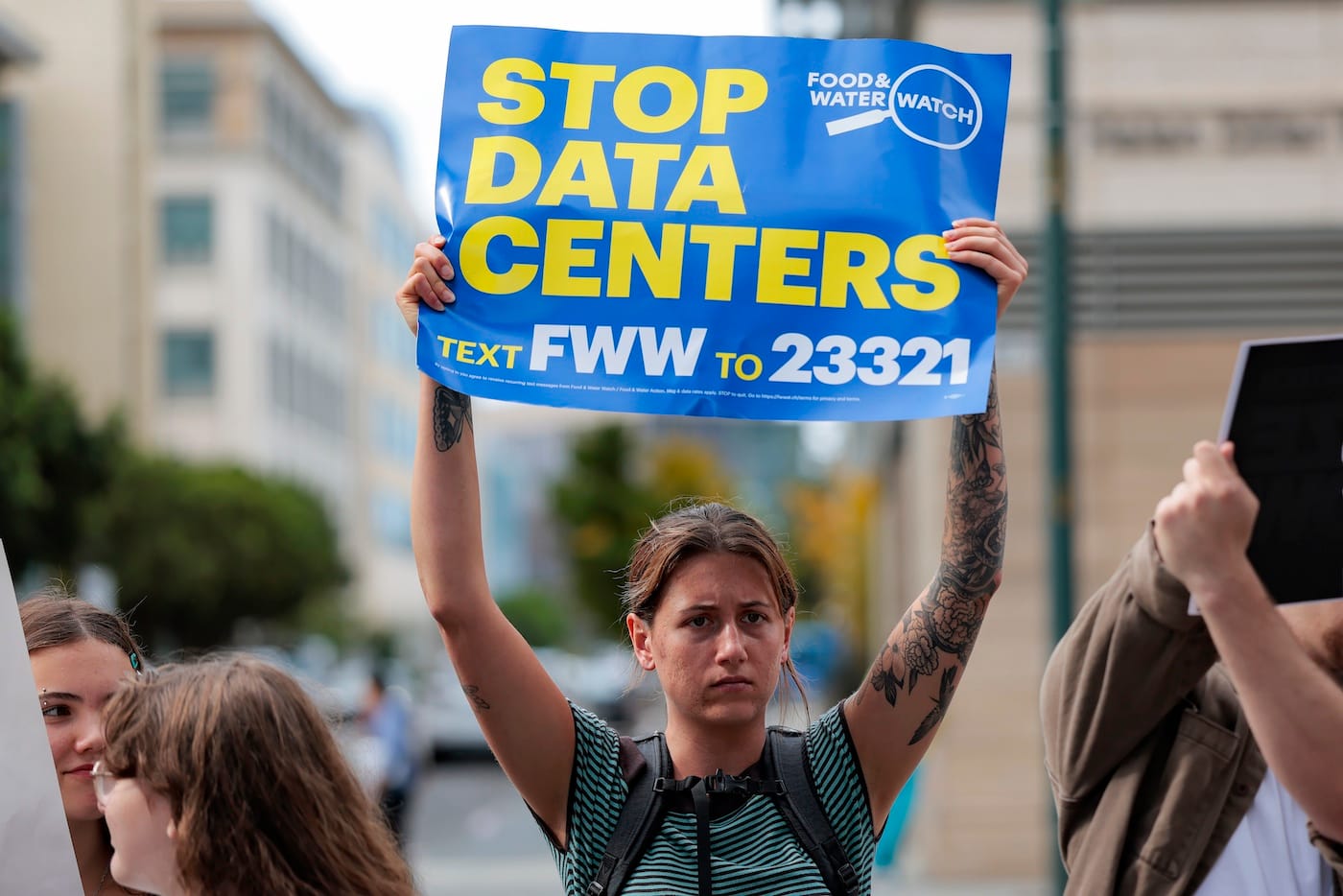
As developers pursue new data center projects in SF, the Board of Supervisors voted Tuesday to extend a moratorium on new facilities, citing unanswered questions about their environmental impacts and demands on the city's power grid.
San Francisco supervisors voted unanimously Tuesday to extend the temporary ban for 10 months and 15 days, as the Chronicle reports. The extension, recommended by the Land Use and Transportation Committee on Monday, gives the Planning Department more time to examine the facilities' potential effects and develop regulations before the city considers approving additional projects.
The vote follows a report released last week by the Planning Department that identified significant gaps in the city's understanding of existing data centers, including their electricity and water consumption, pollution, and effects on surrounding neighborhoods, as SFist reported previously. The department stopped short of recommending whether San Francisco should allow more facilities, but outlined several policy changes officials could consider, including restricting standalone data centers in residential and commercial areas and requiring developers to assess impacts on nearby communities.
According to Mission Local, the report also recommended updating the city's definition of a data center, which currently relies on language dating back to 2001, to better align with the state's definition. The department's assessment examined the city's three standalone facilities but acknowledged that San Francisco does not maintain a complete inventory of smaller data centers operating inside other buildings. Data Center Map, meanwhile, identifies 15 potential facilities throughout the city, many of them downtown.
Two of the larger standalone facilities are located along Paul Avenue in Bayview Hunters Point, a neighborhood that has experienced disproportionate air pollution for decades due to industrial operations, truck traffic, and a former PG&E power plant that closed in 2006.
District 10 Supervisor Shamann Walton, who represents the neighborhood and introduced the original moratorium in October, said the city needs to understand how the facilities affect residents before allowing additional development.
“We really don't know the impact of data centers to our communities,” Walton said before Tuesday's vote.
The Planning Department's report also warned that larger facilities could place substantial demands on an electricity grid already approaching its transmission capacity. A 50-megawatt data center could use as much electricity as 25,000 new homes, potentially competing with housing, hospitals, and businesses for limited power resources, as previously reported. Other concerns include air pollution and noise from backup generators.
Developers have explored potential data center projects at the shuttered SF Centre mall downtown and in Dogpatch. NOVVA, an existing facility at 400 Paul Ave. in Bayview, had also planned to expand from nine to 36 megawatts by 2028, but those plans are now on hold.
The moratorium comes as San Francisco attempts to balance its ambitions to remain a center of the AI industry against the infrastructure demands of the facilities needed to support it. As the Chronicle notes, Mayor Daniel Lurie has made attracting tech investment part of his economic strategy, while labor groups have argued that data centers could create union construction jobs and help fund needed infrastructure improvements.
In a letter Monday, Building and Construction Trades Council leader Rudy Gonzalez, who ran Supervisor Connie Chan’s campaign for US Congress, opposed a permanent ban, arguing that developers should have a path to approval if they meet enforceable environmental and labor standards and cover the costs of the infrastructure they require. He also urged the city to distinguish large commercial facilities from smaller research and development sites.
Walton acknowledged the union's concerns and said he intends to involve labor and community groups in developing future restrictions. Per the Chronicle, public speakers at Monday's committee hearing, meanwhile, questioned whether data centers would deliver meaningful employment benefits, given the relatively small number of workers needed to operate them. Others raised concerns about pollution and the concentration of facilities in communities already facing environmental burdens.
San Francisco now joins Oakland and Seattle in extending temporary restrictions while officials work on regulations. As SFist reported last week, Oakland supervisors also voted unanimously to extend that city's moratorium for another 10 months and 15 days, through October 5, 2027. Oakland is reviewing potential effects on its electricity grid, water supply, and air quality after receiving inquiries from developers, including Behring Companies, which proposed putting a data center inside a downtown office building.
Previously: SF to Consider Extending Data Center Moratorium as Oakland Approves 10-Month Extension