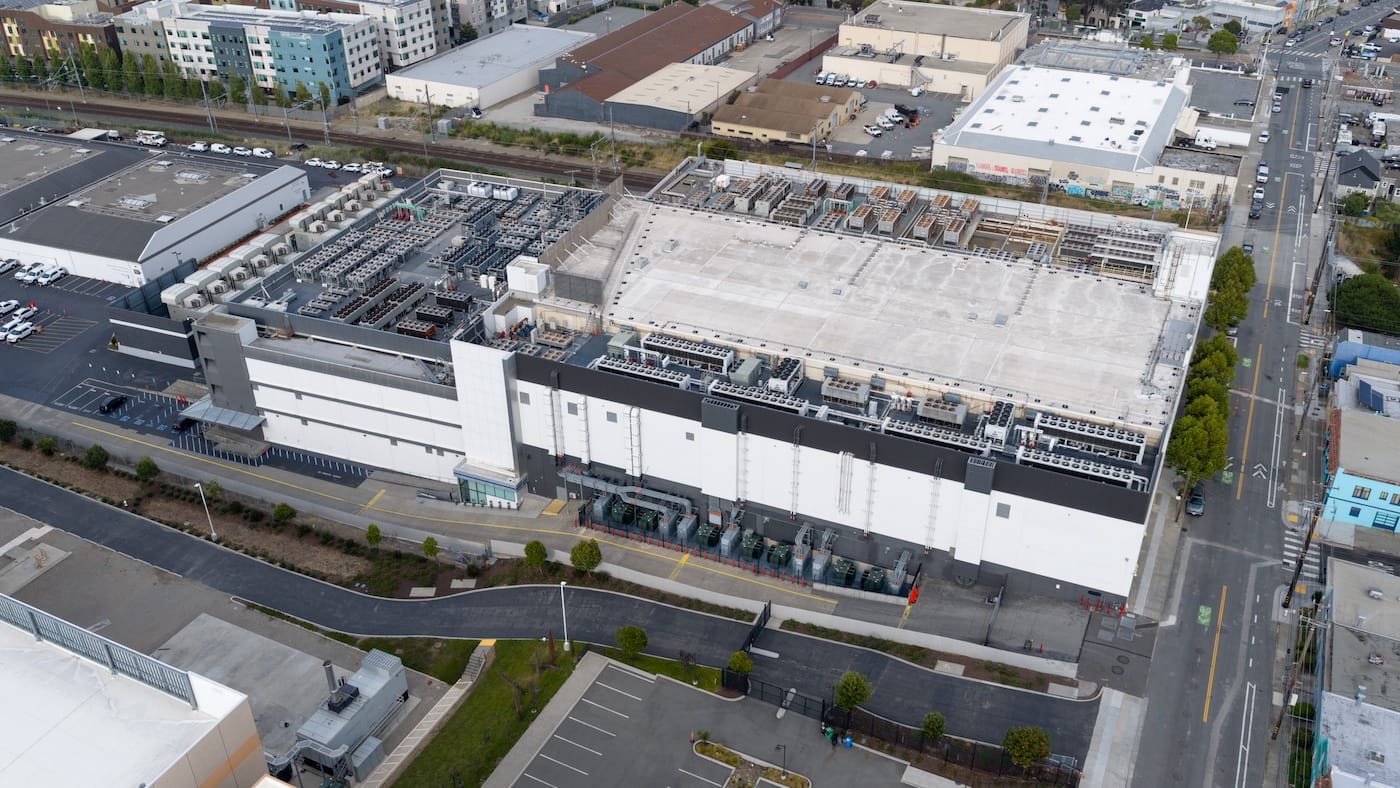
Oakland voted to extend its moratorium on new data centers through October 2027, while SF supervisors will vote on a similar extension next Tuesday, following a new report warning that new facilities would likely push the city’s power grid beyond its limit.
As the Chronicle reports, a new San Francisco Planning Department report warns that new facilities could compete with housing, hospitals, and businesses for available electricity, as SF's transmission capacity is approximately 1,000 megawatts, with peak demand reportedly reaching roughly 800 megawatts last year.
San Francisco currently has three stand-alone data centers, and developers have explored additional projects at the shuttered San Francisco Centre mall downtown as well as in SoMa and the Dogpatch, as SFist reported previously.
The report also estimates that a 50-megawatt data center could consume as much electricity as 25,000 homes.
According to the Chronicle, electricity use is expected to grow by as much as 20 megawatts annually as the city electrifies buildings and accommodates other development, while a major new transmission line could take up to a decade to complete. Backup generators could reportedly add to air and noise pollution, particularly in neighborhoods already facing environmental burdens, while the facilities' water consumption remains another concern.
The report suggests the city consider power limits, additional utility assessments for larger projects, and restrictions on stand-alone facilities in residential and commercial areas.
The analysis does not recommend whether the moratorium should be extended or establish new regulations. Per the Chronicle, the Board of Supervisors is expected to consider extending the existing 45-day for another 10.5 months next Tuesday.
Oakland, meanwhile, voted unanimously Tuesday to extend its own data center moratorium for another 10 months and 15 days, through October 5, 2027, as Oaklandside reports. Introduced by District 3 Councilmember Carroll Fife, the extension gives city officials more time to assess potential impacts on the local electricity grid, water supply, and air quality.
Oakland has also received inquiries from developers, including Behring Companies, which proposed installing a data center inside a downtown office building, as previously reported. Those plans are now on hold.
Residents have raised concerns about utility costs, water consumption, pollution, and displacement. According to Oaklandside, a survey of 424 West Oakland residents conducted by Care 4 Community Action found that 73% supported a full ban on new AI data centers, while 46% expressed concern about rising utility bills.
Fife has argued that Oakland's existing infrastructure was not designed to accommodate the demands of large-scale data centers, and its planning code reportedly lacks specific regulations governing their energy and water use, noise, and backup generators.
Oakland's Planning and Building Department is consulting with PG&E, East Bay Municipal Utility District, and Ava Community Energy to assess potential impacts on local utilities, while reviewing data center regulations adopted by other California cities.
Previously: San Francisco and Oakland Pass 45-Day Moratoriums on New Data Centers