Welcome to The Closing Argument: our verdict on the news, plus our writers’ key takeaways and everything The Argument published and appeared in this week.
The Verdict by Kelsey Piper #
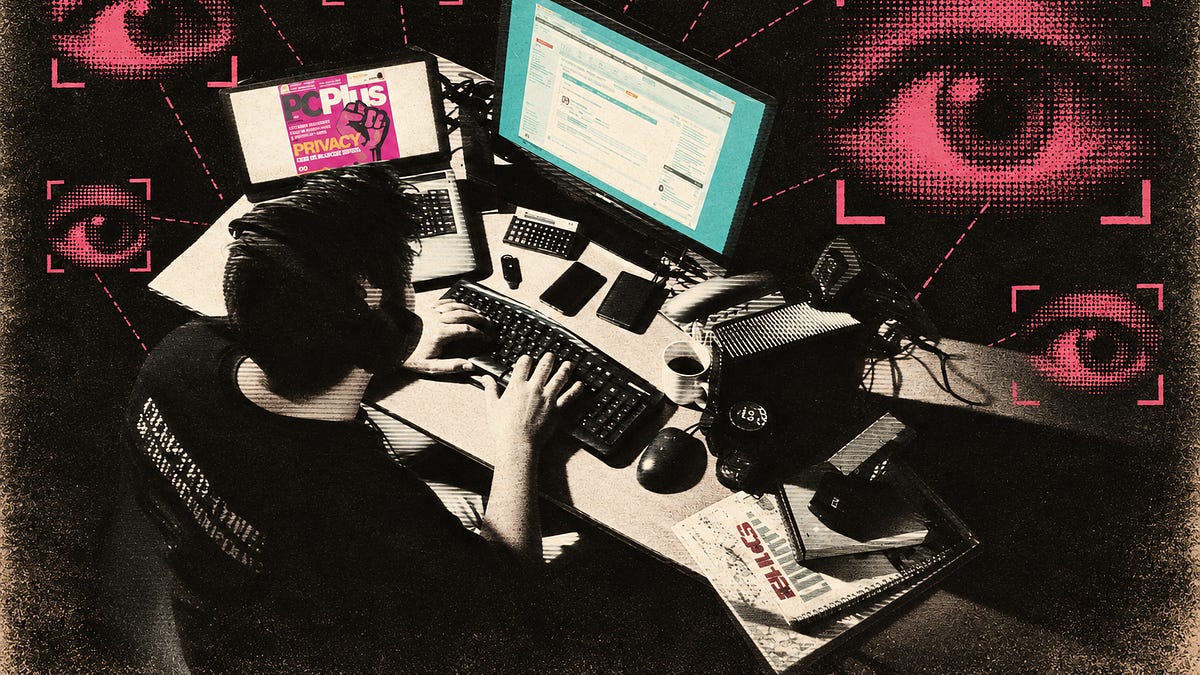
This spring, I discovered that AI had destroyed my ability to write anonymously. No matter what steps I took to eliminate any sign of my authorship besides the text itself, Claude could tell it was me — even when the text was an unpublished draft on a topic I never write about, or my college application essay from 15 years ago.
I warned that the death of anonymity would soon come for the rest of the internet. Some readers of The Argument were skeptical: Was I sure I wasn’t leaking information to Claude when I posed the question? Anyway, most people don’t have millions of words of their writing on the internet, so they would be safe, right?
A preprint of a research paper released this week looks much more systematically at this phenomenon. University of Maryland researchers tested whether modern AI models could identify an anonymous peer reviewer using the authors’ own submitted peer reviews and those of Ph.D. students in some of the authors’ lab.
The researchers found that “Claude Fable 5.2 names the reviewer of 56% of 398 private peer reviews whose authorship was never made public.” (Expanded research looking at thousands more private peer reviews is forthcoming.) That’s one way of testing this phenomenon at scale, and it points to deanonymizing skills that are substantial even with people who are not particularly famous.
The paper used another approach as well: The researchers took comments made by active Reddit users after the model’s release date and asked the model who had written them; it got the username right in 69% of cases in the group with the most active posters. They tried stories written by well-known authors (those with over 1 million Goodreads ratings): it guessed those every single time. They tried papers posted to the scientific paper repository arXiv: The model was 46% accurate.
While these findings support my hypothesis that we’re witnessing a total erosion of the ability to write anonymously online, they also show that the process is still incomplete. Not everyone should consider themselves deanonymized yet. But the erosion is happening: My experiments in the spring convinced me that no prolific public writer could ever write anonymously again, and now we know that academics and even active Redditors should probably assume the same.

If you’re in doubt, there are ways to tell: The authors found that when they asked a model how well it knows an individual, it could correctly predict whether it could deanonymize them. So you can determine if you are vulnerable by asking a model how familiar it is with your name and any usernames you go by online.
What does this all mean? Well, for one thing, the institution of anonymous peer review does not look like it will hold up any longer. The space of possible reviewers for a given academic article review in a particular discipline is pretty small; stylistic tics are sufficient to confidently distinguish between them.
For another, the researchers find that today’s LLMs are also quite effective as a “poor man’s Pangram,” referring to the leading AI-writing detector — that is, they have similarly low false positive and false negative rates when asked whether the author of a text is human at all. (And, if the writing is done by a model from one of the leading U.S. AI companies, they can even name *which* company’s AI it is.)

While the Pangram haters are [at it again](https://x.com/max_spero_/status/2120754019698196714) in the aftermath of yet another controversy over whether to award literary prizes to obviously AI-written works, pretty soon every AI will be capable of identifying AI-written text with high accuracy. It’s part and parcel of their general abilities to identify text authors with high accuracy.
As for what a person can do if they don’t want to be deanonymized, it would be nice to have better answers. I am particularly concerned for anyone who writes anonymously while living under a repressive government, as well as for anyone who has disclosed sensitive personal information in anonymous Reddit posts and the like.
The paper finds that there’s not much you can do. LLMs almost never refuse these tasks. Deleting your internet presence doesn’t remove it from the pretraining data that the model is using to determine authorship. And the researchers find that even paraphrasing a human author’s text with AI does not eliminate a model’s ability to deanonymize that author.
Realistically, I still think we should accept that the internet is no longer anonymous if you write at any significant length. Institutions that relied on anonymity will have to figure out how to function some other way. But if you’ve stayed out of the training weights so far, you can likely continue to do so — by just never writing anything on the public internet. The models very rarely identified anyone who they were barely familiar with — at least on default effort settings.
The Road to 2028 with Lakshya Jain #
Lakshya Jain, our director of political data, gives us his update on the race to become the first president of the post-Trump era:
In building our Wins Above Replacement model, I’ve been struck by how many things it flags ahead of time that we just choose to ignore, because they break our priors. Take Annie Andrews. Most people looking at her Twitter feed might have written her off as a #Resist grifter, but Andrews overperformed by 4 points in her 2022 loss to Nancy Mace, showing that she could absolutely run a credible campaign. Meanwhile, Lindsey Graham had always been tagged as a weak incumbent, underperforming by an average of 6.5 points in his last two elections. So when Andrews flipped Graham’s South Carolina Senate seat, beating Graham’s deeply unqualified sister, it shouldn’t have been a huge surprise to anyone looking at WAR.
What does that mean for 2028? Alexandria Ocasio-Cortez has underperformed in four straight elections, making her one of the weaker incumbents in Congress, while Jon Ossoff has turned in two very strong performances. JD Vance, meanwhile, was a weak candidate in Ohio, and even Marco Rubio never showed much signs of electoral strength. I wouldn’t be surprised if this carried over to the presidential election to some degree, the question is whether anyone will heed the warning signs before it’s too late.
Life of the Mind with Jerusalem Demsas #
In this section, Kelsey, The Argument’s staff writer reporting on AI, tech, science, education, and politics, tells us what she’s seeing in the world this week. This week I’m taking over for her:
Smartphones have been extremely bad for me in particular but I’ve been torn on whether they’re more like alcohol (really bad for a small subset, but broadly fine as an occasional indulgence) or cigarettes (truly no one should ever smoke a cigarette).
But what I’ve never understood is why there’s so much debate over whether it’s good to send kids to schools with a TV in their pocket. This week, a new study found that students at schools that required them to put their phones in locked pouches saw gains in math and reading equivalent to one or two extra weeks of learning a year.
Two co-authors of an earlier smartphone study came away with two very different reactions: “encouraging” and “largely disappointing.”
I’m glad that there are social scientists who preregister their views and tell us when results surprise them. But as a non-economist merely observing reality, I have to say there’s probably no study in the world that could convince me that children and schools aren’t better off with the phones put away.
🌟Abundance Win of the Week🌟 #
Maibritt Henkel, one of The Argument’s writing fellows, gives us her pick for this week’s biggest win in the wide world of abundance:
The Boston City Council voted to eliminate minimum parking requirements for new housing developments this week. If the proposal receives final approval from the Zoning Commission, developers will no longer have to provide parking when building new housing. It’s a small change on paper with big implications: Adding parking in Boston can cost up to $100,000 per underground space.
Eliminating parking minimums has already lowered housing construction costs in other cities. Seattle began ditching parking requirements back in 2012, and in the years that followed, developers built 40% fewer parking spaces, saving around $537 million. In 2023, Austin, Texas, became the largest city to ditch minimums and has since seen average rent drop by around 16.2%. The reform was just one of many that have contributed to Austin’s apartment-building boom, but it’s been cited as one of the key drivers.
In Boston, on the other hand, rent is up 2.5% from just a year ago. Given the entrenched NIMBY resistance to any and all housing reforms in Massachusetts — Question 7, a ballot measure that would have lowered minimum single-family lot sizes, was rejected by voters earlier this month — the City Council’s vote is encouraging.
Is the Bay State finally starting to see the light?
Top stories this week by Maibritt Henkel #
Why does it feel like there’s been a decades-long vibe shift against the ideal of progress? Staff writer Jeremiah Johnson traveled all the way to Berkeley, California, to find out. At Progress Conference 2026, he talked with policy experts trying to build high-speed rail faster, solar technology entrepreneurs, and philosophers trying to grapple with what humanity would look like if we ever conquered aging. All of them had different theories about why ideas like theirs can’t quite ignite the public imagination. One explanation, Jeremiah argues, is decades of inequality: A growing pie means nothing to local communities unless they believe that they, too, will get a slice.
Thursday was something of a Super Bowl for election data nerds, because The Argument director of political data Lakshya Jain released Split Ticket’s entire Wins Above Replacement (WAR) model for the 2026 midterms. Lakshya’s WAR scores compare the final result of every single two-party race to the expected result of a matchup between a generic Democratic and generic Republican candidates in the same district. As such, they’re good at revealing which candidates are truly exceptional and which just benefited from a good environment.
We know what types of disasters experts think AI could accelerate: cyberattacks, bioweapons, even human extinction. But what if we get staggering machine superintelligence without those massive downsides? Staff writer Kelsey Piper considers how a world without the need for human labor — or one where it becomes possible to marry your own mind to AI — would not actually settle the question of what makes a good life.
Worth watching… #
On this week’s podcast, Matt and Jerusalem talk to certified Gen Z-whisperer Kyla Scanlon about why young people hate the economy. Paid subscribers can watch or listen to the episode ad-free or read the transcript. Free subscribers can watch the episode on YouTube or listen at their podcast provider of choice.
Nick Bostrom, author of the 2014 book Superintelligence, and NYU philosophy professor Ned Block joined Kobe Yank-Jacobs for a Substack Live debate about AI consciousness.
The Argument recommends: #
The Argument
Literature:
- *[The Swan Thieves](https://www.goodreads.com/book/show/5983057),* Elizabeth Kostova (novel)
- [Ugly Slave](https://bedenix.com/inscription/#:~:text=taste%20of%20sadness%20in%20my%20youth) , Hsin Ch’i-chi tanslated by Red Pine (poem)
- *[A Doll’s House](https://en.wikipedia.org/wiki/A_Doll%27s_House),* Henrik Ibsen (play)
Articles:
Movies:
Music:
- “ Easier, ” The Crane Wives
We have merch!
We have merch!
We have quarter-zips, keychains, hats, and stickers. Each one is a great conversation starter in its own way. Buy them here.