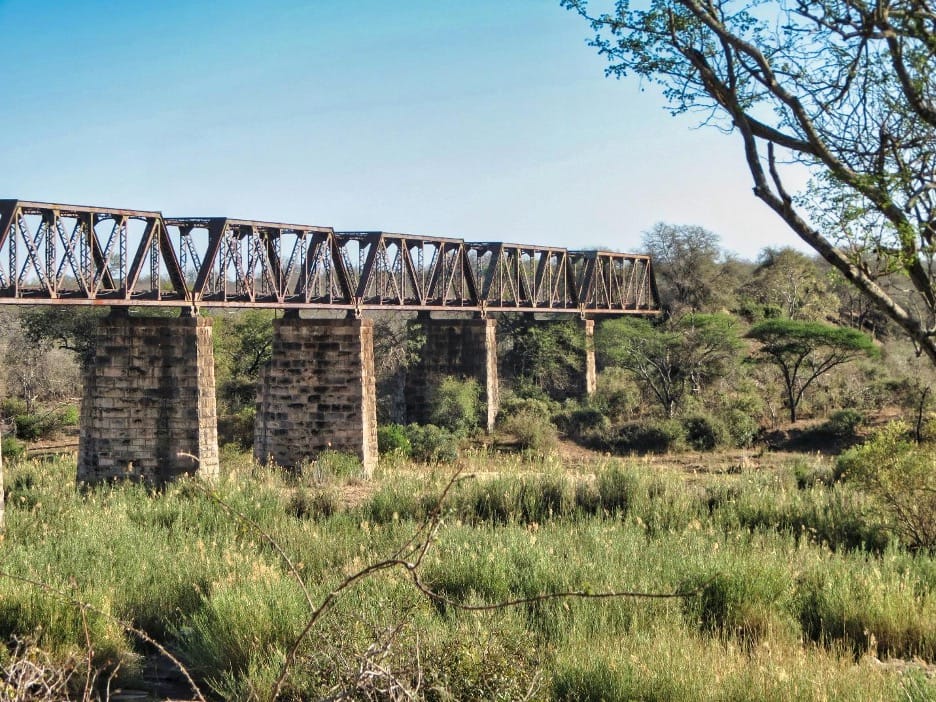
*Editor's note: The "Short of War" Podcast discussing this article is AI-generated.*In 2019, while deployed to the Horn of Africa, my special operations unit was tasked with reclaiming a bridge from al-Shabaab. The terrorist group had previously seized the critical infrastructure and was using the crossing as a node for taxation, a chokepoint for population control, and a transit route for munitions. Whoever held the bridge shaped the behavior of the entire area. Recognizing its importance, my unit applied military force, reclaimed the bridge, and accomplished the mission we’d been given. We then moved on to the next objective.
Yet, after the dust settled and long after my team had moved on, what filled the void that al-Shabaab had left behind wasn’t American power or influence–it was Chinese. After we left, China arrived with fiber-optic cables and began building a network of dependence. While the U.S. had cleared the physical bridge and eliminated the security threat, China had begun hardwiring the digital and economic architecture of the region.
It wasn’t until years later that I realized the key terrain wasn’t the bridge, but the digital and governance infrastructure connecting it to the surrounding population and larger global economy.
Using the bridge example as a jumping-off point, the following analysis explores how adversaries gain influence by investing in and dominating other countries’ digital infrastructure. It introduces the concepts of Protocol Insurgency and Technical Foreign Internal Defense (Tech-FID) and concludes by offering recommendations for how the U.S. can move from securing terrain to designing the systems that determine who holds the enduring advantage. Protocols and Protocol Insurgency Defined
The term that best encompasses the intangibles that China built after we left is protocols. Protocols are a set of rules and digital language that determine how data moves, who can see it, and who is excluded from the network. If the bridge is the metaphorical highway, protocols are the intangible rules that determine who can move on that highway, how, and under whose authority. If the U.S. secures the bridges but lets competitors define the invisible rules that govern them, we are losing the physics of the war.
This is the problem of the modern irregular battlefield: tactical success is meaningless if the adversary shapes the conditions that determine whether that success persists. Therefore, a counterstrategy is needed. That’s where protocol insurgency comes in.** **Protocol Insurgency is a subset of irregular warfare in which decentralized technologies, alternative information pathways, and non-state networks are deliberately employed to subvert an adversary’s control over the protocols that structure power. In a protocol insurgency, victory comes not from seizing the bridge, but from controlling the technological pathways and standards that make the bridge matter.
The Path of Least Resistance vs. Architectural Drag
In regions where great power competition is playing out across Africa, South America, and the Middle East, the digital and informational terrain is being terraformed by America’s adversaries. As the opening anecdote illustrates, when kinetic forces clear a physical space, but fails to leave behind a sustainable systemic alternative, a vacuum is created. This leads to the Vacuum Axiom: power abhors a vacuum. If not filled immediately, the nearest opportunist looking for a power grab will take advantage of the vacuum. America’s near-peer competitors have realized they don’t need to fill this void with soldiers; doing so would draw too much attention. Instead, they fill it with fiber optics, 5G standards, digital wallets, and other mobile banking platforms.
Through strategies such as the Belt and Road Initiative (BRI), Beijing builds long-term dependence by installing systems and infrastructure that are presented to recipient nations as the path of least resistance. When a partner nation’s entire telecommunications backbone is built on Huawei infrastructure or protocols, using those systems becomes the cheapest, fastest, and most logical choice for local populations and military partners alike.
This creates system dependency. When a nation’s financial technology and cellular backbone are built on adversary protocols, that society becomes path dependent. [Their economic survival is then inextricably linked to the adversary's updates, maintenance, and political whims.][1]
This creates a problem for U.S. and allied forces. When a nation’s underlying digital infrastructure relies on companies that are beholden to the People’s Republic of China (PRC) government, U.S. entities operating in that nation must build in workarounds. These work-arounds generate architectural drag. Operating inside systems built to an adversary’s standards forces U.S. units to pay a premium in time, resources, and security.
Volt Typhoon is a good example of a Chinese play that has created architectural drag. A state-sponsored advanced persistent threat that operates primarily in the cyber domain, Volt Typhoon allows Chinese operators to quietly embed themselves inside U.S. communications systems that U.S. bases rely on.
One particularly insidious aspect of Volt Typhoon is that it compromises readiness long before a crisis has even begun: instead of securely leveraging the local digital backbone, U.S. and allied missions require constructing redundant, bespoke communications networks simply to avoid operating on systems the adversary can see or manipulate. In cases where American or partner forces do rely on local communication lines, they risk exposing their data. Architectural drag results from the need to mitigate against China’s embeddedness, yet it slows decision cycles and inflates operational costs.
Irregular Warfare Shapes the Technological and Digital Terrain
The new mandate for Irregular Warfare must be to contest this space proactively. The DoD’s latest update to DoDI 3000.07, Irregular Warfare, hints at this mandate when it adds that irregular warfare will be used to “erode an adversary’s legitimacy, influence, and political will.” It follows, then, that if IW is about proactively creating dilemmas for the adversary, we must shape global standards and impose costs below the threshold of conflict before our adversaries fill those gaps themselves. To prevent future vacuums that China can exploit, the U.S. must ensure that it and its allies’ digital and technology protocols are the default settings of the global operating environment. Doing so requires strategies that integrate security cooperation, unconventional warfare, and information operations. Technical foreign internal defense (Tech-FID) and protocol insurgency are two such strategies.
Technical Foreign Internal Defense (Tech-FID) Historically, Foreign Internal Defense (FID) has focused on training partner forces in the physical arts of counterinsurgency: marksmanship, small-unit tactics, and border security. In the digital age, we must evolve this to include technology protocols. The term to describe this construct is Technical Foreign Internal Defense (Tech-FID).
The goal of Tech-FID is to help partner nations secure their own digital sovereignty by building on open, Western-standard protocols, which can provide transparency, rather than closed-loop adversary systems that can create dependency and obscure control. When the U.S. assists a partner in developing a data network based on transparent, interoperable standards, the U.S. is shaping conditions of the theater and setting its digital architecture. Seen from this lens, Tech-FID can function as a form of operational preparation of the environment (OPE) that denies the adversary the ability to create systemic dependencies and creates the infrastructure necessary for any forward deployed force.
Unfortunately, the implementation of Tech-FID faces a challenge: the DoD understands the threat and the importance of the digital aspect of OPE yet lacks the mandate and organizational structure to execute it. While the DoD’s Office of Strategic Capital (OSC) and Economic Defense Unit (EDU) address economic competition, their focus remains primarily domestic. Conversely, non-DoD entities like the Development Finance Corporation (DFC), Millennium Challenge Corporation (MCC), or State Department possess the theoretical outward-facing mission, but lack the DoD’s scale, resources, and perspective. This institutional "no-man's land" explains why, despite a clear understanding of the threat, China continues to outpace the U.S. in the global digital protocol arena. Overcoming this challenge necessitates treating the deployment of digital protocols as a critical mission set for projecting influence in a contested information environment.
Protocol Insurgency
Where Tech-FID focuses on building partner capabilities and resilience within states maintaining functional governance and sovereign control, protocol insurgency is employed when an adversary has so deeply compromised a nation’s digital domain that the state can no longer exercise sovereignty. Tech-FID is primarily defensive, strengthening a partner’s ability to burden share and secure their infrastructure and digital domain, whereas protocol insurgency applies the principles of Unconventional Warfare (UW) to the digital layer to impose asymmetric costs. In contested or authoritarian-leaning environments, the intent shifts from preservation to subversion, cultivating latent capabilities within tech-undergrounds and citizen networks to bypass digital firewalls and exploit adversary vulnerabilities from the inside out.
By providing decentralized tools (mesh networks, encrypted communication protocols, and satellite-based internet nodes) to partner entities, the U.S. can increase its optionality in crisis or conflict. These tools empower non-traditional partners to target adversary vulnerabilities by providing ways around firewall chokepoints and thus control of information flows. The resulting free flow of information creates friction for the adversary.
Consider a crisis in which an adversary attempts to shut down communications and dominate the narrative through censorship and centralized control. If the U.S. had previously equipped local partners with the aforementioned tools, information could continue to flow despite official restrictions. Journalists and other partner entities could continue documenting events, coordinating activity, and providing OSINT and transparency behind the firewalls. Instead of controlling a handful of centralized communication pathways, the adversary would face thousands of dispersed nodes that are more difficult to identify and suppress, forcing it to divert resources and creating friction within its information-control architecture.
However, we must recognize that deploying decentralized protocols is not risk-free. Adversaries often view the introduction of uncontrolled communication as an existential threat to their internal stability. For example, the Great Firewall is a technical means to prohibit the circulation of any narratives or symbols that could threaten Chinese Communist Party control or legitimacy. As such, protocol insurgency must be calibrated with traditional UW tradecraft to manage the risk of kinetic escalation against our local partners and broader regional escalation.
Policy Recommendations
To operationalize Tech-FID and protocol insurgency, the DoD should:
1. Enable Technical Foreign Internal Defense (Tech-FID): The DoD should issue a supplemental guidance memo that establishes Tech-FID to achieve National Defense Strategy objectives. This would enable DoD entities, including EDU and OSC, as well as combatant commands such as CYBERCOM and USSPACECOM to build partner capacity in data governance, open-standard architecture, and digital resilience.
**2. Use the Office of Strategic Capital (OSC) to Support Overseas Tech Opportunities: **Currently, OSC is focused on domestic supply chain resilience. Congress should expand the OSC’s authorities to include financing opportunities for increasing partner sovereignty. In coordination with the State Department, the OSC could provide low-interest loans and venture capital to vetted, transparent technology companies and key infrastructure startups in strategic regions (for example, in Digital Silk Road corridors in Africa and Latin America). By financing alternatives to Huawei and ZTE, the OSC can create a competitive digital terrain that can limit adversary access before a conflict even begins and finance the infrastructural and digital foundations for American forces to prevail in any conflict.
3. Deploy Resilience Kits as a Standard IW Capability: In contested or authoritarian-leaning environments, the U.S. should develop and deploy protocol insurgency Kits: compact, low-signature hardware packages that contain mesh-network routers, Low Earth Orbit satellite nodes, and encrypted communication tools. These should be distributed to non-traditional partners and civil society groups to increase their digital agency, ensuring that no adversary can truly close the loop on a population's access to the global economy and information commons.
Conclusion
That bridge in Somalia taught a hard lesson. We walked away thinking our job was done. In our minds, the objective was secured and the gains visible. But when China stepped in and filled the less visible space we left behind, it exposed a critical flaw in our approach to competition: we secure the physical terrain but lack the mechanisms to compete in non-physical domains.
As adversaries shift from seizing territory to configuring global protocols, the U.S. must stop doing what it has always done and start meeting adversaries head on in the digital domain. To win in this space, the U.S. must empower populations in strategic regions with secure, Western-aligned digital ecosystems. By transitioning from kinetic clearing to systemic architecture, the U.S. can ensure that the path of least resistance in any theater leads back to democratic values and sovereign independence.
Matthew Sansone is a strategist supporting the Joint Staff and Department of War, where he leads the development and operationalization of strategy and future force concepts. A former SOF Operator with experience spanning the State Department and the House of Representatives, Matt specializes in asymmetric and political competition with China, irregular warfare, political warfare, and the security of global supply chains.
Main image Source: Unsplash.com. Shalati railway bridge over the Sabie river, Africa.
The views expressed are those of the author(s) and do not reflect the official position of the Irregular Warfare Initiative, Princeton University’s Empirical Studies of Conflict Project, the Modern War Institute at West Point, or the United States Government.
If you value reading the Irregular Warfare Initiative, please consider supporting our work. And for the best gear, check out the IWI store for mugs, coasters, apparel, and other items.