Featured Story
Rakuten faces surge in 4G, 5G costs as KDDI cuts it off #
The termination of KDDI's roaming agreement is forcing Rakuten to plug holes in network coverage at some expense.
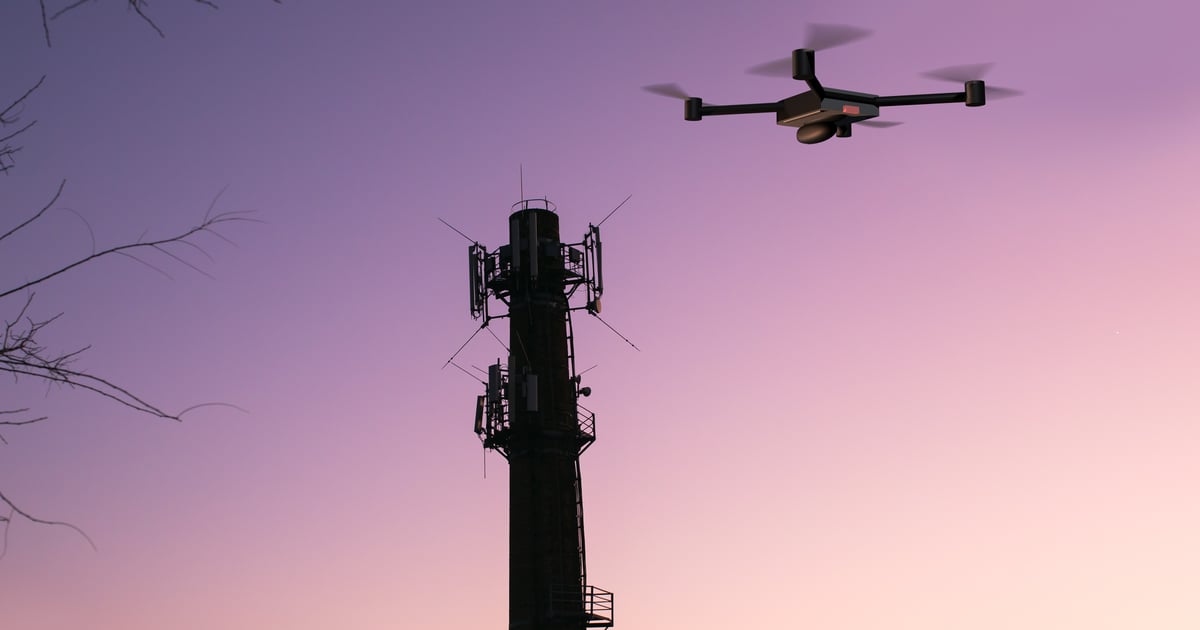
Lockheed Martin plans to offer a 5G drone detection service next year using Verizon's network and tech from Nvidia, ODC, Keysight and subsidiary Astris AI.
US defense contractor Lockheed Martin is preparing to launch a drone detection service for commercial users next year using Verizon's 5G network, after a successful live demonstration last month.
The "airspace awareness-as-a-service" system, called NetSense, brings together technology and AI smarts from Nvidia, Keysight Technologies, startup ODC and Lockheed Martin subsidiary Astris AI, as well as Verizon's 5G network. A NetSense prototype system was unveiled in March.
It will be provided as a subscription that works with customers' security operations. General availability is planned for 2027, with pilot deployments expected in the latter half of this year and early next year.
A demonstration near Miami last month validated the system can identify, track and monitor unmanned aircraft systems (UAS), or drones, without having to change the 5G network. The location was "a critical, high-traffic, urban area important for American protection," and NetSense detected and alerted the team to drones showing up in this environment.
The demo used existing 5G spectrum from Verizon; AI radio access network (AI-RAN) software from ODC; Nvidia's AI Aerial platform and Keysight's radiofrequency (RF) simulation platform.
Lockheed Martin said potential commercial applications for 5G drone detection, and future 6G integration sensing and communication (ISAC) include critical infrastructure, big stadium events, power plants and places like schools, hospitals or airports. Local and federal government agencies are also part of the target market.
"As drones become more affordable and accessible, airspace awareness technology needs to evolve rapidly to outpace potential threats ... By working within the established 5G network spectrum, we're able to collaborate with the commercial technology industry and deploy a solution that's ready at the time of need," said Sarah Hiza, senior vice president, technology and strategic innovation at Lockheed Martin, in a statement.
NetSense is based on Lockheed Martin's warning and tracking systems. It is the latest product to come out of the company's Astris AI subsidiary that was created in December 2024 to build commercial AI solutions from the platforms it uses internally and traditionally for the defense sector.
It currently runs on Verizon's 5G network but can be deployed on any 5G or future 6G network. Lockheed Martin noted its roadmap envisions "broader deployment" across 5G, and 6G in future.
It's also a collaborative effort: ODC's AI-RAN software uses the RF measurements that are already collected from the network. This data is fed into Nvidia's AI Aerial platform, which analyzes RF signal disturbances in real time and sends them to Lockheed Martin's algorithms. Keysight's RF modeling, simulation and test capabilities ensure the system runs as it should.
"By applying AI to the RF signal measurement data already traversing our 5G infrastructure, we can effectively turn our network into an intelligent sensing platform," said Anil Guntupali, senior vice president of technology and product development at Verizon, in a statement.
In other words, the 5G network is "doing airspace sensing as a second job," he wrote on LinkedIn. "For airports, stadiums, utilities, and hospitals, it means UAS awareness that can be deployed on infrastructure that is already on the ground."
Both Verizon and Keysight have worked with Lockheed Martin since late 2021 as part of its 5G.MIL program, which aims to use commercial 5G as one of the technologies for the US military's Joint All-Domain Command and Control (JADC2) project. Nokia Federal Solutions was the latest to join the effort last year and has worked with Verizon in the program.
With NetSense, the defense contractor is blending 5G with its own systems for commercial applications.
For ODC, which launched in 2023, the demonstration is a high-profile instance of its AI-RAN software. ODC Chairman Shaygan Kheradpir said in a statement, the company "enables true ISAC via a standards-compliant commercial architecture – turning everyday mobile network infrastructure into an intelligent, wide-area sensor fabric that detects, tracks and identifies low-altitude threats at the forward edge via applications such as NetSense."
Lockheed Martin's 5G sensing development follows another drone detection demonstration conducted by AT&T and Ericsson last month. Both efforts flagged that while the drone detection capability can be deployed today on 5G, it is also a step on the way to developing ISAC in 6G.
In Europe, Orange Business launched a detection solution early this year called Orange Drone Guardian for companies that need to protect vital infrastructure.
Ildefonso de la Cruz, senior principal analyst at Omdia (a Light Reading sister company), said ISAC is "a great asset" because it "repurposes existing, and planned, cellular infrastructure ... It eliminates the immense financial and logistical hurdles of deploying brand-new, single-purpose counter-drone sensor arrays."