Featured Story
Ericsson moves mmWave radio production from US to Estonia #
Ericsson stops making millimeter wave radios at its 5G smart factory in Lewisville, Texas, and consolidates production at manufacturing site in Estonia.
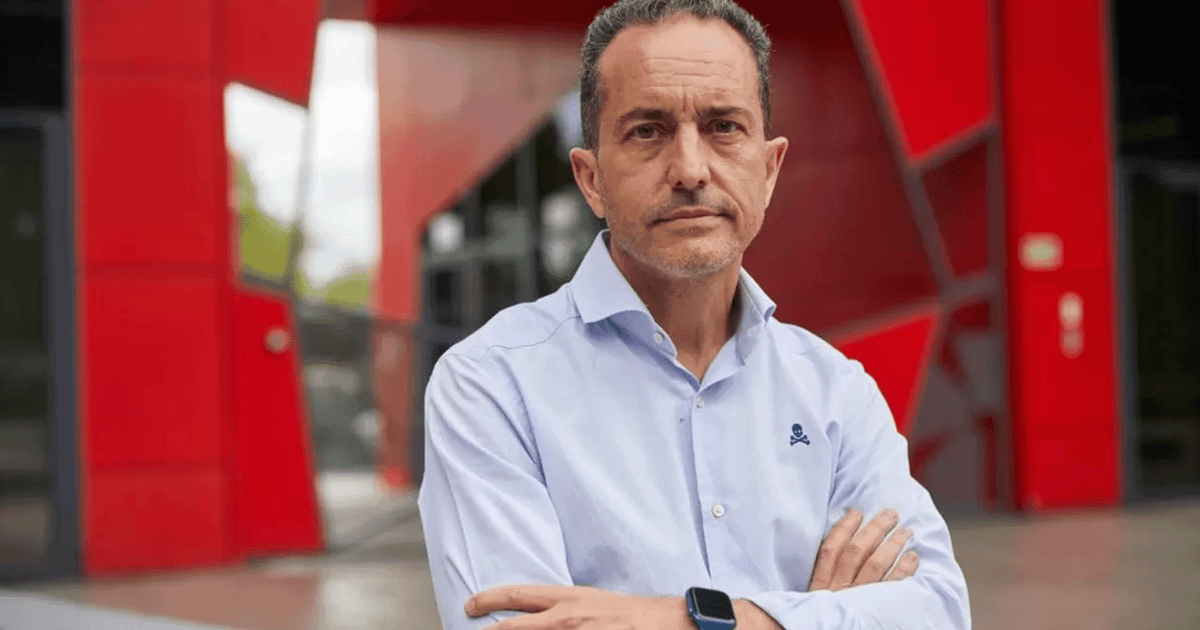
Verizon CTO Yago Tenorio shares initial finding from the carrier's 6G field tests using 7GHz and it's 'not super encouraging' for indoor penetration.
Verizon CTO Yago Tenorio shared an initial verdict on using the 7GHz band for 6G after the carrier's recent field test and said the results were "not super encouraging" for indoor coverage and that future radios will need more power.
Speaking at the Brooklyn AI-Native 6G Summit last week, he said that "7GHz versus 3.5GHz, not surprisingly, has some challenges in penetrating buildings."
Verizon and Ericsson made the first 6G call in the field using pre-commercial equipment running in 7GHz spectrum last month. The test was set up to evaluate signal propagation and indoor penetration of the upper midband frequencies. The carrier built a small house for the user equipment with various wall and window materials to assess in-building signal losses in different scenarios.
The conclusion from the initial test is that 7GHz is not as good as midband spectrum for getting cellular signals inside buildings, as would be expected given the nature of higher frequencies.
"It doesn't mean that we can't sort it out. It means that a lot more work needs to happen on more density in the antenna, higher active element number, higher output power, higher EIRP [effective isotropic radiated power] limits," said Tenorio.
Even with all those advances, he said there are "still probably challenges for [7GHz] to match the C-band footprint." The C-band generally refers to spectrum between 3.7GHz and 4.2GHz.
Verizon's technical assessment from early field trials comes as the US is pushing for 7GHz to be a prime band for 6G. It is one of four spectrum bands the NTIA is studying to free up for future mobile services. Along with 7GHz (7125MHz-7400MHz), the others under consideration are 1.6GHz (1675MHz-1695MHz), 2.7GHz (2700MHz-2900MHz) and 4GHz (4400MHz-4940MHz).
NTIA will publish its report on 7GHz at an event on December 10. This will include details on how much can be cleared for commercial use, when it can be accessed and the cost of relocating existing federal users from the band, according to remarks by NTIA chief administrator Arielle Roth.
"Once that report is released, we hope the FCC will move quickly to launch a rulemaking for a 7 GHz auction so we can bring this important block of mid-band spectrum to market as quickly as possible," she said.
The US is also lobbying for 7GHz at the ITU's World Radiocommunication Conference (WRC) next year. Roth said the band was part of the strategy to make more midband spectrum available for 6G as well as "counter efforts by our adversaries to steer the world towards the 6 GHz band."
Tenorio reiterated worries he discussed at last year's Brooklyn event that despite the US spectrum pipeline, the challenge is getting access to up to 400MHz-wide channels that are being set out in 6G standards. "That's still true," he said.
Assessing the spectrum that's coming online, he said 2.7GHz is "narrow," 4GHz is "uncertain" and 7GHz is "challenged, and none of them provide a clear line of sight to a 400MHz channel."
Bigger channel widths will be important for supporting use cases like integrated sensing and communication (ISAC), he said, noting that this was evident in two separate trials the carrier conducted with Nokia and Qualcomm.
"Your ability to detect and resolve targets is proportional to bandwidth … Beyond capacity alone, if ISAC becomes a use case for 6G, then you really want wide channels because that gives you precision and accuracy in sensing," he said.
Tenorio said the carrier has had a "busy year" for 6G. Along with the 7GHz field test call, the carrier was also granted a temporary license from the FCC to test 6G use cases in 4GHz spectrum in and around its lab in Los Angeles. It also recently expanded its 6G Innovation Forum with nine new members as part of efforts to "flip the script" by identifying use cases first and developing 6G capabilities to match them.
He noted some of those use cases are becoming clear – such as AI wearables, ISAC and the need for "symmetrical uplink" – but said there was more work needed to "shape 6G."
"We have a lot of work in front of us to get us to 2030 – sorting out the spectrum pipeline for wideband, midband spectrum opportunities, coming up with solutions for AI wearables, and making sure that 6G is going to be the generation that fuels these applications," said Tenorio.