Become a member of GB MAX to gain exclusive access to the industry and to the most influential global B2B leadership community in the business of gaming, entertainment, and tech.
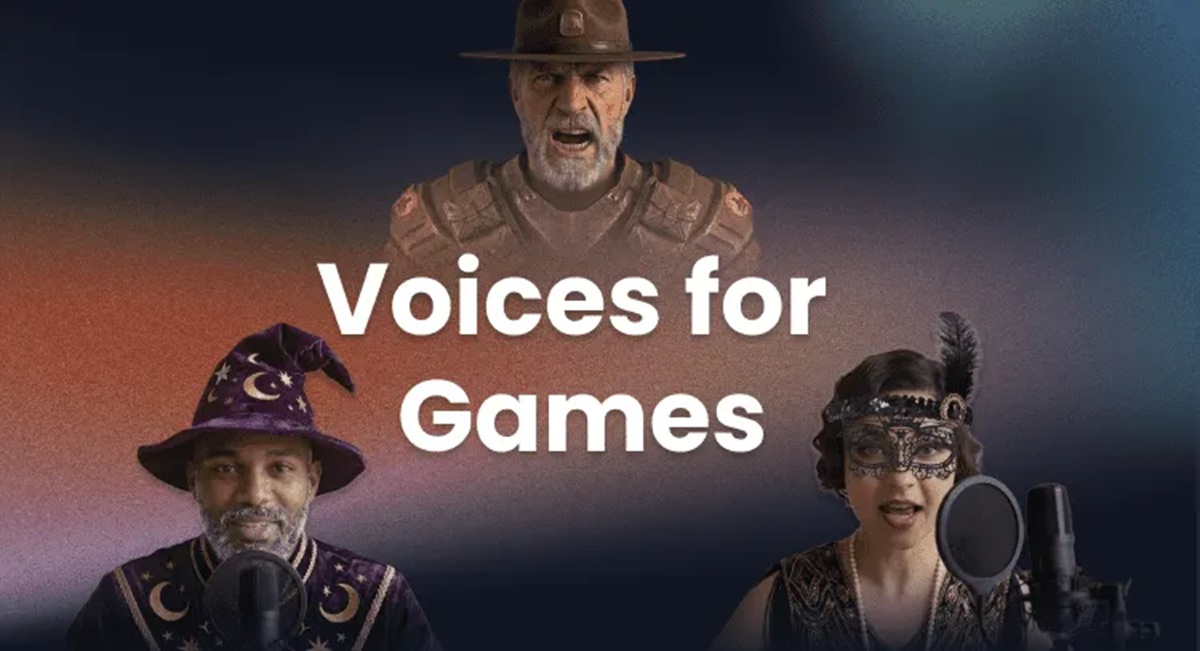
Join nowand also get a VIP ticket to GamesBeat Next (Nov 2-3, SF).Voices for Games is a new way for game voice actors to get paid when their voices are used with an AI-powered development platform.
It’s not about AI replacing voice actors. The Voices character voices are built on real, consenting professional voice actors who are licensed and paid when their voice is used.
Traditionally, Voices is a voiceover platform. Companies like Supercell look for voice actors and voices for their products and things like that. However, Voices for Games is different because it’s an AI voice platform, Dheeraj (DJ) Jalali CTO at Voices, said in an interview with GamesBeat.
In contrast to other existing AI voice platforms, Voice for Games uses a consent-and-licensing model, not a scraped-data or cloned-voice model. That is the distinction that separates it from fully synthetic voice generation, Jalali said.
Voices for Games is not an on-demand generation platform in the mold of Inworld or ElevenLabs, the company said. It is a fully licensed, end-to-end character voice offering
delivered as two purpose-built solutions. The value is performance quality, legal defensibility, and long-term governance, with a real performer underneath every voice.
This approach is more appealing for game developers like Martin Schjøler, sound designer at Supercell. While he doesn’t use Voices for Games yet, he said in an interview with GamesBeat that Supercell has long used Voices for traditional voice talent casting.
Schjøler said the company has always worked with game developers at various levels to provide human voice talent, but now they are launching their specialized character voice platform that lets you create virtually any kind of voice, for any type of character, and generate those voice lines now, rather than waiting for a voice actor to fill a request.
Supercell, which makes Clash of Clans and Brawl Stars (two of the most popular mobile games) uses this technology to create voices for its games. And it uses the platform to make sure that human voice actors get paid when their voices are used.
You can see more of Schjøler’s comments down below.
AI enabling opportunities #
Jalali believes this tech is part of a greater AI revolution.
“The future of interaction with AI is going to be through voice,” Jalali said. “People are going to talk to an agent, and whether it is Alexa in your office, whether it is your phone, or whether you know in future you will have a working robot in your house. You’re going to talk to a machine or you’re going to talk to an agent, and they are going to respond back. The interaction of web in future is going to be through voice, and the brands will differentiate themselves, depending upon what kind of voice represents that brand.”
He said the voice actors should realize the opportunity is big and they shouldn’t miss out on it.
“We are creating an ecosystem where we provide that opportunity to every
voice actor,” he said.
He noted that the Screen Actors Guild (SAG-AFTRA) union in the US reached an agreement with the game companies. In that agreement, the voice actors have more control over their voices, they can get compensation, and they have to deliver their consent for the uses of their voices.
“Whatever we’re going to do, it’s going to follow those three principles,” Jalali said. “We get their consent for it. We have paid the voice actor as per what they are expecting, and then they have control over it as well.”
Two solutions #
Voices for Games has two solutions. One is Branded AI Voice for Characters (for game studios), which is a fully governed, end-to-end character AI voice system for studios. It combines professional talent casting, directed recording sessions, exclusive brand voice licensing, and production support through one accountable partner.
It is built for everything from cinematic leads to non-player characters (NPCs), for union and non-union voice actors. The AI can refashion the actor’s voice for more than 110 languages across 185 countries.
Every voice is professionally performed, exclusively licensed, and engineered to hold up
across sequels, remasters, and live-service updates without legal or continuity headaches.
The second solution is dubbed Licensed Character Voice Datasets (for model builders). It’s a library of professionally performed, fully consented character voice datasets for model builders and voice generators that need range, performance quality, and a clean legal foundation.
It has more than 450 character archetypes and performance styles, from fantasy and military-inspired voices to vintage and comedic personas, spanning more than 800 hours of voice data.
The differentiator is performance range, not just volume: archetypes are directed for
character and emotion, not merely captured for clarity. That direction layer is what
produces expressive, differentiated model output versus generic training data.
Every recording ships with clean, consistent structured metadata (JSON): character type,
tone, emotion, direction notes, and audio length, built to integrate at any stage of a training workflow.
How the Consent & Compensation Model Works #
The company’s focus is on differentiating itself based on a trustworthy practice.
Voice actors opt in. Their voice is licensed, not scraped or cloned without permission. They are paid whenever their voice is used, and kept in the loop for future updates and
iterations.
By contrast, other AI companies have used scrapting or fully synthetic approaches, where the performer is neither in the loop nor compensated.
Voices leads with the notion that the future of voice work isn’t human or AI. It’s human-powered AI, where the technology scales the work and the actors share in it. Voices already has a pool of four million voice actors as its talent base.
In this way, AI keeps voice actors working while removing the production bottleneck of vendor sprawl, rights exposure, and renegotiation mid-production.
Market Context & Supporting Data #
According to a report by Keywords Studios, 94% of studios are already using AI in some capacity. And 79% of decision makers say AI voices should come from real, attributed voice talent, according to Amplified 2026.
Voices positions Voices for Games as closing exactly that gap: professional performance and AI efficiency together under one fully governed offering.
Making AI voice tech that big companies will use #
Jalali said that Supercell uses Voices for its voice acting across games like Boom Beach and more for its existing voice talent. And now it is working with Voices for Games with the AI data set.
“It has this whole concept of branded AI voice for characters, which is basically where a voice actor becomes the voice of the game from their AI voice point of view,” Jalali said. “And there’s also the character voices data set, which is basically a collection of hours of voices that have been recorded in different characters that becomes the basis of the data to train a model on which, then you can develop these AI voices. They both enable each other.”
Voice for Games can be sold as just the data set. If you’re a studio looking to build its own solution, Voices delivers an AI voice solution that is specifically targeted to AI characters, he said.
Once you have a good model, youc can bring the voice actors. They perform like characters and you clone that voice and then that voice becomes the character voice for a specific game, Jalali said.
There are two iterations or two variations through which you can sell this. Voices provides a voice marketplace for all to use in a variety of entertainment. Voices orchestrates the logistics for that. Voices collects about an hour of voice recordings from every actor.
“Our core strength is we can orchestrate the collection of data or curation of data through voice actors at scale,” Jalali said. “Typically a client will come to us, and then we will orchestrate the collection of the data or curation of the data, and then when [somebody will pay for it and put it in a game].”
This involves either training a voice model or cloning a voice. Once the model is created, the game developer can create a script and type the text into Voices platform. Then the text is converted into a voice segment using the chosen actors’ voice.
Jalali said the company has been looking at the latest generative AI tech for the past three years.
“We started to see a lot of demand for it, and that’s how we got into it,” he said. “We have
a pretty exhaustive library of voices, so character data set is one part of it. We have a lot of other libraries like emotional data sets. We have conversational data sets. We have data sets depending upon multiple languages. We have around 50,000 to 70,000 hours of data that we have collected so far.”
He said a variety of calculations enter into the equation for what exactly to pay any given actor, but it’s based on demand.
Performances have a wide range. He said, “When it comes to performance or emotions and things like that, if there’s a script in front of you and really bring that script to life, that’s where you need real voice actors.”
The team has a lot of quality controls in place to determine whether something should be released. If there are revisions needed, the team asks the human actors to redo something, rather than make the AI create something different. The company wants its source material to be clean.
A sound designer’s point of view at Supercell #
Schjøler has been using the Voices platform for years to get actor voices for Supercell games, but he is not yet using the Voices for Games platform, which uses AI to extend the use of actor voices with their consent.
Normally, Supercell’s sound department finds actors with good voices to use in its games to fit its various characters. They send out a script, get some auditions back, and then choose the best talent. The Voices platform assists with that process.
As for the AI version of voices that extends the actors’ voice to new uses, Supercell hasn’t used anything there yet. But when it comes to prototyping with the tool, Schjøler said it is very interesting. He said you can imagine a game designer looking to create voice narration in a game. They might not be sure the cost would work out, but they can use AI voices to get a prototype going. That could help the developers figure out what to use and they could eventually fill the role with a human narrator. In the meantime, they could test voices through tools like Voice for Games.
“At the moment, AI voicing has, for me personally, some limitation when it comes to character acting and depth of character acting,” Schjøler said. “When you compare it to an to an actual actor, you can often clearly hear [deficiencies] where you’re looking for more extreme reactions and deeper emotions.”
He said, “It doesn’t do that too well yet.”
He said that one important point for actors is being part of the process for how their voices are used. He said the actors want to give consent. By getting that consent, the developers can stand on better ethical ground.
How to beat the competion #
I asked Jalali what the competition was like for AI voices in games. He noted that his company does this with the consent of voice actors, and not all others do. he said this transparency sets the company apart.
“That’s very important for brands and big studios, because everyone at trusted brands wants want to do it right,” Jalali said. “They don’t want to just take any data that they don’t have right to. That puts us in a different league, because not many players out there in the market are doing it that way.”
His company also has access to five million voice actors. And the company uses a proprietary system to collect its data. It has its own virtual studio that is build around quality, and that helps it generate better voice data, he said.
The team has about 150 people, including many with years of audio experience. The team is based in London, Ontario in Canada, and it has people spread around the world.
Jalali said the demand for the Voices tech is spread across game studios as well as big tech companies.
Jalali said the team has thought hard about helping the industry because there is so much fear that AI will replace voice actors.
“We see this as an opportunity for voice actors, and that’s what we tell them,” Jalali said. “This opportunity didn’t exist three years ago. Now there’s an opportunity where you could be a brand voice for a major company, where not only would they need you as a voice actor to come in studio and shoot an ad. But you could also take your voice and integrate into their products through AI voice. This did not exist before. This opportunity to represent brand from every angle, whether it’s in product, whether it’s in marketing, whether it’s in big advertisement areas, you can represent all those areas now.”
Jalali said his company is operating in a brand-safe manner, and that’s how the big companies want to operate too in terms of dealing with clean and trusted sources.
He said that consumers and developers want to make sure companies are using AI in the right way, keeping the human in the decision-making loop.
“We can speak to the voiceover industry, at least, and that’s what excites us. Now we know we’re creating a market for them that never existed before, and also driving the industry forward in a way that is sustainable and benefits not from productivity point of view, but also from a participation point of view,” Jalali said. “When humans participate into something, most of the time the outcome is going to be very positive.”
As far as his prediction about the future adoption of AI, he said we’ll all be interacting with AI a lot more than what we are doing right now.
“The adoption of AI is going to be way more. AI maybe used by 5% or 10% of the global population. That’s going to change substantially in next five years as AI continues to become cheaper and cheaper, and it will spread,” he said. “Every device is going to be AI-enabled. Every piece of technology will have AI in it. In the next five years, I think we might be way over 50% and then reach every aspect or every corner of the world.”
The potential AI voice tools of the future #
While he is open to using AI voices in prototyping, Schjøler said he would consider redoing the voices with actual human talent for the final narrative. “If it is done consensually and it actually works, I could see a future where this process will no longer be necessary, even from an ethical standpoint,” he said.
“For the final last quality layer, I would probably re-record or redo. But again, as a tool for proof of concept, I think it could be absolutely amazing,” he said.
He noted it could help indie game developers get up and running with a proof of concept faster. That could help an indie get funding faster.
In general, Supercell is an AI-forward company, where it leaves it up to the teams to decide whether to use it or not. When it comes to AI tools, there’s a lot of activity.
Schjøler said that he is concerned that there is a chance that AI tools will lead to a lot of “vanilla” content, or what others call AI slop. But it’s OK to use this in proof of concept stages when the team is looking at moving fast and not using the content in the final game. In general, actors say various voice snippets and the AI learns the voice and learns how to repeat it so it can be synthesized and used in different ways.
“I think it’s a fascinating time,” said Schjøler at Supercell. “There are old timers such as myself. It feels like where we’re in this pivotal moment where I don’t know what’s going to happen. I’m sure in the future AI will be in all the tools we use.”