Via venturelab.swiss
The grid-scale energy storage company is betting that pairing batteries with data centers will deliver better returns than storage alone.
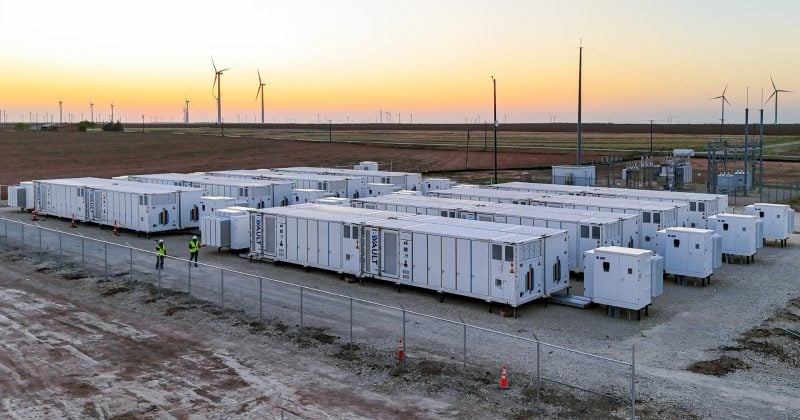
Energy Vault has started construction on an AI infrastructure campus in Snyder, Texas, marking the company’s first real move into the data center business. The NYSE-listed energy storage firm is deploying Crusoe Spark modular data centers at the site, with an initial capacity of up to 25 MW of IT load.
The deal and what it actually involves #
The partnership traces back to a strategic framework agreement signed between Energy Vault (NYSE: NRGV) and Crusoe on February 11, 2026. Crusoe, which specializes in modular AI data centers and managed inference services, will install its Spark data center modules at Energy Vault’s technology center in Snyder.
The campus will be built in phases, with the first construction phase kicking off in May 2026. Energy Vault’s role is essentially that of the landlord and power provider, offering what the company describes as modular “powered shell” infrastructure.
The site already houses Energy Vault’s Cross Trails battery energy storage system (BESS), which has been delivering power and ancillary services to the ERCOT grid. It is Energy Vault’s first fully owned and operated battery storage system. Rather than building power infrastructure from scratch, the company is layering AI computing on top of energy assets it already operates.
Crusoe benefits from faster deployment timelines, since the power infrastructure is already in place. Energy Vault benefits from what it says will be significantly higher revenue and EBITDA per megawatt compared to its traditional battery storage business.
What this means for investors #
The core investment thesis here is straightforward. Energy Vault is arguing that a megawatt deployed for AI computing generates meaningfully more revenue than a megawatt deployed purely for battery storage. If that math holds, the company’s existing portfolio of energy storage sites becomes a pipeline of potential data center locations.
At 25 MW, the campus is more of a proof of concept than a revenue driver. Investors should watch for announcements about expansion phases or similar deployments at other Energy Vault sites as signals that the model is working.
Disclosure: This article was edited by Editorial Team. For more information on how we create and review content, see our