AI Infra Summit 2026 As grid connections are delayed, some operators turn to on-site generation. As racks grow denser, others upgrade electrical systems
Akul Saxena
SANTA CLARA, Calif., Sept. 16, 2026 – Grid delays in Texas pushed one artificial intelligence infrastructure company to generate its own electricity. AI infrastructure firm Crusoe constructed a 300-megawatt gas turbine plant to supplement utility service at its Abilene data center campus.
The plant supplements limited utility power while Crusoe waits for additional grid capacity, Chief Data Center Officer Chris Dolan said Wednesday. The company is serving the first 1.2 gigawatts of the campus through a combination of grid electricity and power generated at the site.
The project illustrates how the timelines for adding computing capacity can outrun those for adding utility infrastructure. Dolan said Crusoe can combine grid electricity with gas generation and other sources depending on what is available. Some projects operate entirely behind the meter, meaning the electricity is generated and consumed at the data center rather than delivered through the utility grid.
Grid access is only part of the problem
Getting electricity to a site is only part of the constraint. Operators are also trying to fit increasingly power-intensive AI equipment into buildings designed for earlier generations of computing.
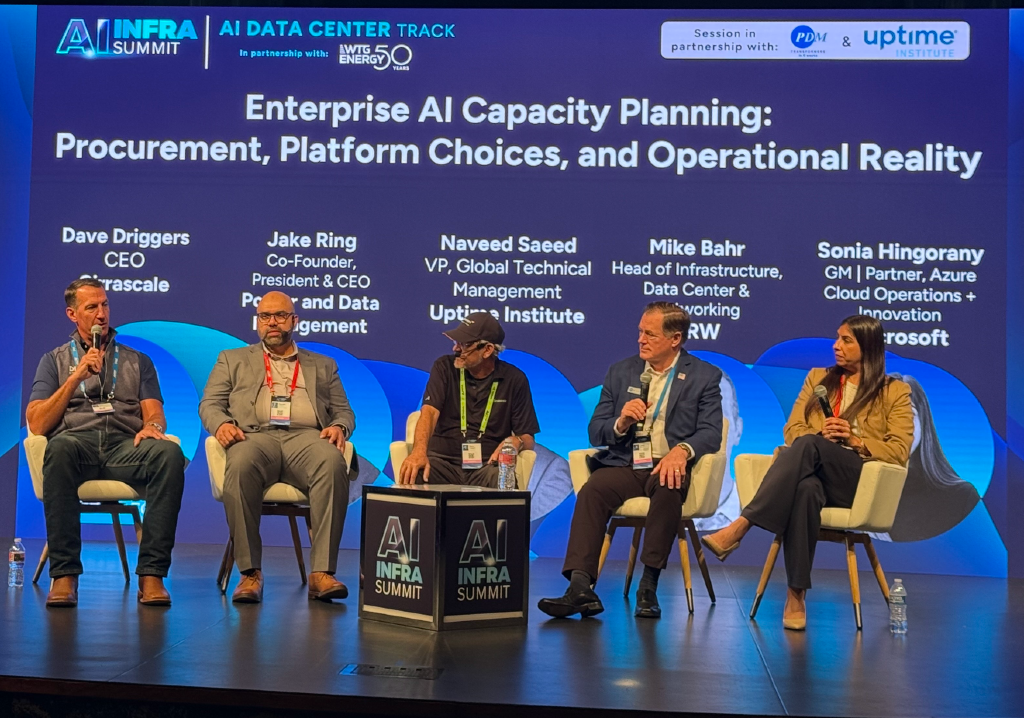
That is increasing interest in upgrading existing facilities before building new ones. Sonia Hingorany, general manager and partner for Azure Cloud Operations and Innovation at technology company Microsoft, said operators should consider retrofits, equipment refreshes and reclaiming existing capacity rather than defaulting to “build, build, build.”
Retrofits modify the building for new equipment, refreshes replace aging hardware, and reclamation frees up power or space that is already there but underused.
Designing for higher-voltage AI
New construction is being planned for the same surge in power density. Mike Bahr, who oversees infrastructure, data centers and networking at Chicago-based trading firm DRW, said operators need to prepare facilities for the much higher voltages and power densities demanded by the next generation of AI hardware. Panelists pointed to 800-volt direct-current systems, an emerging way to carry more power closer to the computing equipment itself, as one option for handling the next generation of AI hardware.
The higher voltage would feed increasingly dense racks, the tall cabinets that hold stacks of servers and networking equipment. For data centers built from scratch, Bahr said operators should consider bringing higher-voltage power closer to the building and designing the internal electrical system around those future loads.
Older facilities present a different tradeoff. Colocation providers rent companies data center space, power and network connections instead of requiring them to build their own facility.
Moving equipment to a newer colocation facility requires rebuilding those connections and running the old and new computing environments in parallel during the transition, Bahr said. That expense can make upgrading an existing building more practical than moving.
The supporting equipment is not shrinking either. Generators, batteries and uninterruptible power supplies, which keep equipment running through short power outages, continue to occupy substantial space even as more computing is packed into each rack, said Jake Ring, co-founder and CEO of Power and Data Management.
The result is a two-sided infrastructure problem: Developers need more electricity from outside the building while finding ways to move and use more of it inside. Crusoe built additional generations, while other operators are trying to stretch existing capacity through retrofits and higher-voltage electrical designs.