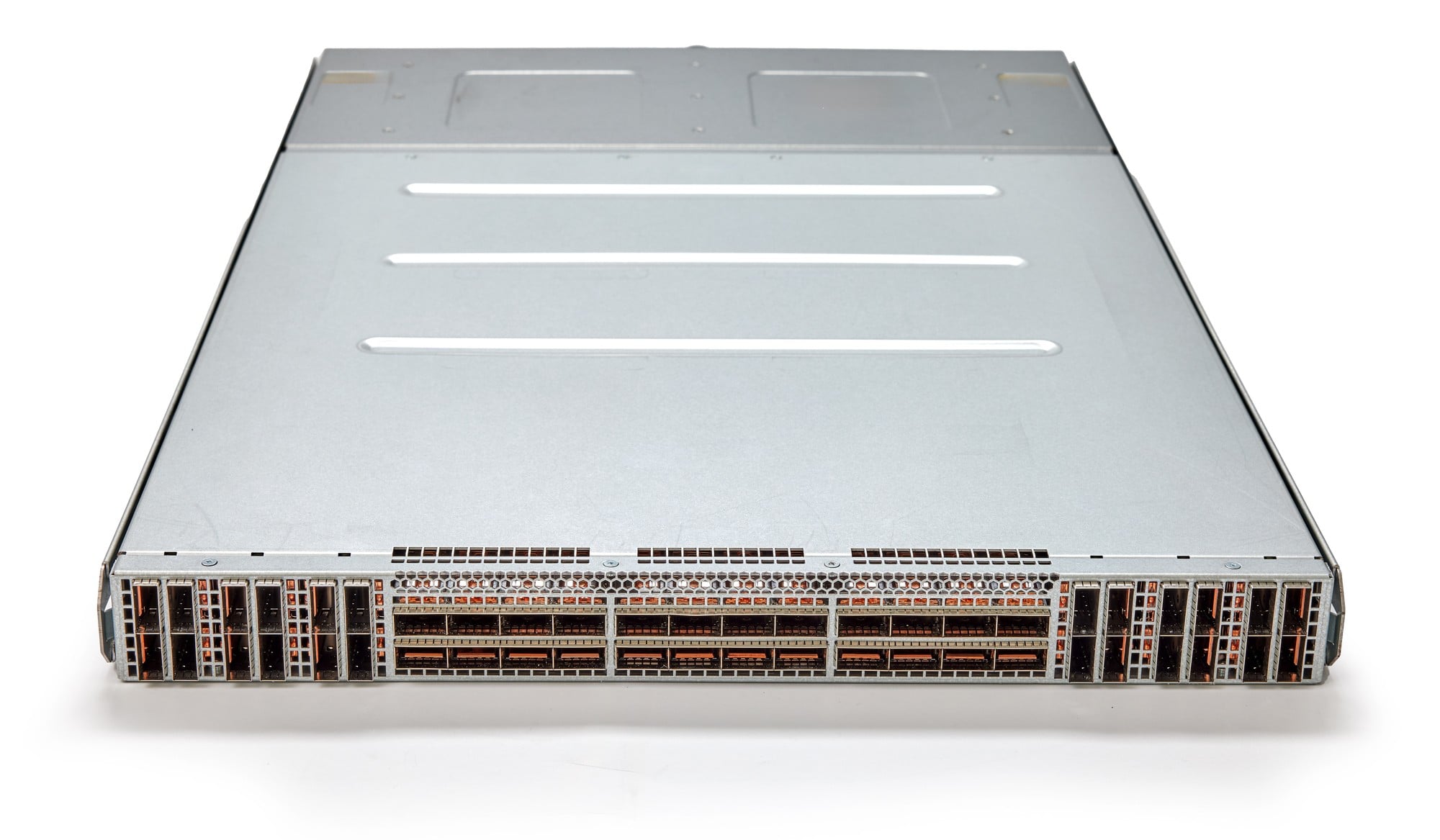
Cornelis and AMD have launched a joint program to design, validate, and deploy HPC and AI-for-science systems that pair AMD EPYC CPUs and Instinct GPUs with Cornelis networking, sold through the OEMs and system integrators customers already use. The announcement is anchored by a production system: GWDG’s new EMMY P4 supercomputer in Göttingen, Germany, runs approximately 300 dual-socket EPYC 9745 nodes on a Cornelis CN5000 Omni-Path fabric. Cornelis also gave timing for the next generation, with OEM systems pairing its CN6000 with EPYC 9006 expected from Q1 2027.
CN5000 Production Deployments and Workload Validation #
Cornelis says CN5000 is qualified and in production on AMD EPYC 9005 Series platforms, validated on more than 25 platform configurations, and deployed at university, research, government, and industrial sites across North America and Europe. Qualification now extends to AMD Instinct MI350X Series GPUs. The program targets workloads where compute and network have to scale together: computational fluid dynamics, climate and weather, life sciences, physics, materials science, and other double-precision codes.
At GWDG, EMMY P4 serves NHR@Göttingen, one of nine centers in Germany’s National High Performance Computing Alliance, and supports thousands of research codes across life sciences, physics, quantum computing, AI, and the digital humanities. It adds capacity to an environment that runs approximately 3.5 million HPC jobs a year. Prof. Dr. Julian Kunkel, deputy head of high-performance computing at GWDG, said the EPYC processors and Cornelis fabric give the center the compute density, low latency, and consistent performance to serve that range of codes.
“Every AMD EPYC generation puts more cores in a node, and every one of those cores needs its own path to the network,” said Lisa Spelman, CEO of Cornelis. “When the network can’t keep up, you pay for compute that sits waiting.”
For each engagement, AMD and Cornelis are combining engineering, field, and partner teams from architecture design and benchmarking through acceptance testing and production. Customers buy through their preferred OEM or integrator and can run their codes at the AMD HPC Center of Excellence in Munich before they commit. The companies plan to publish joint reference designs and application performance data for leading ISV software, and to extend the program to each new EPYC and Instinct generation.
Application Scaling and CN6000 Plans #
Cornelis has published application results for the pairing: on dual EPYC 9755 servers with CN5000, Siemens Simcenter STAR-CCM+ ran 8.99x faster on eight nodes than on one across nine models, a 112% parallel efficiency. Across 132 CONVERGE CFD workloads on Dell PowerEdge R7725 servers with the same processors, CN5000 delivered 20% higher average throughput than NVIDIA NDR InfiniBand at four nodes. Cornelis cites up to 39% higher throughput across the applications it tested. These are Cornelis results, and we did not run or audit them.
CN6000 is the follow-on, an 800G adapter with a PCIe 6.0 x16 host interface that Cornelis is validating with AMD EPYC 9006 Series processors and next-generation Instinct platforms. Cornelis says CN6000 can give every core in a 512-core, dual-socket server a dedicated connection to the network, and it claims 1.6 billion messages per second and 23% lower MPI latency than NVIDIA XDR InfiniBand, figures it describes as internal measurements and projections. A 512-core, two-socket Venice server is the configuration we tested in the Dell PowerEdge R9825.
The codes this program targets run in double precision, and AMD says its Instinct MI430X is designed for up to 288 TFLOPS of native FP64, a peak theoretical figure. OEM systems pairing CN6000 with EPYC 9006 platforms are expected beginning in Q1 2027. Cornelis will show EPYC platforms with its networking at SC26 in Chicago at booth 1419.