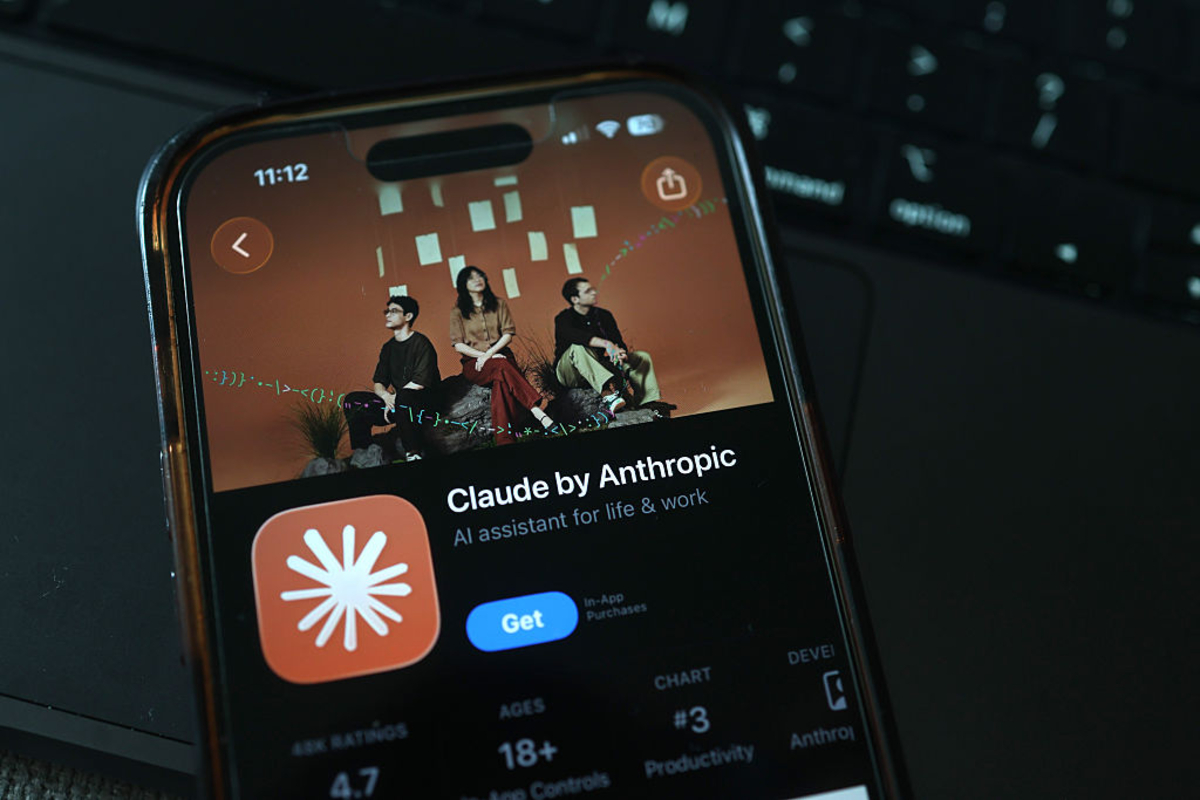
Anthropic will begin adding invisible watermarks to text generated by Claude as part of new EU rules designed to make AI-generated content easier to identify.
But the system will also mark some text originally written by humans if it has subsequently been edited or processed by Claude, potentially complicating efforts to determine whether material was actually created by AI.
The Sillicon Valley AI giant said on Tuesday that Claude models launched in the EU from 2 August will include machine-readable marks from release, while it is working to extend the technology to older models.
Despite being introduced in response to the EU AI Act, Anthropic said the markings will apply worldwide wherever supported Claude models are available, including Claude, Claude Code and its developer platform.
Text generated by the models will carry an embedded watermark that Anthropic said should remain when it is copied and pasted and may survive some editing.
Meanwhile, images and other supported files will instead carry signed information showing that they have been processed by Claude.
Anthropic said it would also make tools available to allow users and third parties to check for its marks, although technical details have yet to be published.
The move comes as AI companies face growing pressure from regulators and publishers to make synthetic content easier to identify amid a sharp increase in machine-generated material online.
City AM previously reported the rise of AI-generated “slop” reaching newsrooms, including opinion pieces and pitches presented as the work of executives and other contributors.
Human writing could also be marked #
Anthropic acknowledged that finding one of its watermarks would not necessarily mean Claude had written the original material.
A person could write an article themselves before asking Claude to proofread, translate or edit it. The resulting copy may still carry Claude’s watermark even where the underlying text and ideas originated with the author.
Article 50 of the EU AI Act says the marking requirement does not apply where an AI system performs “an assistive function for standard editing”, or does not substantially alter the material or its meaning.
Anthropic has signed the EU’s voluntary Code of Practice setting out how companies can comply with the transparency requirements, but its decision to apply marks across supported Claude output could therefore capture material beyond what the legislation strictly requires.
The company has also warned against using the marks as definitive proof of AI authorship.
Heavy editing or paraphrasing can make a watermark undetectable, while short passages may contain too little text to produce a reliable signal. Metadata attached to images and other files can also disappear when files are converted or screenshotted.
Slope detection tech not yet perfect #
Alex Cui, chief technology officer of AI detection company GPTZero, wrote on X that text watermarking generally works by subtly changing the probability of which words a model selects, creating a statistical pattern that can later be identified.
But he said the technology remained imperfect, arguing that watermarks could struggle to survive “intense paraphrasing”and warning that making detection tools publicly available could make it easier for users to work out how to remove them.
“The free paraphrasers I’ve tried have quickly bypassed Google Deepmind’s SynthId for what it’s worth”, he wrote.
A recent study of 1,682 adults published in the journal Judgment and Decision Making found participants rated stories produced by ChatGPT as more absorbing and higher quality than human-written stories.
However, people gave higher ratings to stories they were told had been written by humans. In two further experiments, researchers found no general evidence that participants could reliably distinguish between human and AI-written stories.
Anthropic said its watermark would not visibly change Claude’s output or affect its meaning or readability.
The company conceded that the system would provide a signal rather than conclusive evidence about where a piece of content originated, leaving businesses or publishers to decide how much weight to place on the new marks.