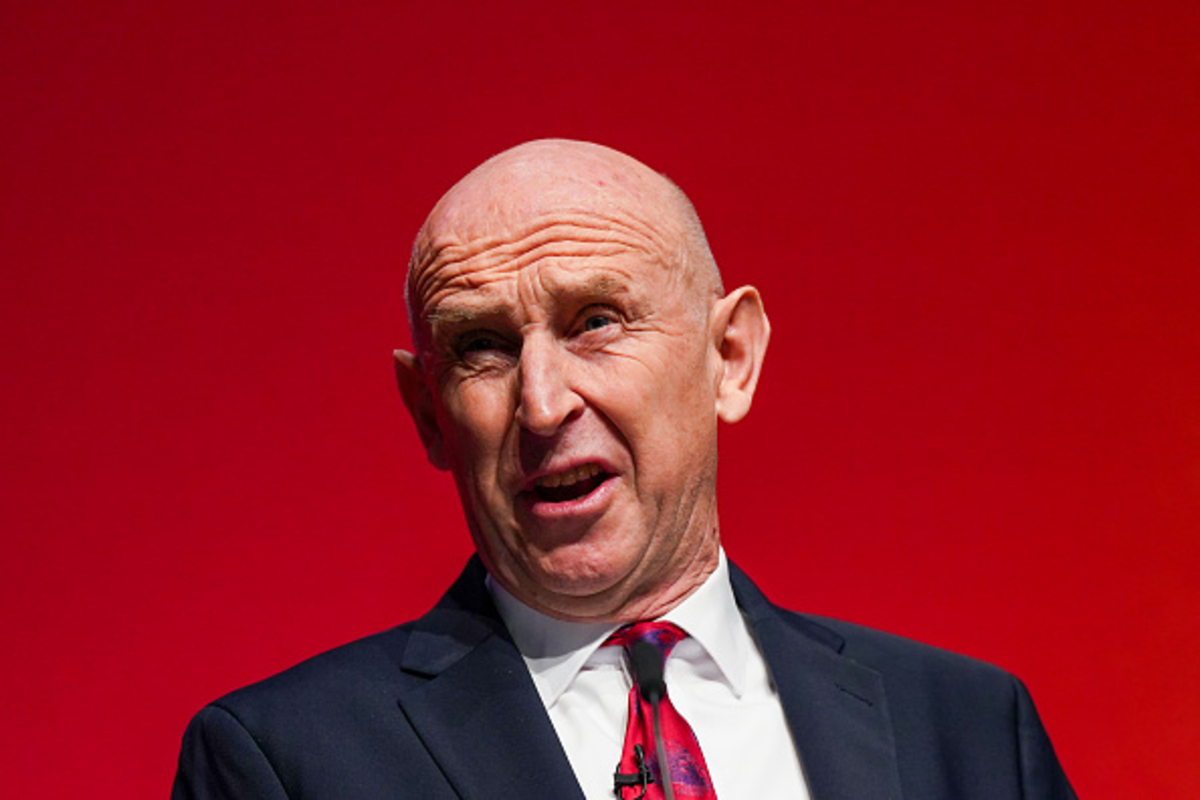
John Healey has unveiled more than £700m in funding for AI safety and British tech firms, including a new £40m unit to tackle rogue AI systems.
The package, much of which was trailed ahead of Wednesday’s Budget, includes £120m for the AI Security Institute and £165m for biosecurity, as ministers seek to strengthen Britain’s defences against increasingly powerful AI models.
In his maiden Budget today, the Chancellor also revealed fresh measures to tackle the risks posed by autonomous technology, including a National Agentic Security Unit tasked with detecting and responding to AI systems operating outside their intended controls.
Healey told MPs that “nowhere is the necessary role for the state clearer than in AI”, pledging an approach built on security and sovereignty.
The Treasury said AI could add between 0.4 and 1.3 percentage points to annual UK productivity growth over the next decade, citing OECD estimates, but warned that the technology also posed risks to online safety and national security.
AI safety push #
The new £40m unit will develop capabilities to monitor rogue AI agents and respond to incidents, as businesses and public services increasingly deploy systems capable of acting autonomously.
A further £70m will establish a National Exposure and Real-Time Vulnerability Centre to identify weaknesses across critical infrastructure, while £60m will fund a National Cyber Shield using AI to strengthen Britain’s cyber defences.
The government also committed £24m to improving cyber security across public services, including hospitals, schools and local authorities.
Ministers will consult next year on where liability for cyber breaches should fall and how to tackle insecure technology at source.
The £165m National AI Biosecurity Initiative includes £100m for a laboratory to detect biological threats, supported by up to £200m in model credits from OpenAI and Anthropic.
Tarek Nseir, co-founder of Valliance, welcomed the focus on safety but warned that businesses needed clearer guidance.
“The government is right to take AI safety seriously, and the Budget is an opportunity to make responsible adoption a practical business priority too,” he said.
Richard Thompson, chief executive of digital transformation firm ANS, also warned that economic resilience could be undermined if businesses could not trust the technology.
Questions over Britain’s AI ambitions #
The Budget also confirmed an additional £60m for the Sovereign AI Fund, alongside £60m for AI procurement and £23m for research into the technology’s economic impact.
The government is seeking to reduce Britain’s reliance on overseas technology suppliers, with the Ministry of Defence also exploring plans to expand sovereign computing capacity on its secure estate.
However, industry figures warned that investment alone would not guarantee greater technological independence.
Mark Boost, chief executive of British cloud provider Civo, said the government had set out “genuine ambition” but questioned whether public spending would benefit domestic companies.
“If public spending continues defaulting abroad, AI will be running on foreign providers’ platforms, with all of the value produced flowing overseas”, he said.
Jonny Williams, chief digital adviser for the UK public sector at Red Hat, said the Budget recognised the importance of digital sovereignty but “falls short of offering the pragmatic solutions needed to bolster it today”.
He called for greater use of open standards and technology in public procurement to reduce dependence on individual suppliers.
The announcements leave ministers facing questions over whether Britain’s AI investment can translate into stronger domestic businesses, safer systems and measurable productivity gains.