When Jack Dorsey and Block unveiled Buzz recently, they did more than launch another AI product. They introduced one of the industry’s most ambitious attempts to rethink where work happens when humans and AI agents become true collaborators. For months, the AI conversation has revolved around increasingly capable models. Buzz shifts the focus toward something far more consequential: the environment those models actually operate in.
Block deserves genuine credit for making that bet publicly and for building it in the open. It imagines a workspace where developers and AI coding agents work side by side, sharing context, identity, workflows, and communication inside a single environment. Whether or not that vision ultimately becomes the dominant model is almost secondary. Its launch signals that the industry is finally moving beyond asking what AI agents can do and beginning to ask where they should do it.
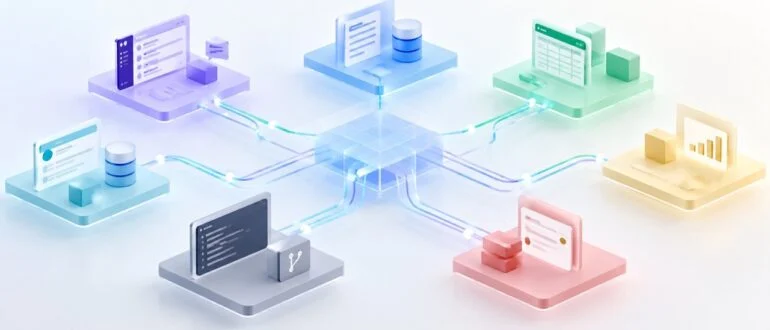
Buzz also raises a much bigger question: what happens when AI work extends beyond a single team or workspace? Software development is only one part of the coming agent economy. Many AI agents inside large enterprises will never write a single line of code. They’ll review contracts, reconcile invoices, investigate security alerts, coordinate supply chains, manage procurement workflows, assist customer support teams, and automate thousands of routine business processes. Unlike coding agents, they won’t all inhabit the same developer workspace, or even the same company. Instead, they’ll operate across an increasingly fragmented technology landscape. Some will run inside Salesforce or ServiceNow. Others will live in Slack, Microsoft Teams, SAP, Workday, GitHub, or internally developed applications. Different departments will adopt different models. Business partners will introduce their own agents. Suppliers, customers, and contractors will all bring AI systems that need to participate in shared work without belonging to the same infrastructure.
A developer workspace works because it owns the context, while enterprise work rarely does. Many meaningful business processes eventually cross applications, cloud providers, business units, organizations, and identities. Once that happens, the problem is no longer simply collaboration inside a workspace but coordination across many of them.
History suggests this is where enterprise technology becomes more complex, not less. Every platform wave arrives with the promise of consolidation, yet enterprises rarely standardize around a single system. CRM didn’t end with one vendor, despite Salesforce’s dominance. Cloud computing didn’t eliminate on-premises infrastructure or produce a single cloud provider. Collaboration didn’t converge on one platform either; many organizations today still run some combination of Microsoft Teams, Slack, Zoom, email, and dozens of specialized applications. Instead of replacing what came before, each new generation tends to layer on top of existing investments.
AI appears to be following the same path. Every month introduces another frontier model, agent framework, orchestration platform, or domain-specific application, and enterprises are adopting them alongside the systems they already rely on. The result is an increasingly heterogeneous ecosystem, which means the defining challenge of enterprise AI won’t simply be building more capable agents, but enabling potentially thousands of independent agents to coordinate work safely and reliably across different tools, clouds, organizations, and trust boundaries.
Consider what happens when an employee asks an AI assistant to complete what sounds like a simple business request. The assistant may need to retrieve customer information from Salesforce, request budget approval through Workday, create engineering tasks in Jira, notify colleagues in Microsoft Teams, and coordinate with a supplier’s procurement system. Each step may involve a different AI agent running on a different platform under different governance policies. None of those systems share the same workspace, yet the work itself has to remain coherent. That’s where entirely new questions emerge. Which agent is acting on whose behalf? Who approved an action? What happens if one agent completes its task but another fails? How is trust maintained when work crosses organizational boundaries?
This is exactly why I believe Buzz’s launch is important beyond software development. It validates something many in the industry have been anticipating — that AI agents need purpose-built environments where humans and machines can work together productively. But it also highlights where the next, and arguably larger, challenge begins. Once workflows span departments, applications, organizations, and AI systems, the challenge shifts from creating better environments for agents to enabling them to coordinate everywhere they operate.
The internet didn’t succeed because every organization adopted the same computer or operating system. It succeeded because open protocols allowed radically different systems to communicate. Enterprise AI is likely headed toward a similar future. Organizations will continue to use different models, software, clouds, and vendors, and the winners in this race will be the ones who allow it all to work together. Buzz asks an important question about where agent-native work should happen. The next decade of enterprise AI will be shaped by an even bigger one: how work moves safely and intelligently between every place it already does.
Arick Goomanovsky is the CEO and co-founder of BAND.