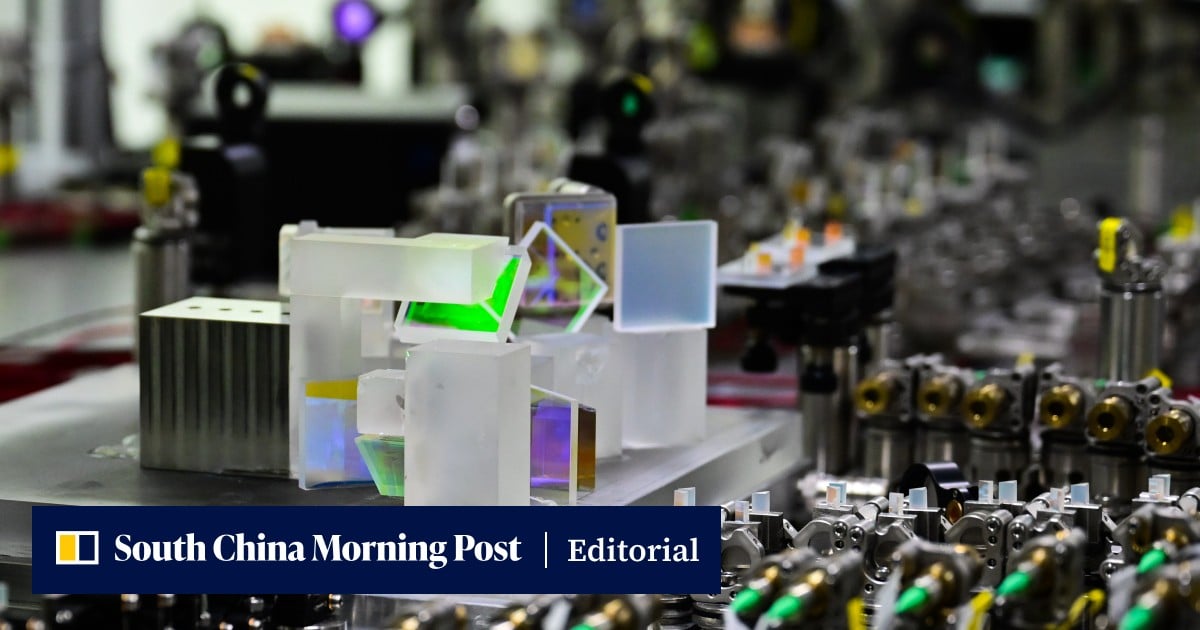
Presence of science and technology experts at the annual Beidaihe meeting of China’s top leadership underlines Beijing’s strategic focus
Beidaihe meetingis often described as mysterious. But the informal, closed-door summer retreat for China’s current and retired leaders usually offers indications of overall policies, future planning, and major domestic and foreign issues of the moment.
The list of those invited to join the top-level gathering in Hebei province also offers clues about Beijing’s policy priorities. Last year, invitees were luminaries in the nation’s cutting-edge research in science, technology and innovative entrepreneurship, working in diverse fields such as quantum physics, biology, artificial intelligence (AI), materials science and medical research, and hi-tech industries.
Cai Qi, secretary of the Communist Party’s secretariat who ranks fifth in the party leadership, extended his “sincere greetings” to leading invited academics and scientists. Though a formal guest list was not published, invitees were known to be working at the frontiers of basic research, strategic and cutting-edge tech industries, core technologies in key fields, and academics in philosophy and the social sciences.
You don’t need to be a seasoned sinologist to grasp what Beijing is focusing on. This comes as Premier Li Qiang signed a decree for revised intellectual property protections, with rules specifically targeting computer chip design security while Beijing aims to boost technological self-reliance.
China has entered a critical new phase, moving beyond simple export barriers to a contest of fundamental research investment with the United States.
Nominal figures might suggest American dominance: the US spent US$993 billion on research and development in 2024 compared to China’s 3.93 trillion yuan (US$551 billion) in 2025. But adjusted for purchasing power parity, China reached parity with the US in 2024, spending about US$1.03 trillion against the US’ US$1.01 trillion. The playing field is levelling rapidly.
China’s current five-year plan has set an annual target for R&D spending to grow by at least 7 per cent by 2023. Last year, about 7.1 per cent of China’s total R&D spending was on basic research.