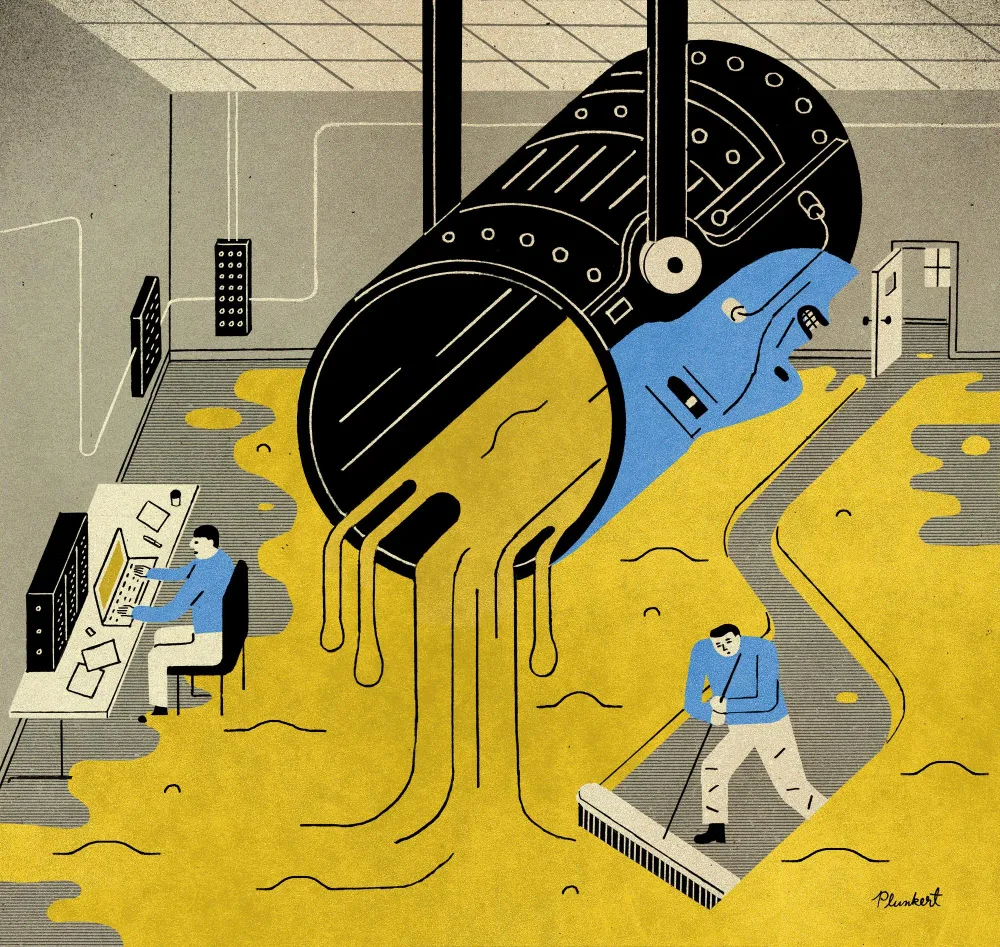
A recent survey of over 1,100 developers by Sonar reveals that AI is now contributing roughly 42% of the code being added to shared repositories. Despite this volume, 96% of those same developers don't fully trust the output to work correctly without human intervention. This isn't just a "trust" issue; it's a technical one. 38% of devs report that reviewing AI code actually takes more effort than reviewing a peer's work because you have to hunt for those subtle, "hallucinated" logic errors that a human wouldn't typically make.
The real-world impact of agentic coding #
The scale of this problem is becoming obvious at companies leaning heavily into LLM agents. Synthesia, an AI video platform, saw a 120% year-over-year increase in pull requests after their 118 engineers started using tools like Claude Code. The scary part? 95% of those requests contained AI-generated code.
One specific failure point is context blindness. AI agents often fail to recognize existing utility functions within a large codebase, leading to massive duplication. In some cases, Synthesia found up to 10 different versions of the same function written by AI because the agent didn't "know" the code already existed. This forces engineers into a tedious cycle of manual deduplication and retraining the agent to recognize the existing architectural patterns.
Shifting the AI workflow from scratch #
To combat this, the AI workflow is shifting. Instead of "generate then fix," teams are moving toward a "plan then generate" model. This is essentially a form of prompt engineering at the architectural level. For example, at Amazon Stores, teams are using AI to modernize 17-year-old legacy code for their mobile app, but the engineers are spending significantly more time defining the exact requirements and architectural constraints before the AI writes a single line.
There's also a growing market for specialized AI agents that act as a first-pass filter. Startups like CodeRabbit are trying to bridge this gap, claiming to handle over 2 million reviews weekly for clients like Nvidia and BMW. The goal is to use a secondary AI to catch the "slop" before a human ever sees the PR.
The junior developer dilemma #
There is a looming crisis regarding the "learning curve" for entry-level engineers. If a junior developer spends their first two years mainly reviewing AI-generated blocks rather than struggling through the implementation from scratch, they might never develop the intuition needed to spot the very errors they are tasked with reviewing. We are moving toward a world where the primary skill for a software engineer isn't writing code, but performing a deep dive into AI-generated logic to ensure it doesn't crash the system.
For those building their own AI workflow, the takeaway is clear: the bottleneck has moved. If you're deploying agents to handle your codebase, you need a rigorous verification layer, or you'll just be accumulating technical debt at 10x speed. Next Apple is finally entering the foldable market with a $2 →