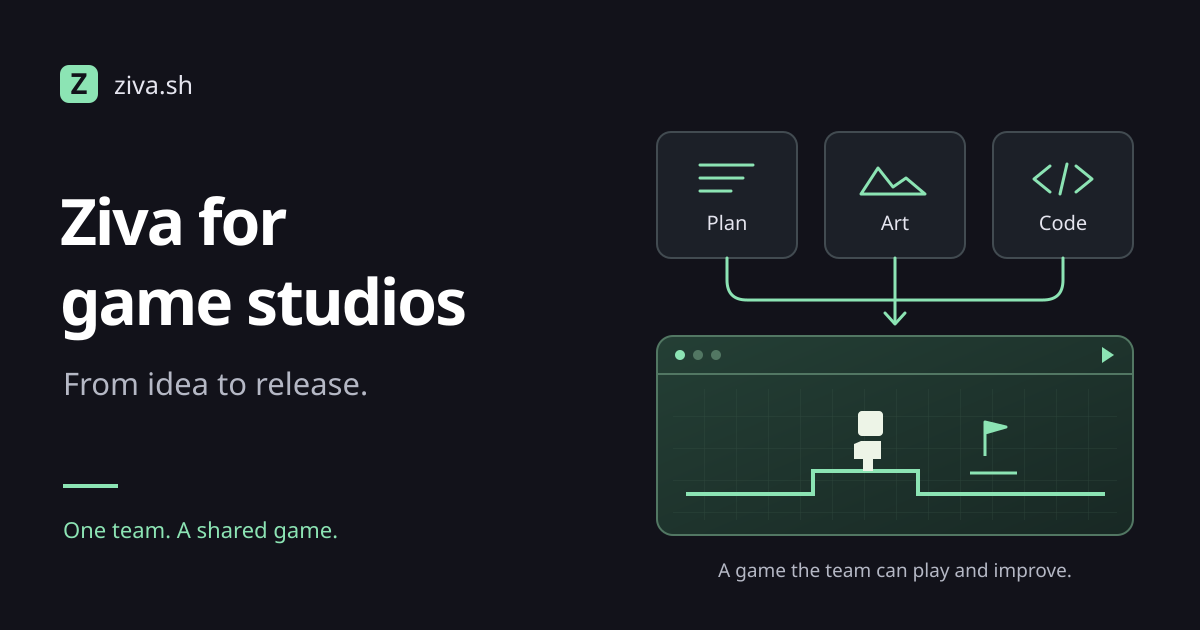
A game studio brings together the people needed to make and release a game. Artists create its look, designers and planners shape the experience, developers make it work, and marketers help it find players.
Ziva helps these people work on the game together, with AI that understands the project they’re building.
Decide what to build #
Before a team spends weeks on a new feature, it needs to know what that feature adds to the game.
Ziva’s planning agent can read the project’s code and help designers work through those decisions. It can suggest how to teach players a new skill, give them a reason to return, or reduce the work needed to try an idea. Planners can weigh those suggestions against the studio’s budget and goals. The team decides which suggestions to use.
Get the idea working in the game #
An artist might create a character’s jump animation, then wait for a developer to connect it to the game. The result can work perfectly in code and still feel different from what the artist imagined.
With Ziva, the artist can connect that animation and adjust its timing directly in the game engine: the software used to assemble and run the game. They can see how it feels, change it, and show the team a playable result.
Ziva’s 2D and 3D generation also helps fill in missing assets. Artists can guide image generation with their existing artwork, adding a small prop or finishing detail that follows the game’s visual style.
Developers get that same access to the engine. A working game needs its scenes, animations, settings, and code to agree. Ziva connects AI tools such as Claude and ChatGPT to the editor so they can change the project and inspect the result.
It also checks the work. In Godot, Ziva can flag properties that don’t exist, run code tests, and use an AI playtester to play through a feature. That gives developers evidence of what works and what still needs fixing.
Prepare for launch #
Ziva’s publishing program helps studios get their games ready for players. That can include builds for different platforms, playtesting, and localization, alongside support for marketers with social advertising and press outreach. Ziva users get preferential rates through its publishing partners.
Talk to Ziva about your studio. Godot is available today, Unity is in beta for studios, and Unreal Engine support is arranged with each team.