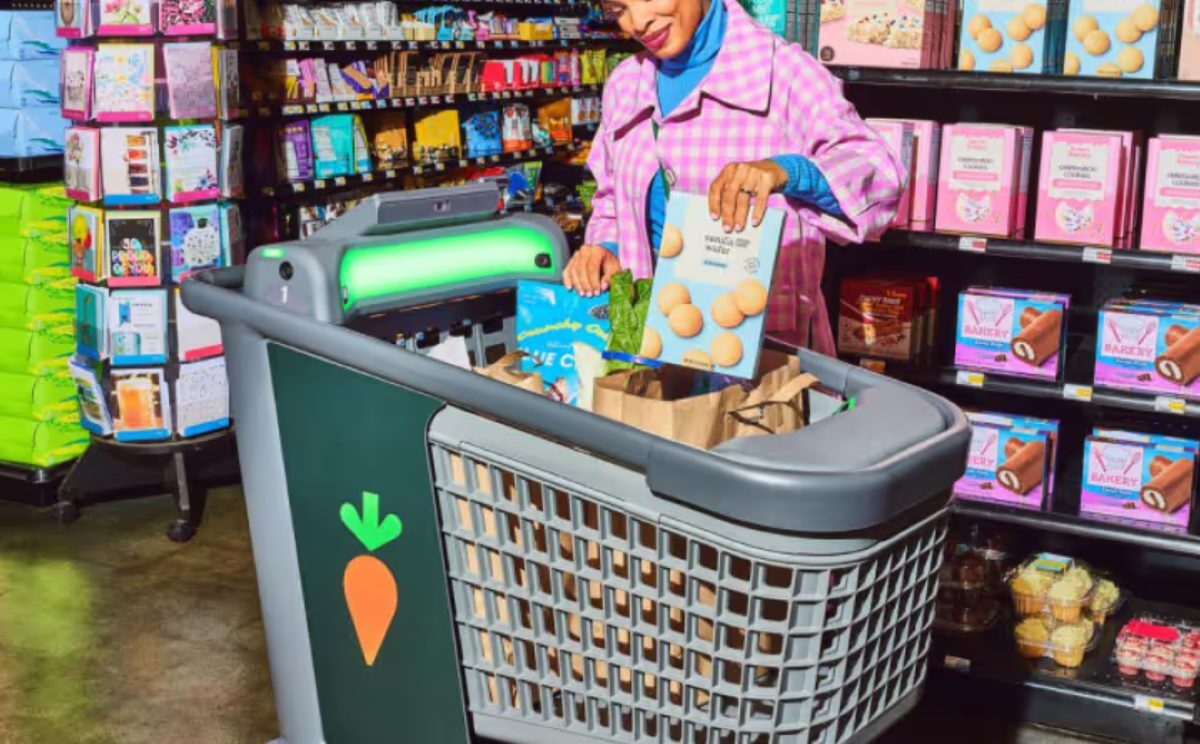
You’re halfway through the cereal aisle when the screen on your shopping cart suggests Dreyer’s ice cream. Not because there’s a sale sign overhead. Because the cart’s cameras just watched you drop ice cream cones into the basket, and a brand paid for that moment — the kind of covert targeting that a surveillance app in another context would envy.
A Rolling Surveillance Rig Disguised as Convenience #
Instacart’s Caper Carts pack cameras, scales, and location tracking into grocery store hardware now live in over 100 U.S. cities across 15 states.
Caper Carts have spread across more than a dozen retail banners, including Kroger, ShopRite, Fairway Market, and now Weis Markets in Pennsylvania. Each cart carries basket-facing and outward-facing cameras, certified weight scales, location-tracking systems, and a touchscreen. Edge computing on the cart feeds Instacart’s cloud AI, trained on more than 1.6 billion historical grocery orders — what the company calls its “Physical AI” strategy for brick-and-mortar retail.
The convenience pitch is genuine. You get:
- a live running total including taxes and discounts
- automatic coupon application
- loyalty rewards integration
- the option to check out directly from the cart and skip the line entirely
The data collection, though, is just as real. The cart logs:
-
every item placed or removed from your basket
-
your precise location throughout the store
-
past loyalty-linked purchases via “Buy It Again” prompts
-
your real-time responses to location-based deal nudges It then merges all of it with your online Instacart order history. Instacart says Caper Carts “bring a real-time understanding of customers, shelves, and store activity,” per the company’s press materials. For shoppers already concerned about paying too much without realizing it, the hidden costs of this data exchange deserve equal attention.
The Ad Network on Four Wheels #
Brands like General Mills and Del Monte now buy personalized ad placements triggered by what you’re putting in your cart right now.
In January 2024, Instacart began selling on-cart advertising, piloted at Bristol Farms in Southern California with General Mills, Del Monte Foods, and Dreyer’s Grand Ice Cream. Two formats run:
- generic brand and seasonal promotions at the start of your trip
- personalized ads triggered by real-time basket contents
Think of your Instagram feed’s algorithmic upsell logic — except bolted to a shopping cart. Location-aware prompts have already lifted average basket size by nearly one percentage point, per Instacart. Retailers collect a share of that ad revenue, making the cart a retail media screen on wheels.
What Instacart hasn’t publicly detailed matters just as much. Camera footage retention policies, whether biometric or facial recognition data gets created, and meaningful opt-out options for personalized tracking while still using core cart features all remain undisclosed. No independent accuracy audits appear in available sources. Amazon’s “Just Walk Out” stores quietly relied on human reviewers labeling footage — the gap between “AI-powered” and “fully automated” deserves the same scrutiny here. Apps secretly tracking users have already demonstrated how opaque these systems can be.
The question isn’t whether this technology works. It’s whether you’ll accept in-store behavioral targeting the same way you accepted it online: gradually, then all at once — a pattern well documented across broader tech scandals that have exploited millions of consumers.