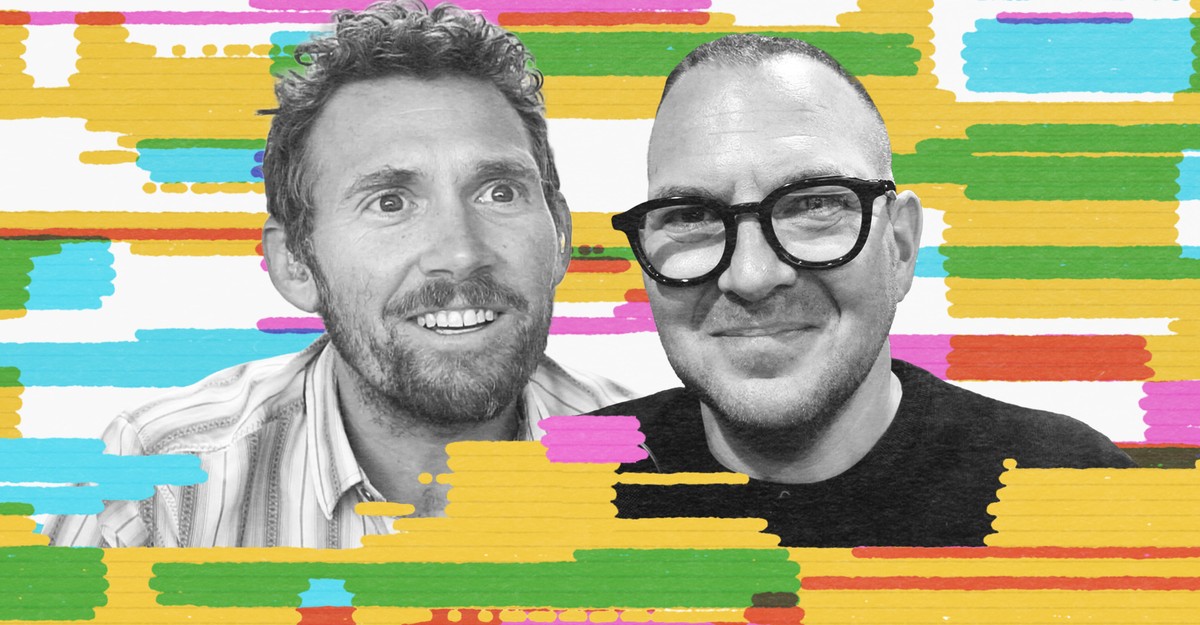
Cory Doctorow appears on The Atlantic's podcast to argue against AI hype, drawing on his new book 'The Reverse Centaur's Guide to Life After AI.' Doctorow contends that AI companies have lured investors through overhyped claims and accounting gimmicks, predicting the resulting bubble will burst with economic fallout rivaling the pandemic recession. He frames the core issue as the difference between centaurs - people assisted by machines - and reverse centaurs - workers forced to serve machine-paced workflows. Those who find AI valuable, he argues, are those who chose to adopt it; those who find it useless had it imposed on them. Despite the grim forecast, Doctorow sees a post-bubble future shaped by cheap, open-source models running locally for practical tasks like transcription.
Background
Cory Doctorow, the EFF Special Advisor, sci-fi author, and tech critic behind the concept of "enshittification," appears on The Atlantic's podcast to discuss AI hype ahead of the June 2026 release of his book "The Reverse Centaur's Guide to Life After AI: How to Think About Artificial Intelligence Before It's Too Late" (MCD, $18).
The Centaur vs. Reverse Centaur Distinction
Doctorow's central argument hinges on a distinction from automation theory. A centaur is a person assisted by a machine - someone who chooses to use a tool and benefits from it. A reverse centaur is a worker forced to serve a machine's pace, like a warehouse picker racing an algorithmic routing system. He argues this split explains the AI usefulness debate: people who find AI valuable are those with agency over how and when they use it; those who find it useless or harmful had it imposed on them by employers or platforms.
The Bubble Argument
Doctorow asserts that AI companies have lured investors by overhyping capabilities and inflating revenues through accounting gimmicks. He predicts the bubble will pop with economic fallout comparable to the pandemic recession. In prior writing, he has argued explicitly that a large share of US stock market capitalization is tied up in AI-heavy companies with no clear path to profitability, and that the eventual correction will harm hundreds of millions of people. He has written: "AI cannot do your job, but an AI salesman can 100 percent convince your boss to fire you and replace you with an AI that can't do your job."
Post-Bubble Outlook
Despite the grim forecast, Doctorow is not simply anti-technology. He uses AI tools himself and believes a useful "AI residue" will survive the collapse - particularly cheap, open-source models capable of running on personal hardware for tasks like transcription and image processing. The book frames a path toward a life "after" AI in which tools serve workers rather than the reverse.
Editorial Note
This is an opinion and analysis piece; claims about bubble timing and economic magnitude are Doctorow's argued positions, not independently benchmarked forecasts. His broader critique of investor hype and workforce displacement has been consistent across years of public writing and is well-documented, even where specific predictions remain contested.
Scoring Rationale #
A well-argued opinion podcast tied to a new book from a credible, widely-cited tech critic; Doctorow's AI bubble thesis has meaningful influence on public discourse and policy framing. Capped in the 4.x range as an opinion/analysis piece with no new technical finding or data release.
Practice interview problems based on real data
1,500+ SQL & Python problems across 15 industry datasets — the exact type of data you work with.