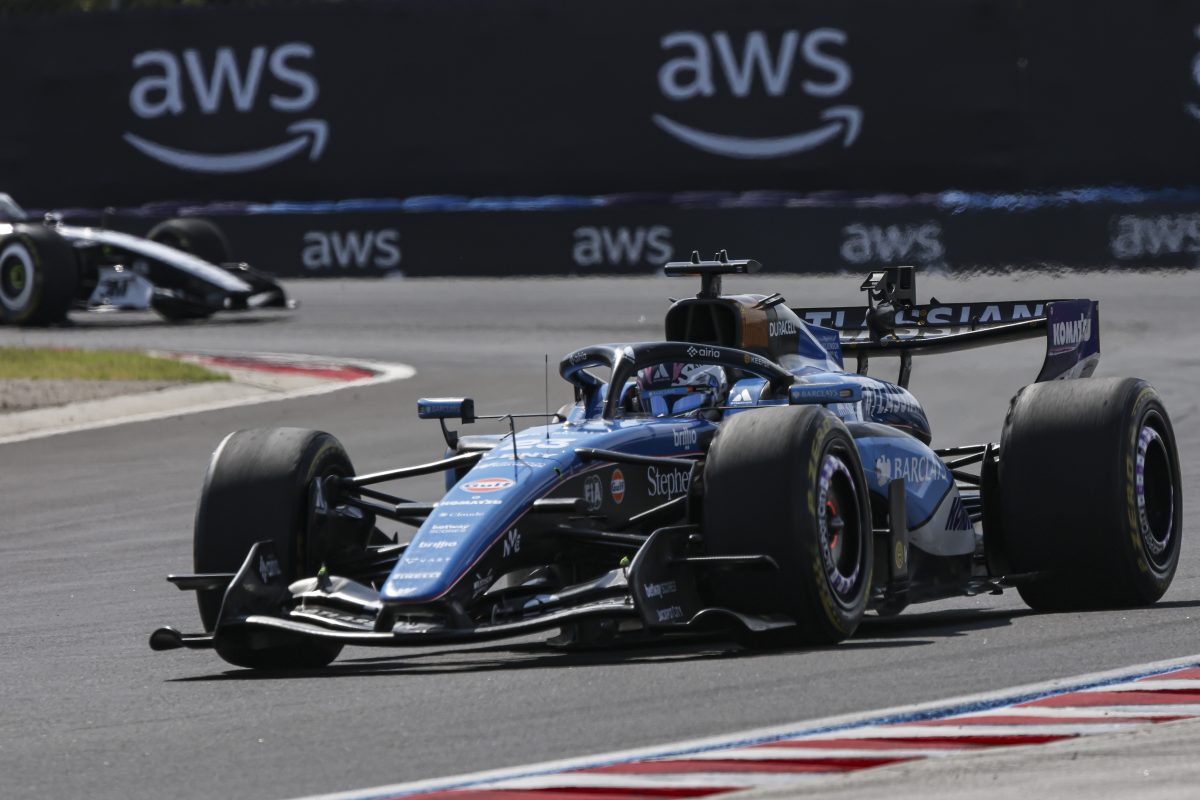
British racing team Williams is turning to AI to free up engineering time as Formula One’s (F1) cost cap makes squeezing more from existing resources more valuable.
The nine-time constructors’ champion has rolled out software from title partner Atlassian across its 1,200-strong operation as part of a wider overhaul under team principal James Vowles, as it attempts to return to the front of the grid.
An initial programme covering 200 employees cut 863 hours of “low-value” meetings in a month and increased work throughput by 83 per cent between October and March, according to Atlassian’s own analysis.
Matt Harman, Williams’ director of engineering, told *City AM *the team’s biggest constraint was increasingly time, not spending.
“We don’t believe we’re at a budget loss to those teams,” he said. “Our constraint is time, which is why any efficiencies we can put into the system, we’ll grab them with both hands.”
Formula One’s cost cap, introduced in 2021, limits much of teams’ spending on designing and developing their cars, restricting the richest outfits from simply adding more resources.
For Williams, which finished fifth in last year’s constructors’ championship after years towards the back of the grid, that has put greater emphasis on making its existing engineering operation more efficient. Harman said his use of Atlassian’s Rovo AI saved him around four hours a week by pulling together project information that previously required meetings and manual work. But he said the team didn’t trust the technology to make engineering decisions.
“We should never replace our inquisitive nature as engineers with AI,” Harman said. “We must always be critical of what we’re presented with.” Instead, he said he wants AI to assemble the relevant information and suggest a conclusion, leaving engineers to interrogate it and make the final call.
Fixing factory faults #
The more immediate problem Williams is trying to solve is getting information around a large engineering organisation quickly enough.
The team, which consists of Carlos Sainz and Alex Albon, is currently tracking in ninth position in the 2026 constructors’ championship.
During practice at the Hungarian Grand Prix, the team suffered a system failure which prevented it from collecting data from an important test. The F1 British team later discovered the same fault had occurred at its factory two weeks earlier but had not reached the relevant trackside staff.
“Because we weren’t joined up as an issue management system, that issue hadn’t been surfaced, so nobody knew about it,” Harman said.
Williams has since brought more of its factory and trackside fault reporting into Jira Service Management. Rovo can flag potentially duplicated problems and retrieve previous incidents, including how they were resolved.
Andrew Boyagi, Atlassian’s customer technology officer, said Williams previously had different systems for reporting faults at the circuit and factory, creating delays and duplication between teams. That has become a broader focus for enterprise AI as companies struggle to translate widespread adoption into measurable returns.
Atlassian’s own research found 85 per cent of its workers were using AI, but just 29 per cent had embedded it into their day-to-day workflows. Only six per cent of executives surveyed could point to clear examples of AI delivering a return on investment.
“AI helps you generate more, but if it still has to go through those same bottlenecks, it makes the bottleneck worse,” Boyagi told City AM.
Productivity boost #
Despite the time savings, Harman said Williams is not currently looking to AI as a way to reduce headcount. “We don’t see it as a headcount challenge,” he said.
Instead, the team said it has more engineering projects than capacity to pursue.
Atlassian said 62 per cent of the 200 Williams staff it studied reported having more time for strategy and innovation after the changes. The figures are Atlassian’s own assessment of a relationship from which it also benefits commercially.
The Australian software group became Williams’ title partner last year, giving it prominent branding across the team as Formula One has become an increasingly valuable marketing platform for tech companies.
Chief executive Mike Cannon-Brookes acknowledged the commercial appeal, telling City AM that putting Atlassian on a “global stage” was “one half of the score”.
Williams is also working with Anthropic after the Claude maker became its official thinking partner earlier this year, with the AI model set to be used across areas including car development and operations.