Just as geopolitical influence in the 20th century often rested on energy markets, so may the 21st century be dominated by infrastructure
race for artificial intelligence, they usually focus on software. Headlines revolve around ChatGPT, Gemini, DeepSeek or the latest breakthrough model.
Governments announce AI strategies and investors pour billions into start-ups promising to transform everything from medicine to education. Nonetheless, the most consequential battle in the AI age may not be over algorithms at all. It may be over the machines.
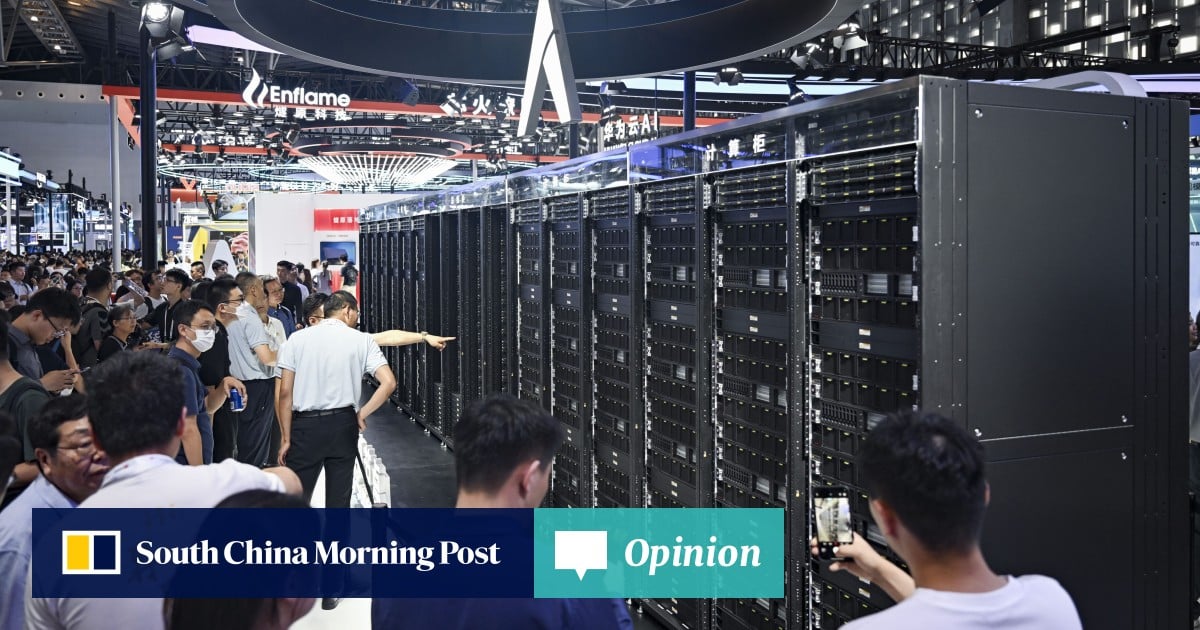
Behind every chatbot response and AI-generated image lies a vast physical infrastructure of semiconductor factories, data centres, cloud networks, transmission lines and power plants. These are the factories of the 21st century. Increasingly, the divide may be between countries that own the infrastructure behind AI and those that only access the applications built on top of it.
History offers a familiar lesson. During the Industrial Revolution, economic power flowed to countries that controlled manufacturing capacity. In the 20th century, geopolitical influence often rested on oil, pipelines and energy markets. Today, computing power is emerging as the new strategic asset.
The United States currently hosts more than 4,200 data centres, accounting for nearly half of global capacity. Germany, Europe’s second-largest hub, has slightly over 500. China has fewer than 500, while India, despite being the world’s most populous country, has nearly 300. This gap matters because AI runs on infrastructure. Training and deploying advanced AI models require enormous processing power. Countries with stronger computing ecosystems are better positioned to attract investment, host digital industries and capture more value from the AI economy.
The US’ advantage extends beyond numbers. Microsoft, Amazon, Google and Meta operate some of the world’s largest cloud networks and collectively spend tens of billions of dollars each year expanding AI infrastructure. In the last financial year, Microsoft said it was investing around US$80 billion in AI data centres.