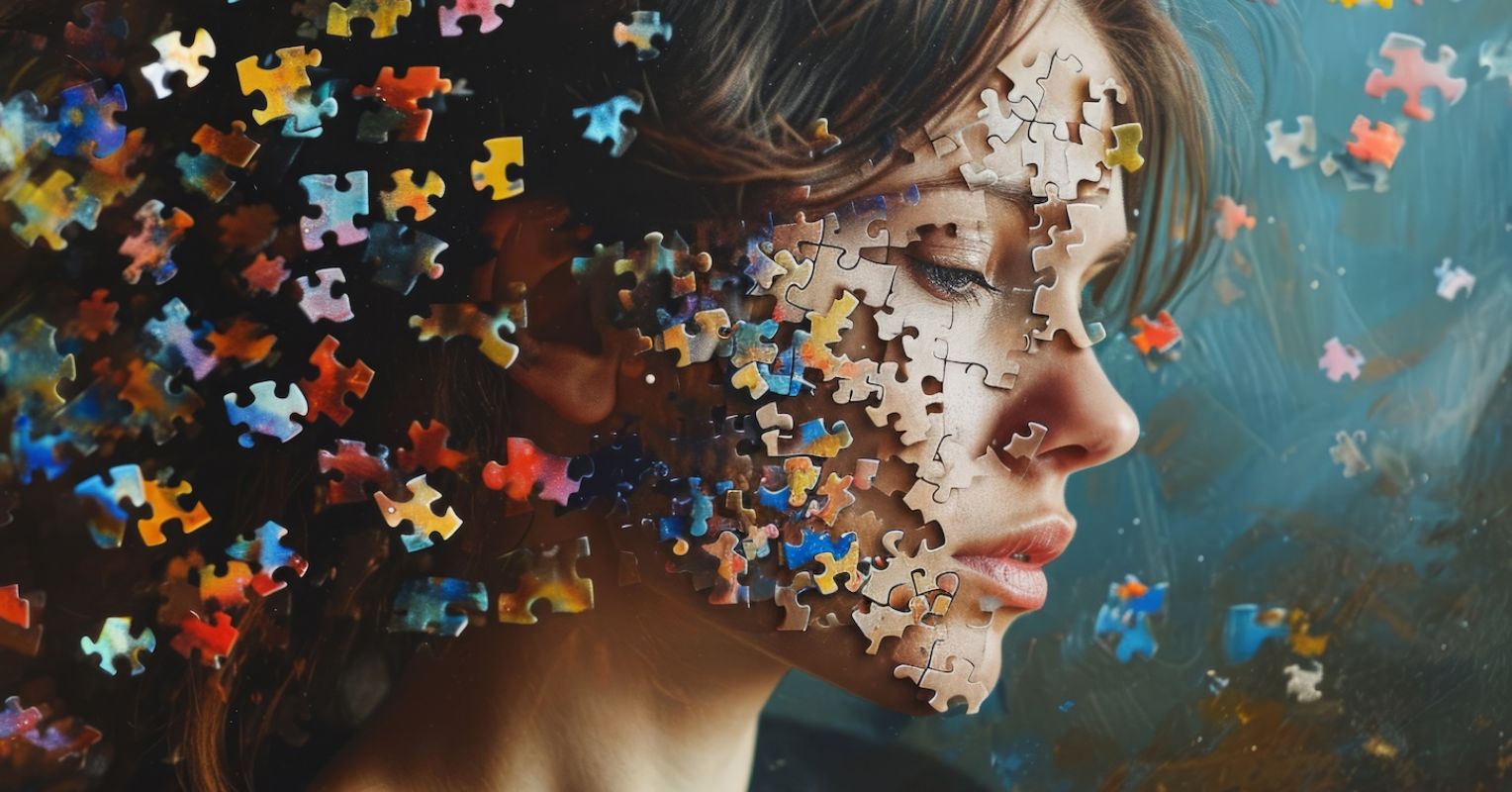
Machines may learn facts. They can't learn to be you. #
Posted July 9, 2026 [ Reviewed by Michelle Quirk
](https://www.psychologytoday.com/us/docs/editorial-process)
Key points
- AI is making stored, retrievable knowledge cheap—and that quietly threatens how we see ourselves.
- Two kinds of knowing resist the machine: judgment read from a live moment and skill that lives in the doing.
- Our worth was never the stored facts; it lives in what practice and experience have made of us.
There’s a particular fear in the air right now. And more and more of us are beginning to watch it coming true.
Ask Timothy McKeon. McKeon spent years translating Irish for the European Union. It was good, steady work, but then artificial intelligence (AI) learned to produce translations that were serviceable enough for the EU’s purposes, and about 70 percent of his income was suddenly gone.
“The more it learns,” he said, “the more obsolete you become. You’re essentially expected to dig your own professional grave.”
That’s the surface fear—that AI is coming for our jobs and our livelihoods. Many of us have felt this ourselves. It’s the mood music to a lot of lives right now, the inescapable background to many professional conversations. The worst thing about this fear is that it isn’t irrational. In fact, it is perfectly reasonable, as McKeon and thousands of others have already found out. But the fear of being replaced is making it hard to see that something deeper is going on here.
Ultimately, this isn’t really about employment or even about money, important as those things are. It’s about identity.
Why It Feels Personal #
For most of the modern era, much of our worth has rested on our individual capacity for action. And that capacity has hitherto always been a function of what we knew. A doctor, for instance, can practice medicine because she knows certain things. Her professional worth is derived directly from what she knows. Professional worth is, of course, important in and of itself. But it very quickly turns into something deeper: It becomes central to our identities. We can see this simply by the verbs we use to describe our occupations. The woman does not just work at a hospital—she *is *a doctor; the man does not just work at a university—he *is *a professor.
So when it turns out that a machine knows almost everything that a doctor knows, and when it starts being able to do what the doctor does by virtue of that knowledge, the threat isn’t just an expansion of professional competition. Personal identities suddenly come under siege.
If a system can know what I know and so do what I do, what’s left for me? And what’s left of me? Well, there’s good news, and there’s bad news. Let’s start with the bad.
What Machines Can Learn #
A frontier AI model has read more tax code, case law, medical literature, and market history than any of us ever could, and it is able to communicate most of it at the drop of a hat. The comforting stories of just a few years ago—that these systems hallucinate too much to trust, that they will never come close to human expertise—are rapidly falling apart. Week by week, the errors are growing rarer, and the responses are becoming more sophisticated.
One instinct is to climb higher: abandon the simple work and bet everything on the rare, deep expertise that the machines haven’t gobbled up yet. For now, that remains a viable move. But it’s got an ever-shortening shelf life. To a machine, there is nothing special about rare knowledge. It’s just another bit of the map to fill in, and it *will *be filled in, as long as someone has recorded the information somewhere. Depth buys you time, but it doesn’t buy you invulnerability.
So, it’s lucky for us that the retreat into the depths isn’t the only escape route.
Two Kinds of Knowing #
The philosopher Gilbert Ryle drew a distinction that turns out to matter enormously here. Ryle identified a difference between knowing that and knowing how. You can know every fact in every physics textbook and still fall off a bicycle. You can read everything ever written about music and still not be able to play a note on a violin. The fact and the skill are different creatures, and one of them can’t be handed to you simply by being told how to do it.
AI will have more knowing-that than any of us ever could. But fortunately for us, two kinds of knowing-how remain stubbornly out of the machine’s reach.
The first is contextual judgment. The best advisor I ever watched excelled at her job not because she knew more facts than the others but because she knew which detail mattered for this person, in this moment. She could sense a fear before it had been articulated, could nudge a room that didn’t itself realize it needed nudging. None of that was or even could be written down anywhere, because the moment had never happened before in quite that form.
IntelligenceEssential Reads The second is knowing earned by doing. A full library about leadership does not make a leader. Reading everything on negotiation won’t give you the nerve to hold a silence or keep your footing when the other side pushes. The philosopher Michael Polanyi called this tacit knowledge, and described it in one line: “we know more than we can tell.” This kind of knowing is, in principle, impossible to articulate. You acquire it only through practice, and nobody can hand it to you.
From Having to Being #
Knowing-that is portable. It can be written down, copied, transferred—which is exactly what made it teachable for centuries, and exactly what makes it takeable now. But judgment and tacit skill don't work like that. They exist only in the person who earned them. They are not things you have. They are things you are.
When we said the woman is a doctor, we assumed the “is” pointed at what she knew—the warehouse of facts and protocols in her head. We were wrong; or rather, we were only half right. Because it also pointed at what 20 years of practice had made of her: the calibrated eye, the steadiness at 3 a.m., the feeling for a patient and what they needed in that moment. A machine can certainly take the warehouse, but it cannot take what she has become.
Let me put it like this: Think of the things you trust most in yourself. My guess is that you didn't acquire them from books. You acquired them from experience. And that’s where our professional worth—and yes, our identity—can find a home in the age of AI.
Ways to Make the Shift #
Compete on outcomes, not outputs. Stop racing the machine on drafts, analyses, and answers. Build your work around what only a present, embodied person delivers: the relationships you nourish, the rooms you persuade.Get in the room where it happens. Judgment grows only through exposure to live, unrepeatable moments. Seek out the situations where real decisions get made, even when participating is inconvenient or uncomfortable.Take stock of what you embody. Once a month, write down a capability you trust in yourself that comes from the way you live rather than what you have read or been told. This is where your worth actually sits; know the list.
The Warehouse and the Person #
McKeon was right about one kind of knowledge: The more the machine learns, the more obsolete careers based on human learning become. But the person, the human, the individual themself can never be made obsolete by anything a machine can learn. Because the person was never, and never will be, nothing more than a stack of facts.