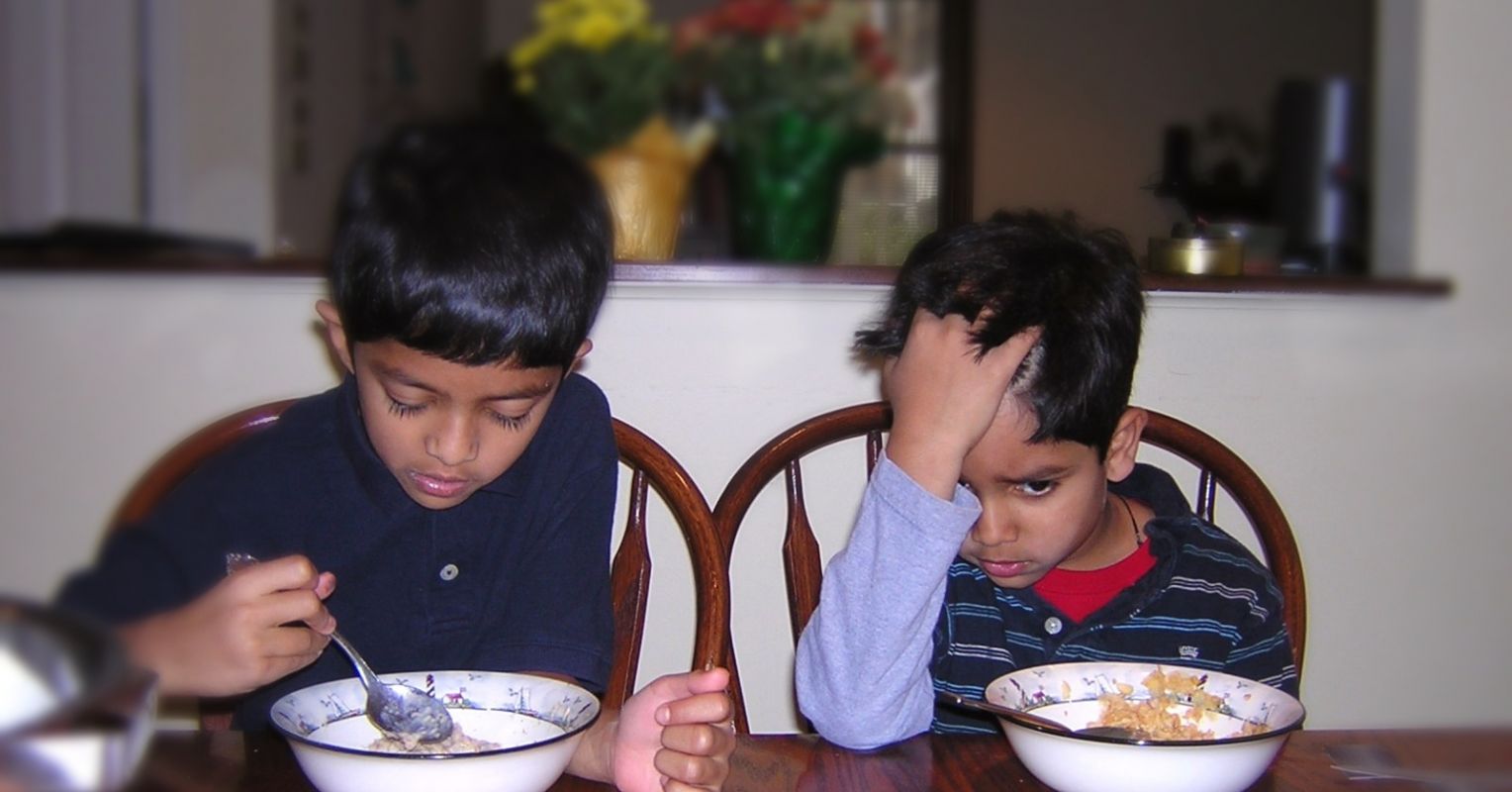
Relationships exert influence through negative nonverbal cues. AI does not, yet. #
Posted July 9, 2026 [ Reviewed by Michelle Quirk
](https://www.psychologytoday.com/us/docs/editorial-process)
Key points
- Strong relationships exert influence in an unusual way, through negative nonverbal cues and muttered asides.
- Relational collaborators signal, suggest, and sometimes deliberately move our behavior through discomfort.
- The signals that shape us in human collaboration are absent while working with an AI model alone.
Working relationships are not productive simply because colleagues share sustained positive feedback. Strong relationships exert influence in an unusual way, through negative nonverbal cues, dismissive gestures, and muttered asides. That is the real stuff of work that ultimately helps create something of value.
How Subtle Reactions Shape Decision-Making in Teams #
The people we work with and trust do not simply tell us what to do; they shape our choices through reactions we absorb: a colleague's slight hesitation, a mentor's shift in tone, the meaningful shrug. We often revise our thinking, our decisions, and our actions in response to these signals, which carry meaning as vivid as the spoken message. Research on nonverbal behavior bears this out. Ambady and Rosenthal found that brief samples of a person's expressive behavior—the face, the posture, the tone—carry enough information for observers to make accurate judgments about that person, often more reliably than words do.
Relational collaborators signal, suggest, and sometimes deliberately move our behavior through discomfort. A graphic designer I am working with can show unhappiness with a choice I have made, and that reaction leads me to reconsider and often to change the decision. Part of this is due to the designer's professional skill, but a great part of it is relational. The disapproval carries weight because it comes from a person whose judgment I have come to trust and whose regard I would rather keep than lose.
The same holds when working with a software developer, a writer, or a key advisor. The dynamic runs in reverse as well. I might show unhappiness, consciously or not, and the other person reads it, weighs where it is coming from, mulls it over, and adjusts. A collaborator's displeasure moves us more than the same collaborator's praise, given the higher weight that negative signals typically carry.
Behavioral science supports the dynamics I am describing. When I change a decision to relieve a collaborator's expressed displeasure, that is negative reinforcement, an operant process in which a behavior that removes an unpleasant state is strengthened. Mowrer's two-factor theory suggests that anticipatory behavior requires both classical and operant processes working together. Classical conditioning first associates the unease with a cue, and operant conditioning then rewards the action that relieves the unease. What gets reinforced is not the removal of the displeasure itself, which may never arrive, but the relief from anticipating it.
Bandura's social cognitive theory points to similar outcomes but stemming from expectations formed in advance. For Bandura, we do not simply absorb consequences; we form expectations about what an action will produce, and we act on those expectations before any consequence materializes. We also learn by watching a person we regard, modeling their judgment rather than waiting to be rewarded or corrected. When I anticipate a developer’s reaction and adjust before suggesting an update to a project, I am acting on an expectancy built from a relationship, not responding to a stimulus in front of me.
The Absence of Relational Dynamics in Collaboration With AI Models #
These complex dynamics, often carried in nonverbal negative signals, are the part that has gone missing when I work with a large language model. The models have added efficiency and creativity to a variety of tasks in ways I had not anticipated. That said, no matter how much I invite the model to push back, in the end it supports the choice I have already made, or it has no real stake in the choice at all. The signals that shape me in human collaboration, often delivered as asides and often persisting long after a decision or discussion, are absent. There is no displeasure to relieve, no regard to keep, no relationship in which my choice carries any weight for the other party.
Some aspects might get captured as multimodal artificial intelligence becomes commonplace: systems that pair language with video, expressive on-screen avatars, physical robots. A , a change in tone, a shift in what is visible on a screen could all be simulated to show something like displeasure.
What cannot be manufactured is the relational core of the exchange, the fact that the other person's regard is real and that I stand to keep it or lose it. Baumeister and Leary argued that the need to belong, to form and keep interpersonal attachments, is a fundamental human motivation, and that the prospect of losing an attachment moves us on its own. This is why a collaborator's regard has force. It is not merely information about my choices; it is a bond I would rather not damage.
IntelligenceEssential Reads That is one reason I keep a trusted person involved in any work I do with a model rather than work with the model alone. The pushback, the frown over a Zoom call, the shrug emoji in a text—all of these exert powerful influence on collaborations and the outcomes they reach. It may be another reason working with people continues to matter, even as the tools grow more capable and more human-like.
References
Mowrer, O. H. (1960). Learning Theory and Behavior. Wiley.
Bandura, A. (1986). *Social Foundations of Thought and Action: A Social Cognitive Theory. *Prentice-Hall.
Baumeister, R. F., & Leary, M. R. (1995). The need to belong. Psychological Bulletin, 117(3), 497–529.
Ambady, N., & Rosenthal, R. (1992). Thin slices of expressive behavior as predictors of interpersonal consequences: A meta-analysis. *Psychological Bulletin, *111(2), 256–274.