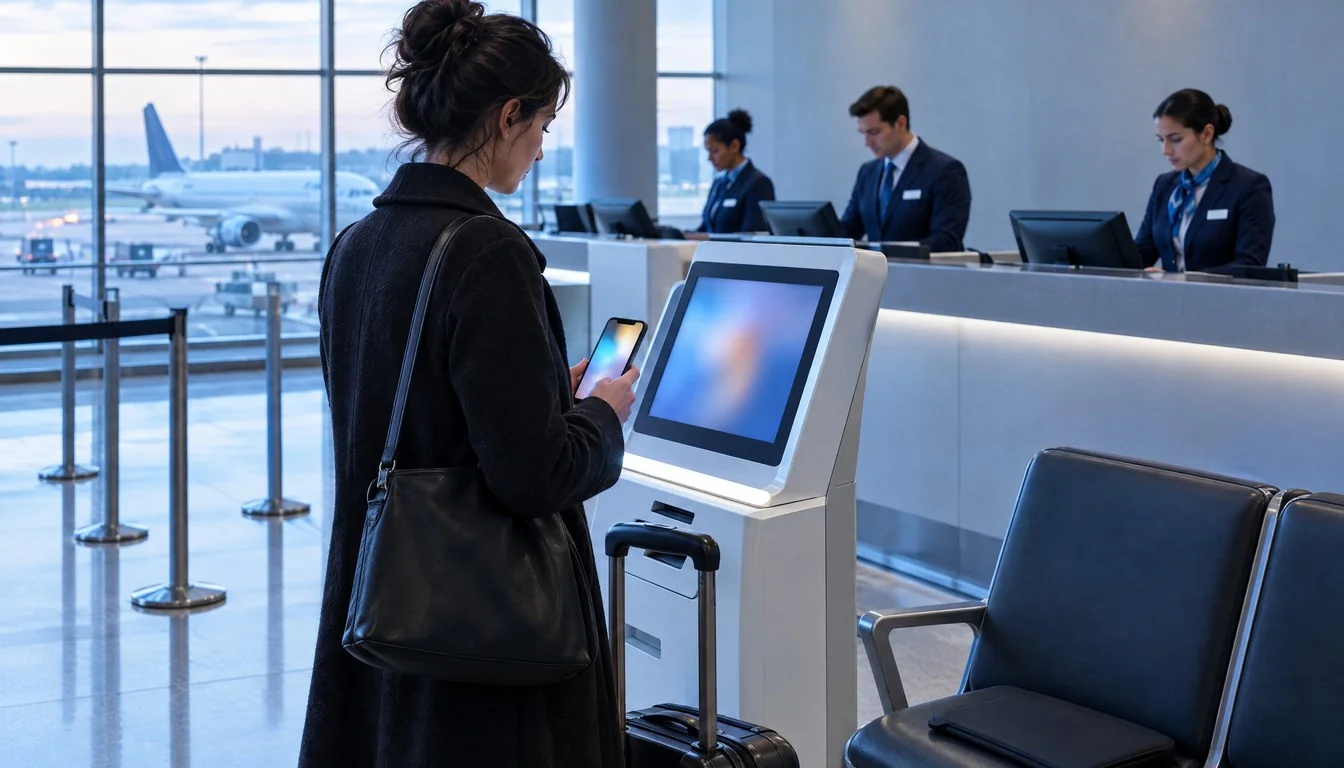
United Airlines said on November 11, 2026 that it will restrict “unauthorized, third-party personal AI agents or assistants” from reaching its digital platforms. Reports from Reuters, Engadget and The Information confirm the move, which targets bots, browser extensions and browser features that act for a customer on United.com or inside the United app without the airline’s permission. It is one of the first times a major carrier has drawn a public line around consumer-side AI automation.
The announcement matters well beyond aviation. Personal AI agents promise to book, change and cancel travel on a user’s behalf, and United is telling the market that it will not let them do that with a customer’s login. The same tension runs through our earlier look at how few neurons can backdoor an AI agent, where the core question was how much trust an autonomous tool deserves once it holds real credentials.
This analysis sticks to what United and the outlets covering it have confirmed. It separates the confirmed facts from the open questions, maps the likely effects on travel platforms and agent builders, and sets out five predictions. United has not published an implementation date, a technical blocking method or a list of affected AI products, so none of those appear here as fact.
Don't miss new tech stories on Google
Add Shattered once in the Google app and our stories show up in your news suggestions.
What United Airlines Announced on November 11 #
The core of the announcement is a policy statement. United said it is taking steps to restrict access to its platforms for personal AI agents that a third party built and that a customer has pointed at their United account. The airline framed the restriction as a response to security and regulatory risk, not as a dispute over competition or fares.
Two details define the scope. First, the restriction applies directly within United’s own website and app. Second, it applies indirectly through travel agencies and aggregators, the intermediaries that already sell United seats and handle customer bookings. That second channel is the more consequential one, because it means the airline expects its distribution partners to keep unauthorized agents out as well.
United also said it does not currently have partnerships with third-party AI agents. That line matters for reading the policy. The airline is not announcing a licensing program or an approved-agent list. It is announcing a default of “no” for personal AI assistants, with no stated path to “yes.”
The coverage came from several named outlets on the same day. Reuters, Engadget and The Information all reported the restriction, and the airline’s own on-record language appears consistently across those reports. That consistency gives the core facts solid footing, even though the finer technical details remain undisclosed.
Which Tools the United Airlines AI Agents Policy Covers #
United described the covered category broadly. The policy reaches bots, browser extensions and browser features that act on behalf of consumers on United.com or the United app without United’s permission. That wording sweeps in more than a standalone chatbot. A browser extension that clicks through a booking flow counts. So does an assistant built into a browser that fills in forms for the user.
The qualifier doing the work is “unauthorized.” United is not saying that no software may ever touch its platforms. It is saying that software acting for a customer without the airline’s sign-off falls outside the rules. Because United said it has no AI agent partnerships today, nothing currently sits on the authorized side of that line.
The reporting does not name a single product. United did not publish a list of blocked assistants, and the reporting does not tie the policy to a specific vendor’s tool. Any claim that a particular chatbot or browser agent is now blocked would go beyond what has been confirmed. The honest summary is a category-wide policy with no named targets.
That breadth creates a practical puzzle for the people who run agents. A traveler who asks an assistant to check a flight status may never think of the request as “acting on behalf of the consumer.” United’s definition appears to reach actions taken on an account, and the airline’s stated worries center on purchases, account changes and miles. Whether passive lookups fall under the same restriction is something United has not addressed.
The Security Case: Credentials, Purchases and MileagePlus Miles #
United’s stated reasoning starts with credentials. In its on-record statement, United Airlines said: “Sharing account credentials with personal, third-party AI assistants can expose sensitive information, and actions taken by these tools may result in unintended purchases, account changes, or use of MileagePlus miles.”
Three separate harms sit inside that sentence. Exposure of sensitive information covers the account data an agent can read once it logs in. Unintended purchases cover the case where an agent misreads an instruction and buys the wrong fare. Account changes and use of MileagePlus miles cover the case where an agent alters a profile or spends loyalty currency that a customer never meant to spend.
The loyalty angle deserves attention. Airline miles behave like a private currency, and a mistaken redemption can be hard to reverse. An agent that books an award ticket on a flawed reading of a request could burn miles that a traveler spent years collecting. United’s decision to name MileagePlus explicitly signals that the airline sees loyalty balances as a prime exposure point.
The credential problem is not hypothetical across the AI industry. Our reporting on 1,379 secrets exposed on GitHub through Claude Code settings files showed how easily tokens and keys leak when an AI tool sits close to a user’s accounts. That case involved developers, not airline customers, but the mechanism is the same. Hand an assistant a password or a token and you widen the places that secret can end up.
| Risk United cited | What it means in practice | Who bears the loss first |
|---|---|---|
| Exposure of sensitive information | Account data visible to a third-party tool after login | The customer |
| Unintended purchases | An agent buys a fare or add-on the user did not intend | The customer, then United’s support team |
| Account changes | An agent edits profile, itinerary or settings | The customer |
| Use of MileagePlus miles | Loyalty balance spent by an automated action | The customer, with United handling disputes |
| FAA and DOT regulatory exposure | Automated actions that may breach federal rules | United, as the regulated carrier |
The table shows a pattern. Four of the five risks land on the customer first, but the fifth lands on United. That mix explains why the airline wrapped a consumer-protection argument and a regulatory argument into one policy.
Why FAA and DOT Rules Enter the Argument #
United went further than security. The airline said automated AI actions could potentially violate Federal Aviation Administration and Department of Transportation regulations. The word “potentially” matters here. United did not claim that an AI agent has already broken a federal rule. It argued that the risk exists and that it must manage it.
The airline gave one concrete example, flight check-in. Check-in requires a human to acknowledge that their baggage does not contain prohibited items such as explosives. If an AI agent clicks through that screen, United argued, nobody has actually given the acknowledgment the process demands. The airline treats that step as a safety attestation, and a machine cannot stand in for the person making it.
This example gives the policy a firmer footing than a pure “we do not like bots” stance. A baggage declaration is a human statement with legal weight. An agent that confirms it automatically turns a deliberate act into a reflex. Regulators and airlines both have reasons to care about who made that statement.
Skeptics may point out that the example is narrow. Check-in is one step in a long customer journey, and most agent tasks, such as comparing fares or watching for schedule changes, do not involve a safety declaration. United’s reply, based on its statement, is that the broader risk of unsupervised automation justifies a broad rule. Whether regulators agree is an open question, and neither the FAA nor the DOT has publicly weighed in on United’s reading according to the material reviewed for this story.
Direct Blocks and Indirect Pressure on Travel Agencies and Aggregators #
The structure of the restriction has two arms. United said it will act directly within its own digital platforms and indirectly through travel agencies and aggregators. Its on-record statement reads: “As a result, United is taking steps to restrict access, directly within our digital platforms and indirectly via travel agencies and aggregators, to prohibit use by unauthorized, third-party personal AI agents or assistants.”
The direct arm: United.com and the app
On its own properties, United controls the login, the session and the checkout. It can decide how to treat automated traffic and can change those rules without asking anyone. The airline has not said how it will do this. No technical blocking method has been confirmed, so the mechanism remains unknown.
The indirect arm: intermediaries
The indirect arm is subtler. Travel agencies and aggregators sell United inventory and sit between the airline and the customer. By naming them, United signals that it wants those partners to stop unauthorized agents from using their channels to reach United accounts. The airline has contractual and technical leverage over distributors that it does not have over a random browser extension.
For intermediaries, this is a compliance question. They must decide how to treat AI-driven sessions that come through their own platforms. The airline did not say how it will enforce this or what penalties apply. Until it does, partners will probably read the statement as a warning and adjust cautiously.
What United Has Not Said: Confirmed Facts vs Open Questions #
A policy announcement can sound more complete than it is. United gave a clear scope and a clear rationale, but it left several practical points open. The table below separates what the reporting confirms from what remains unconfirmed.
| Item | Status | Detail |
|---|---|---|
| Announcement date | Confirmed | November 11, 2026 |
| Covered tools | Confirmed | Bots, browser extensions and browser features acting without United’s permission |
| Covered channels | Confirmed | United.com, the United app, plus travel agencies and aggregators indirectly |
| Cited risks | Confirmed | Sensitive information, unintended purchases, account changes, MileagePlus miles |
| Regulatory concern | Confirmed as a stated concern | Possible FAA and DOT violations from automated actions |
| Partnerships with AI agents | Confirmed | United said it has none at present |
| Implementation date | Unconfirmed | No date published |
| Blocking method | Unconfirmed | No technical approach disclosed |
| List of blocked AI products | Unconfirmed | No products named |
| Financial impact | Unconfirmed | No figures given |
| Full block of all agents | Unconfirmed | The reporting describes steps to restrict access, not a completed block |
The last row deserves emphasis. Some headlines will say United “blocked” AI agents. The airline’s own wording describes steps to restrict access, which is a statement of intent and direction. Readers should treat claims of a finished, airtight block as unproven until United or an independent test shows otherwise.
The missing implementation date also shapes the story. A policy with no start date can take effect gradually, and enforcement may arrive in stages. That ambiguity leaves agent developers guessing about when their tools will stop working with United and whether partial access will survive.
Why This Is an AI Model Story, Not Only an Airline Story #
The AI industry has spent the past year selling agents that act, not just answer. Chat models that once drafted an email now click buttons, fill forms and complete purchases. That shift moves the risk from “the model said something wrong” to “the model did something wrong with my money.” United’s policy is a response to that second category.
Model builders face a design problem that no benchmark captures. An agent must prove it has the user’s authority to act, and the destination site must be able to verify that proof. Today the common workaround is the user’s own password, handed to the agent. United’s statement attacks exactly that workaround, since it names credential sharing as the risk.
Safety teams have raised related concerns. Our coverage of a 12-step test of prompt injection detectors explained why an agent that reads web pages can be steered by hidden instructions on those pages. A booking agent that visits a hostile page while holding a MileagePlus login is precisely the scenario that worries security teams. United did not cite prompt injection by name, but the logic of its concerns overlaps with it.
Readers who follow model releases and agent tooling can find more on this beat in our AI and machine learning section. The United announcement belongs there because it tests whether agent products can survive contact with the sites they want to operate.
Agent Security Has Been a Rolling Problem in 2026 #
United’s move did not come out of nowhere. Over the past weeks, a run of stories has shown how fragile the agent ecosystem still looks from a security standpoint. The numbers below come from our own earlier coverage, each of which carries its sourcing in the linked article.
| Story | Key figure | Why it connects to United’s concern |
|---|---|---|
| Microsoft backdoor research on AI agents | Fewer than 10 neurons | Shows how small a change can corrupt an agent’s behavior |
| Grok Build upload report | 5.1 GiB sent for a 192 KB task | Shows agents moving far more data than a task needs |
| Claude Code settings files on GitHub | 1,379 secrets exposed | Shows credentials leaking near AI tooling |
| Cloudflare request data on bots | 57.5% of requests | Shows automated traffic already dominating the web |
| Workers pressured to use AI | 52% used AI despite a faster manual route | Shows adoption outrunning judgment |
| Fireworks AI incidents | 10,000+ customers, hit twice in weeks | Shows supply-chain exposure for AI platforms |
Take the Grok Build report of 5.1 GiB uploaded for a 192 KB task. It is a reminder that an agent’s footprint can dwarf the job it was asked to do. A booking assistant with the same habit could carry far more of a customer’s data than a flight search requires.
Meanwhile, the web itself already tilts toward machines. The Cloudflare data showing bots at 57.5% of requests frames United’s problem. A site that already fields mostly automated traffic has reason to ask which automation it wants and which it does not.
Market Impact: Travel Platforms, Agent Builders and Consumers #
United has not disclosed any financial impact, and no outlet in the verified set reports one. Any dollar figure attached to this policy would be speculation. The market effects are still worth sketching in qualitative terms, because they point to who gains and who loses leverage.
Agent builders lose a convenient path. Many consumer agents work by operating a logged-in browser session, which is the exact pattern United calls unauthorized. Developers who built travel features on that approach now face a large carrier telling them the approach is unwelcome. They can lobby for a sanctioned integration, wait for an official interface, or drop airline-specific features.
Travel agencies and aggregators take on new obligations. They already negotiate with United over inventory, fares and data. Now they must also police how AI-driven sessions reach the airline through their platforms. Smaller intermediaries with thin compliance teams will feel that burden more than large ones.
Consumers get a mixed result. The restriction may protect people from a misfiring agent that spends their miles. It also removes a convenience that some travelers wanted, such as having an assistant watch their itinerary and rebook after a delay. The net effect depends on whether United offers an official alternative, and on this point the airline has said nothing.
The wider market signal may matter most. When one large platform declares a stance, others can copy it or choose a different path. The reaction from other airlines, hotels and retailers will show whether United set a norm or took a lone position.
Competitive Comparison: Three Ways a Platform Can Respond to AI Agents #
United chose to restrict. That is only one of several postures a large consumer platform can take toward third-party agents. The comparison below describes the general options and where United’s stated position sits. It does not describe the policies of any other named company.
| Approach | How it works | Main upside | Main downside | United’s position |
|---|---|---|---|---|
| Restrict unauthorized agents | Block or deter agents that act without permission | Protects accounts, miles and regulatory standing | Frustrates users who want automation | Announced November 11, 2026 |
| License approved agents | Allow vetted partners through an official channel | Keeps control while enabling automation | Needs contracts, tooling and oversight | None currently, per United |
| Tolerate agents | Treat agent traffic like any other session | Low effort, users stay happy | Leaves credential and purchase risk in place | Not United’s stance |
| Offer first-party AI | Build an in-house assistant for customers | Keeps data and the customer relationship | Costly, and quality must compete with outside tools | Not addressed in the announcement |
The second row is the interesting one. Because United said it has no agent partnerships today, the door to a licensed model stays technically open. A restriction with no sanctioned alternative reads as a first step, and the next step might be an approved route. The airline has not promised that, so it remains a possibility and not a plan.
The fourth row also deserves a note. United’s announcement did not mention building its own AI assistant. Readers should not infer one from the policy. The reporting covers only the restriction.
Historical Context: From Scrapers to Agents #
Airlines have fought automated access for years. Fare and schedule data is valuable, and carriers have long tried to control who can pull it and how. Rate limits, login walls and anti-bot checks became standard tools for that fight, and websites in general leaned on the same toolkit as automated traffic grew.
Agents change the old contest in one important way. A classic scraper reads public pages. An AI agent acting for a customer operates inside a private, logged-in account, and it can take actions that carry financial and legal weight. United’s statement targets exactly that difference. It focuses on purchases, account changes and miles, not on the scraping of public fare listings.
The industry is also in an awkward adoption phase. Our look at workers pressured to use AI even when a manual route was faster found 52% used AI anyway. Enthusiasm for agents runs ahead of the controls around them, and a carrier with regulatory duties has little reason to wait for those controls to mature.
Seen this way, United’s policy follows a familiar arc. A new class of automation appears, early users hand it their credentials, and the platform eventually draws a boundary. What differs this time is the speed. Consumer agents moved from demo to daily use fast, and the boundary arrived in the same news cycle as the pitch.
What United Said on the Record #
The verified record in this story consists of United Airlines’ own statements. No independent expert quotes are included here, since none were verified for this report. The two on-record statements, quoted in full, carry the substance of the policy.
On the risk to customers, United Airlines said: “Sharing account credentials with personal, third-party AI assistants can expose sensitive information, and actions taken by these tools may result in unintended purchases, account changes, or use of MileagePlus miles.”
On the response, United Airlines said: “As a result, United is taking steps to restrict access, directly within our digital platforms and indirectly via travel agencies and aggregators, to prohibit use by unauthorized, third-party personal AI agents or assistants.”
Read together, the statements follow a clean chain. The first names the harm, and the second announces the remedy. Notice the verbs. The airline says it is “taking steps” and does not say it has finished. That phrasing fits the unconfirmed status of any complete block.
Five Predictions for AI Agents and Airline Platforms #
The following forecasts are analysis, not reported fact. They rest on the confirmed announcement and on how platform policies have tended to evolve. Each one carries real uncertainty.
- Other travel brands will state a position. When a large carrier goes public with a stance, rivals and hotel groups usually face pressure to say where they stand. Expect at least some to follow with restrictions, and some to choose an approved-agent route.
- An official agent channel will emerge somewhere in travel. Blocking without an alternative frustrates customers. A sanctioned interface, with authentication that does not require sharing a password, is the logical fix for any platform that wants agent traffic on its terms.
- Authentication will become the central fight. The problem United describes is credential sharing. Solutions that let a user grant narrow, revocable permission to an agent without giving up a full login will draw attention from airlines, banks and retailers alike.
- Agent vendors will adjust their travel features. Companies that sell general-purpose assistants will likely add warnings, limit airline automation, or seek partnerships. Some will argue that user-directed actions should count as the customer’s own.
- Regulators will be asked to clarify. United tied its policy to FAA and DOT rules. If agents keep spreading, pressure will grow for regulators to say whether an automated action can satisfy a requirement that calls for human acknowledgment.
The common thread is control over identity and consent. Whoever builds a trusted way for a human to authorize a machine, and for a platform to verify that authorization, will shape how agents work with regulated services.
What Travelers and Developers Should Do Now #
For travelers
Avoid giving a personal AI assistant your United password or MileagePlus login. United named that practice as the source of its worry, and the airline says it will restrict such tools. If an assistant already holds your credentials, consider changing the password and reviewing recent account activity. Complete flight check-in yourself, since the baggage acknowledgment is meant for a human.
For developers and product teams
Do not build airline features that depend on a customer’s shared login. The United announcement shows that approach can disappear overnight. Look instead for official interfaces, partner programs or user-controlled permission flows. If you run an aggregator or agency, review how AI-driven sessions reach airline systems through your platform, since United named your category as part of its enforcement path.
Teams should also test their agents against injection and data-handling risks before attaching them to accounts that hold money or loyalty value. The goal is to make an agent’s authority narrow and its actions reviewable, so that a mistake costs little.
The Takeaway: A Line Drawn Without a Map #
United Airlines has drawn a public line against unauthorized personal AI agents, and it grounded that line in account security, MileagePlus miles and federal aviation rules. The announcement is clear on principle and thin on mechanics. There is no date, no named product, no method and no cost figure.
That gap is where the story will develop. Watch for three signals: whether United publishes an enforcement timeline, whether it opens a sanctioned route for agents, and whether other platforms copy the stance. Each will show how much room consumer AI agents really have to act inside regulated services.
FAQ: United Airlines and AI Agents #
What did United Airlines announce about AI agents?
On November 11, 2026, United said it would restrict unauthorized, third-party personal AI agents or assistants from accessing its digital platforms. Reuters, Engadget and The Information reported the move.
Why is United blocking AI agents?
United cited exposure of sensitive information, unintended purchases, account changes and unauthorized use of MileagePlus miles. It also said automated AI actions could potentially violate FAA and DOT regulations.
Which AI products does the restriction affect?
United has not published a list. The policy covers bots, browser extensions and browser features that act for consumers on United.com or the United app without United’s permission, but no specific products have been named.
Does the policy affect travel agencies and aggregators?
Yes, indirectly. United said it is restricting access both within its own platforms and indirectly through travel agencies and aggregators.
When does the restriction take effect?
United has not confirmed an implementation date or a technical blocking method. The airline described steps to restrict access, and it has not said it has fully blocked all AI agents.
Why did United mention flight check-in?
United gave check-in as an example because it requires a human to acknowledge that baggage does not contain prohibited items such as explosives. The airline argued an automated agent cannot give that acknowledgment.
Does United partner with any AI agent providers?
United said it does not currently have partnerships with third-party AI agents.
Should I stop using an AI assistant for travel?
United’s concern centers on sharing account credentials with third-party assistants. Avoid giving any assistant your United login, and handle purchases and check-in yourself until the airline clarifies how the policy works.