U.S. Treasury Secretary Bessent threatens sanctions against Chinese AI model makers
U.S. Treasury Secretary Scott Bessent said today that the White House is going to examine some of the highest profile “open-weight” models from China to see if their creators have stolen the intellectual property of America’s top artificial intelligence frontier labs. If evidence suggests that’s the case, the U.S. could respond with sanctions against the Chinese firms found guilty, he said.
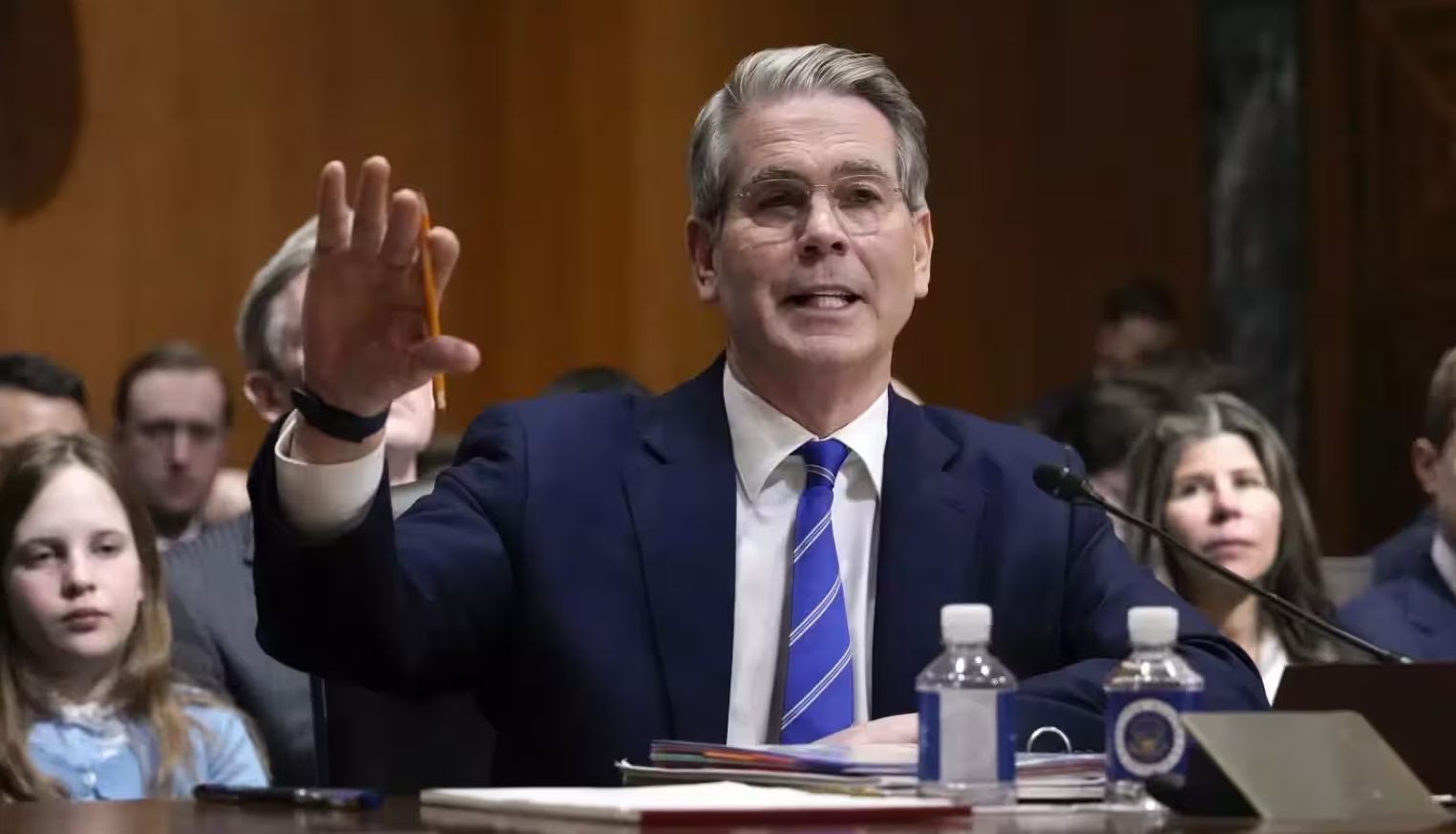
In an interview with Fox Business, Bessent (pictured) said the Trump administration supports open-source models, but is dead against IP theft. “If we see, especially, that overseas models are stealing from our great companies, we have the ability to sanction them because of this theft,” he said.
Bessent’s comments come just days after one of China’s hottest AI startups, Moonshot AI, unveiled a new open-weights model called Kimi K3 that matches the performance of OpenAI Group PBC’s and Anthropic PBC’s most advanced models. Chinese models are becoming increasingly popular with U.S. businesses, because they’re seen as more than good enough in terms of their capabilities, and cost far less money thanks to their open-source nature. It’s a trend that threatens to derail the business models of America’s top AI labs and prevent them from raising further capital.
On Monday, a report in Axios claimed that the Trump administration was even considering implementing a wholesale ban on open-source models from China, though officials have since distanced themselves from that report. Both Anthropic and OpenAI have publicly voiced concerns in recent months that foreign competitors are harvesting massive amounts of data from their models in order to use it to build their own, redeployed as open source technology. In April, the White House vowed to work with them to try and combat this perceived theft.
If the U.S. does implement sanctions against Chinese model makers, it would be a significant escalation of an increasingly bitter race to maintain leadership in the AI industry. The U.S. has already taken substantial steps to rein in China’s capabilities, restricting its access to the most advanced AI processors. But the sanctions would mark the first time it has targeted Chinese model makers directly. China’s leading AI firms are accused of using a technique known as “model distillation,” which makes it possible to assimilate the capabilities of much larger models into smaller systems that are easier to run. The technique has been used by many American companies to create more efficient versions of their own models, and not everyone agrees it constitutes theft. One of the biggest critics of those criticizing China’s AI labs is Microsoft Chief Executive Satya Nadella, who insinuated that it’s hypocritical of American firms to make such accusations. “While the great innovation that comes from model providers having fair use rights to train models on public data is needed, I find it ironic that the status quo is to then turn around and impose restrictive terms on distillation,” he wrote in an article on X last month.
— Satya Nadella (@satyanadella)

[July 12, 2026]
It’s hard not to see Anthropic just as guilty as the Chinese firms it’s accusing, and U.S. law appears to agree that’s the case. Earlier this week, the Claude chatbot creator revealed it would start writing checks to authors as part of a $1.5 billion settlement it had agreed after a judge ruled that it had illegally downloaded and stored millions of copyrighted books that were used to train its models. Meanwhile, OpenAI is still embroiled in its own, long-running feud, having been sued by the The New York Times in 2023 for allegedly training its models on its content without permission.
Any sanctions imposed by the U.S. on Chinese AI firms may well be moot, however, if Beijing decides to make good on a recent threat of its own. Earlier this month, Reuters reported that Chinese officials are considering restricting the ability of foreigners to access its most advanced models, in response to similar moves made by the White House.
Photo: Wikimedia Commons
Support our mission to keep content open and free by engaging with theCUBE community. Join theCUBE’s Alumni Trust Network, where technology leaders connect, share intelligence and create opportunities.
15M+ viewers of theCUBE videos, powering conversations across AI, cloud, cybersecurity and more** 11.4k+ theCUBE alumni**— Connect with more than 11,400 tech and business leaders shaping the future through a unique trusted-based network.
About SiliconANGLE Media
theCUBE AIand theCUBE SuperStudios — with flagship locations in Silicon Valley and the New York Stock Exchange — SiliconANGLE Media operates at the intersection of media, technology and AI.
Founded by tech visionaries John Furrier and Dave Vellante, SiliconANGLE Media has built a dynamic ecosystem of industry-leading digital media brands that reach 15+ million elite tech professionals. Our new proprietary theCUBE AI Video Cloud is breaking ground in audience interaction, leveraging theCUBEai.com neural network to help technology companies make data-driven decisions and stay at the forefront of industry conversations.