Support CleanTechnica's work througha Substack subscription,on Patreon, oron Stripe. Help us produce all of thehigh-quality, original content we publish week after weekdespite the challenges of content-scraping AI, antisocial media, inflation, and other hurdles.For whatever reason, U.S. President Donald Trump’s “American Energy Dominance” plan supports biomass alongside fossil fuels. That’s already coming back to bite his friends in the oil industry. Biomass has turned in a less-than-stellar performance as a power generation resource here in the US, but it has been edging petroleum out of the US automotive market in the form of corn ethanol, and now stakeholders are pushing into the SAF (sustainable aviation fuel) space, too.
Sustainable Aviation Fuel From Biomass
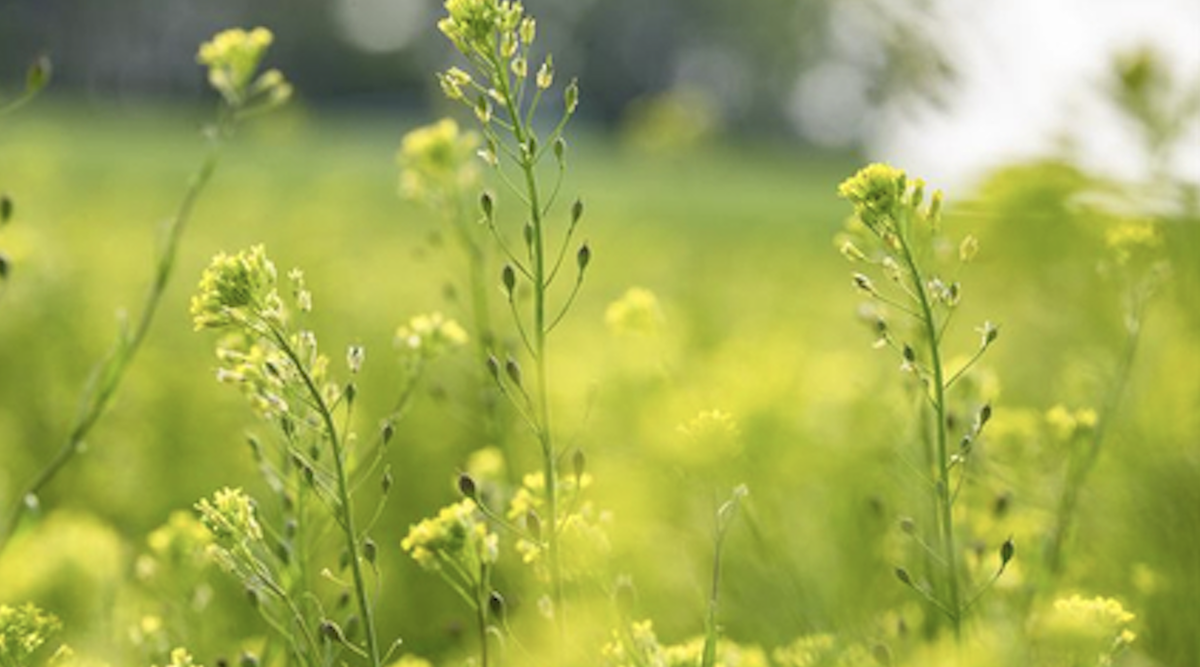
Biomass has tried to crack the SAF code for years with little to show, though animal fats, used cooking oil and other waste oils have achieved some slim success. Now activity is finally begin to stir in the area of plant-based inputs including winter camelina (pictured above).
And, the Trump administration is here for it. The recently launched Montana Renewables biofuel facility in Great Falls, Montana, for example, is among the few Biden-era renewable energy projects to continue practically uninterrupted with financial backing from the Energy Department, even as Trump shredded his way through the agency’s $30 billion loan portfolio upon taking office last year.
The Energy Department issued a $1.67 billion loan guarantee to Montana Renewables during the last days of the Biden administration in January of 2025, with the company anticipating an eventual SAF capcity of 300 million gallons per year. Trump initially canceled the loan only to restore it within a matter of weeks, around February 12, 2025.
With the assist from the taxpaying public, Montana Renewables (a branch of Calumet) is pressing its way into the SAF field with both animal fats and plant-based biomass on the menu. The firm lists tallow, distillers corn oil, canola oil, used cooking oil, and camelina oil among its overall inputs.
Last October, the company announced that its “MaxSAF™ Blended” 50/50 certified blend of SAF and conventional jet fuel was market-ready and available for drop-in use at aviation hubs in the region, including Washington and Oregon as well as Montana.
Regional Production, Regional Distribution
If you caught that thing about distribution to regional airports, that’s an important element of the SAF balance sheet. Transporting large quantities of biomass to a central refining facility layers on additional expenses, as does shipping the finished product out again. Concentrating on regional inputs and offtakes trims those expenditures down. With that in mind, the newly launched Minnesota SAF Hub aims to produce 1 billion gallons of SAF per year for use at the Minneapolis–Saint Paul International Airport, assisted in part by a $1.50-per-gallon state incentive.
The project comes under the umbrella of the Greater MSP Partnership, which describes the new hub as a first-if-its-kind, multi-partner effort to center the “sustainable” in sustainable aviation fuel. Delta Airlines is among the anchor partners on the project.
As with the Montana facility, part of the focus is on winter-grown camelina, an oilseed crop that has been explored for jet fuel use since the early 2000’s.
On July 27, the Minnesota SAF Hub announced the completion of a new blending facility in Rosemont, Minnesota, with the capacity to accommodate up to 30 million gallons of neat (unblended) SAF annually. The Roseont facility is tasked with blending neat SAF provided by the Aviation branch of Shell with conventional jet fuel for delivery to MSP International Airport, using an existing pipeline.
“SAF can now be supplied, blended, and uplifted at MSP Airport in commercial volumes, enabling use of Minnesota’s nation-leading SAF tax credit and solving a critical infrastructure bottleneck,” explains the Minnesota SAF Hub.
“The facility is a critical link in Minnesota’s SAF value chain because neat SAF must be blended, tested and certified before it can enter the airport fuel supply and be used in today’s aircraft,” the agency elaborates.
As for the use of food crops, that’s where things get complicated, though a recent report from the World Resources Institute indicates that the Midwest generates enough inedible corn residue to produce 3 billion gallons of SAF per year.
What’s Shell Got To Do With This?
The Minnesota hub not the only place where Shell Aviation is expanding its SAF footprint in the US. On July 15, Delta announced it is also partnering with Shell’s Aviation branch at Los Angeles International Airport in California, Portland International Airport in Oregon, John. F. Kennedy International Airport in New York City, and Logan International Airport in Boston.
The five-year agreement aims to build consistency into the SAF supply chain, moving the needle from one-off “milestone” demonstrations to a routine feature in airport operations.
Under the agreement, Shell will support the infrastructure and logistics involved in distributing both neat and blended fuel. “That infrastructure-first approach helps ensure SAF can scale with demand while maintaining operational reliability,” Delta emphasizes.
“Delta and Shell will work together to evaluate and advance next generation SAF technologies — including alcohol to jet and power to liquid pathways — aimed at unlocking additional supply and further reducing lifecycle emissions over time,” Delta elaborated in a press statement.
Here Comes Power-To-Liquid…And Electrification, Too
The power-to-liquid reference is no surprise considering Shell’s interest in the e-fuels and green hydrogen field, with “green” meaning hydrogen pushed from water with an electrical current, ideally supplied by wind, solar, or other renewables (see more e-fuels background here).
Activity in the e-SAF field all but sputtered out here in the US after Trump took office, though Shell has been pushing forward with e-fuels facilities in Europe.
One firm that has cracked the US e-SAF code is Infinium. The company’s Project Pathfinder in Texas was up and running in 2024. Last year construction was also well under way on another facility in Texas, the Project Roadrunner e-fuels project. If all goes according to plan, Project Roadrunner will produce 7.6 million gallons per year of e-SAF and other e-fuels.
For the record, electrification is also putting the squeeze on fossil fuels in the aviation field, with batteries and fuel cells both in play.
Biomass For Power Generation…Not
Digging further into the weeds of continued federal support for the biomass-t0-SAF pipeline, in June Department of Agriculture affirmed guidelines for calculating the value of SAF and other biofuels produced through regenerative agriculture, with regenerative referring to practices that center soil and water conservation. The biofuels advocacy organization Clean Fuels Alliance was among those supporting the rulemaking.
In the meantime, Trump’s biomass policy is a glass half empty. Biomass continues to fall flat in the US power generation space despite the purported support of the Trump administration.
The leading grid operator PJM, for example, barely registers any forthcoming activity in the biomass power generation field. PJM recently announced that it has selected 715 power plant applications for further consideration, totaling 201.5 gigawatts for a service territory covering 67 million people, with biomass slotted into a catch-all category covering just 1.1 of those gigawatts. That’s in accord with the “other energy sources” listed by the US Energy Information Agency, which foresees biomass power production declining slightly in the coming years.
Photo: Despite the sharp U-turn in federal energy policy, the sustainable aviation fuel (SAF) movement is growing in the US, with winter camelina among the energy crops playing a role (courtesy of Cargill/University of Minnesota via businesswire.com).
Sign up for
CleanTechnica's Weekly Substack for Zach and Scott's in-depth analyses and high level summaries, sign up forour daily newsletter, andfollow us on Google News!Have a tip for CleanTechnica? Want to advertise? Want to suggest a guest for our CleanTech Talk podcast?
Contact us here.Sign up for our daily newsletter for 15 new cleantech stories a day. Or sign up forour weekly one on top stories of the weekif daily is too frequent.
CleanTechnica uses affiliate links. See our policy
here.CleanTechnica's Comment Policy