cd /news/ai-agents/tracking-down-a-mystery-beep-by-givi… · home › topics › ai-agents › article
[ARTICLE · art-172207] src=hackaday.com ↗ pub= topic=ai-agents verified=true sentiment=↑ positive

Tracking Down a Mystery Beep By Giving a Coding Agent a Few Ears

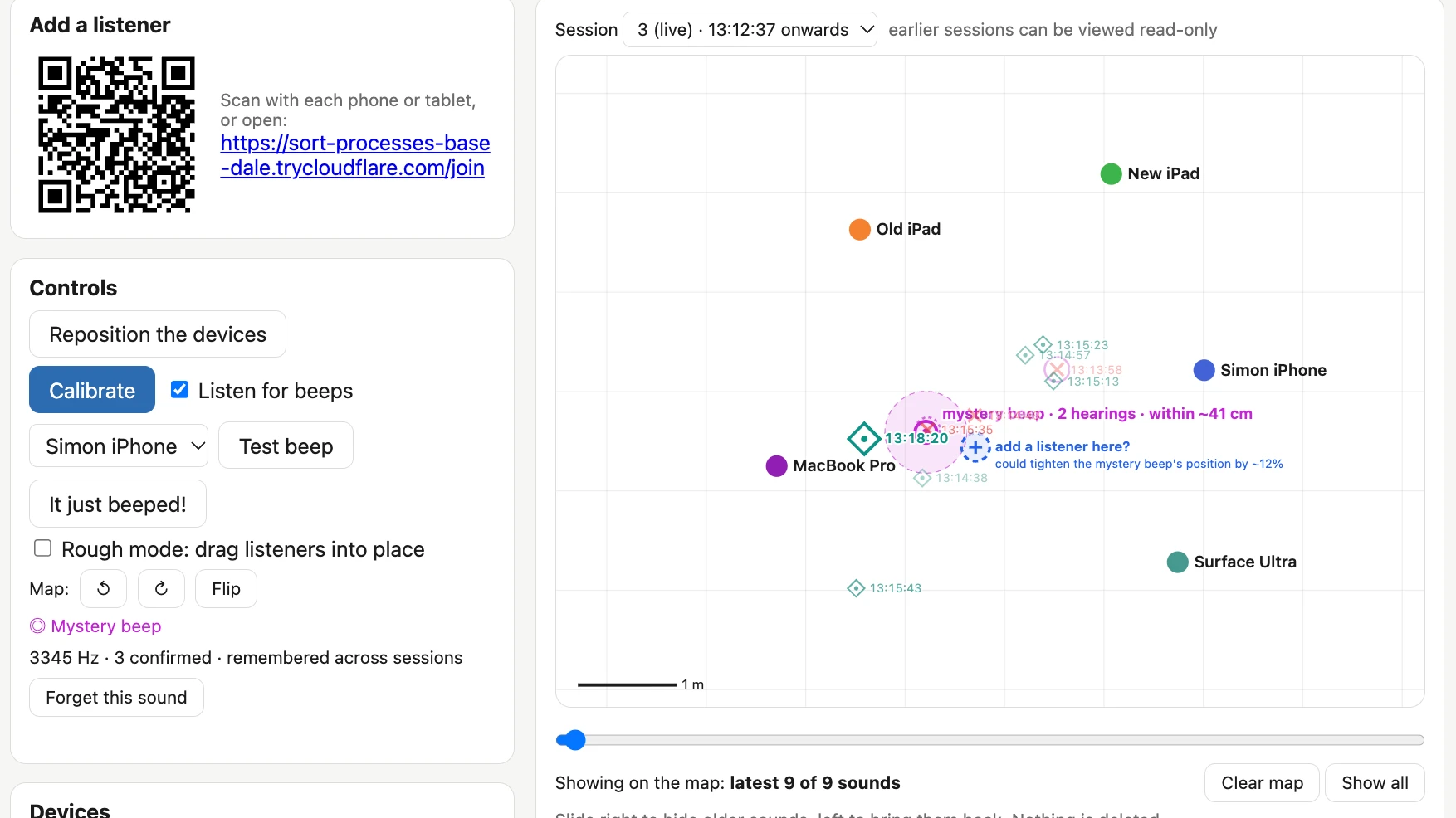
Simon Willison built beep-locator, a Python web server that turns ordinary devices into listening posts via the Web Audio API so a coding agent could triangulate an intermittent beep in his room; the culprit was an old carbon monoxide detector buried in a box and chirping its low-battery warning. The project's point, Willison writes, is giving a coding agent its own real-world sensing so it can gather audio data and recalibrate during development without manual recording. The code is published in the beep-locator GitHub repository.

recommendation

Wire sensors directly into the agent's loop so it can gather and recalibrate on real data itself, as beep-locator did with QR-paired Web Audio listeners feeding a Python server.

more in playbook: Designing agent systems
by read1 min views1 publishedNov 19, 2026
Tracking Down a Mystery Beep By Giving a Coding Agent a Few Ears
Image: Hackaday (auto-discovered)

[Simon Willison] recently used a coding agent in an unusual way. A software system temporarily used the microphones on devices scattered around the room to triangulate the source of a mysterious, intermittent beep coming from within one of the many boxes in the room.

The main part of the system is a Python web server, and the listeners can be any old devices one might have hanging around. Scan a QR code, and the device becomes a listening post by leveraging the Web Audio API. With listeners spread around the room, the system has everything it needs to patiently wait, listen, and zero in on the mystery beep. The culprit? An old carbon monoxide detector, buried in a box and emitting a low battery chirp.

That’s neat, but what this project really demonstrates is the benefit of hacking together a way for a coding agent to actually sense the real world, the better for it to design a solution to a physical problem.

The ad-hoc framework of web-based listeners allowed [Simon] to give the agent the ability to gather audio data on its own to refine and recalibrate its approach during development, without any need for him to record audio and pass it on manually.

It’s a bit reminiscent of this WiFi analyzer connected to an AI model, a project that hints at the possibilities of a physical tool that can be steered by an agent. Check out the GitHub repository for beep-locator if you’d like a closer look at the code itself.

── more in #ai-agents 4 stories · sorted by recency
── more on @simon willison 3 stories trending now
sponsored brought to you by zahid.host 4,200+ EU-deployed projects
reading about agents? ship yours in a single git push.

Run your AI side-project on zahid.host

EU-based hosting, git-push deploys, automatic HTTPS, no cold starts. Free tier with a custom domain — perfect for shipping the agent you just read about.

$git push zahid main
→ Live at https://your-agent.zahid.host ✓
Get free account → Pricing
from €0/mo · no card required
LIVE [news/tracking-down-a-myst…] indexed:0 read:1min 2026-11-19 · —