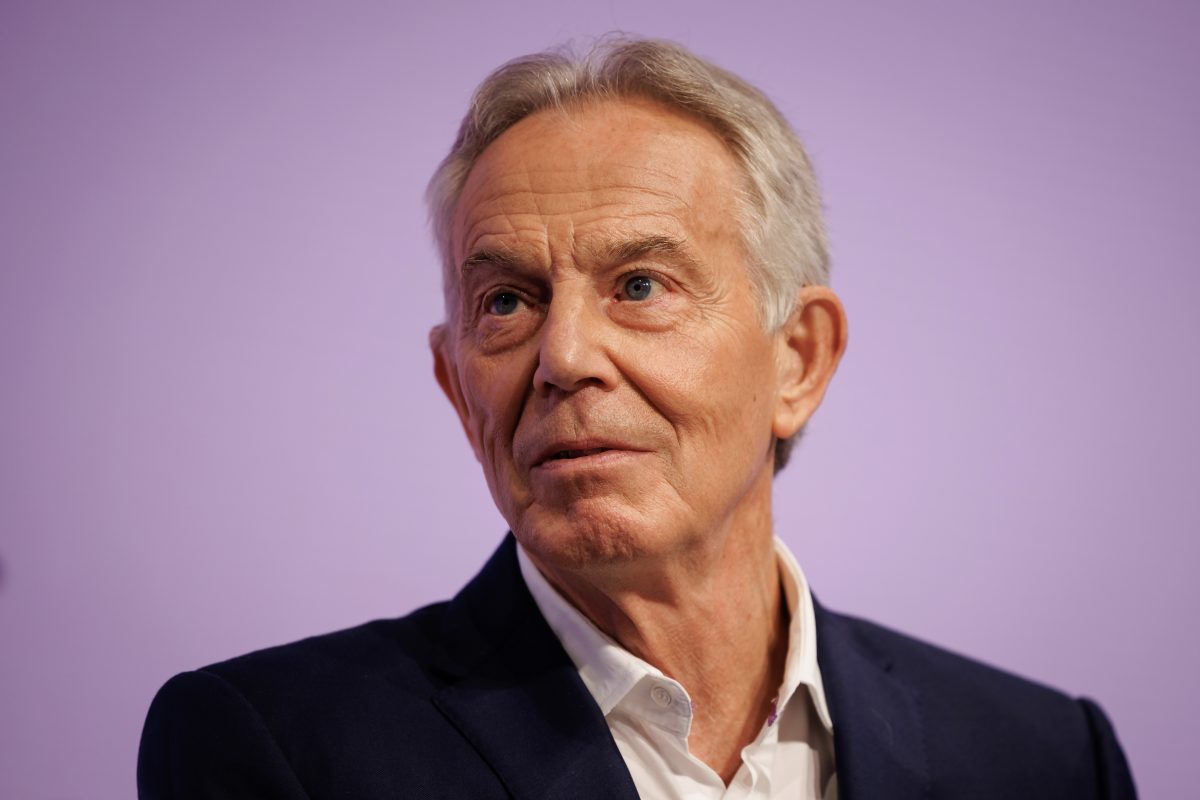
Tony Blair has warned governments against bowing to a growing “techlash” over AI, arguing that slowing adoption could leave countries poorer and less secure as concerns over the technology mount.
A report from the Tony Blair Institute (TBI), published on Monday, said political leaders in the US and UK were facing growing pressure to hold back AI but warned that “doing less” may carry significant long-term costs for economic growth and national security. It lands after a bruising fortnight for an industry more accustomed to selling the upside of AI than debating whether it could kill its customers.
Former Anthropic researcher Jacob Coxon sparked a new wave of concern this month after quitting the company and warning that developers were “gambling with our lives”, while Anthropic boss Dario Amodei and OpenAI chief Sam Altman have since backed calls to “pace” development at the frontier.
Nvidia boss Jensen Huang pushed firmly in the opposite direction over the weekend, dismissing predictions of human extinction by the end of the decade as “not grounded in science”, and saying developers should move “as fast as we can” without compromising safety.
TBI’s latest reports argue that governments should neither give AI companies a free pass nor respond to public anxiety by slamming on the brakes. Instead, the think tank is calling for a much bigger system of independent testing and assurance, alongside a wholesale overhaul of government to make greater use of the tech.
“The question leaders should be asking themselves is not whether AI is a good thing or a bad thing”, Blair wrote. “Rather, it is simply the thing: the defining technological reality of our age”.
He warned that countries which failed to absorb major technological shifts had historically suffered “profound and compounding disadvantage”, arguing governments could not “protect themselves from AI by ignoring it”.
‘Grip’ rather than brakes #
Ministers told City AM last week that existing rules covering areas such as data protection, competition, product safety and online harms may not always be enough as models become more capable, leaving the door open to tougher regulation.
Tony Blair’s think tank argues that governments should focus instead on building an “AI assurance” industry capable of independently testing, evaluating and certifying systems before and after they are deployed.
Elizabeth Seger, TBI’s AI governance and ethics adviser, said the answer was neither “slamming the brakes on AI or letting it run wild – it’s about grip”.
“People are rightly feeling uneasy about the incredibly fast rate at which AI is advancing and being used in ever more important areas of our lives”, she said.
TBI research found 38 per cent of UK adults regarded a lack of trust as the biggest barrier to using AI, while 61 per cent of organisations said concerns about reliability had caused them to delay or reduce planned AI investment. The think tank said government should make AI assurance a national priority, clarify who is liable when systems fail and use procurement and regulation to create demand for independent testing.
It also cited analysis estimating the global market for AI assurance services could reach $276bn (£204bn) by 2030, arguing countries that establish testing expertise and standards early could sell those services overseas.
But Blair’s report calls for AI to be built into the machinery of government itself, allowing Whitehall to pull together information across departments and model the consequences of policy decisions. It proposes AI systems that could track government commitments, request updates and initiate pre-approved workflows, although the report said their powers should remain “bounded, auditable and revocable” and political decisions should stay with humans.