The Office of the National Cyber Director has issued a directive to OpenAI and Anthropic: withhold your newest AI models from the United Kingdom’s AI Safety Institute until a US-led security review is complete. Anthropic complied, leaving its latest model, Claude Mythos 5.1, restricted to a specific set of US organizations. OpenAI has not responded to requests for comment. The UK’s ability to independently verify the safety of frontier models is now contingent on US approval.
This is not a bureaucratic delay. It is the operational form of a position the White House stated plainly at the UN General Assembly two days earlier. On September 22, President Trump declared that “The United States totally rejects any attempt to construct a globalist scheme to control artificial intelligence.” Two days later, the directive landed.
What the UK Was Told #
The request, first reported by Politico, came from the Office of the National Cyber Director and puts both companies in a position of choosing between withholding models from AISI – one of the most well-resourced government testing agencies in the world – or risking the White House’s displeasure. The impact is already documented. Henry de Zoete, the director of the UK AISI, acknowledged in a letter to a parliamentary committee that the institute lacked access to Anthropic’s latest model. He noted that AISI had tested OpenAI’s GPT-6 Astra before its release. But the direction of travel is clear: the UK’s independent verification capacity is being shaped by a gate it does not control.
Anthropic’s compliance is the sharper signal. The company did not push back, negotiate, or seek a compromise. It simply restricted Claude Mythos 5.1 to US organizations and moved on. For a company whose CEO published a 3,800-word essay twelve days earlier calling for democratic coordination and global alignment, the speed of that compliance tells its own story about which constituency comes first.
Hand in Glove, Until It Isn’t #
The timing could not be more pointed. On September 22, UK Prime Minister Andy Burnham told the UN General Assembly that the UK was working “hand in glove with the US and the leading labs on AI safety.” He announced that AI would be at the heart of the UK’s G20 Presidency in 2027 and called for “a single set of global principles and standards.” The next day, at the first-ever UN Security Council briefing on AI safety, UK Foreign Secretary Ed Miliband laid out three pillars: safety, transparency, and resilience. He warned that AI’s founders were telling governments “in stark terms” that the technology “cannot just be left to them.”
Yet the US response to this multilateral framing was not coordination – it was gatekeeping. The “hand in glove” metaphor implies two partners working with equal access. What the directive reveals is a relationship where one hand decides what the other is allowed to touch. The UK-US AI and Autonomy Partnership announced at UNGA is real, but it operates within boundaries the US sets unilaterally.
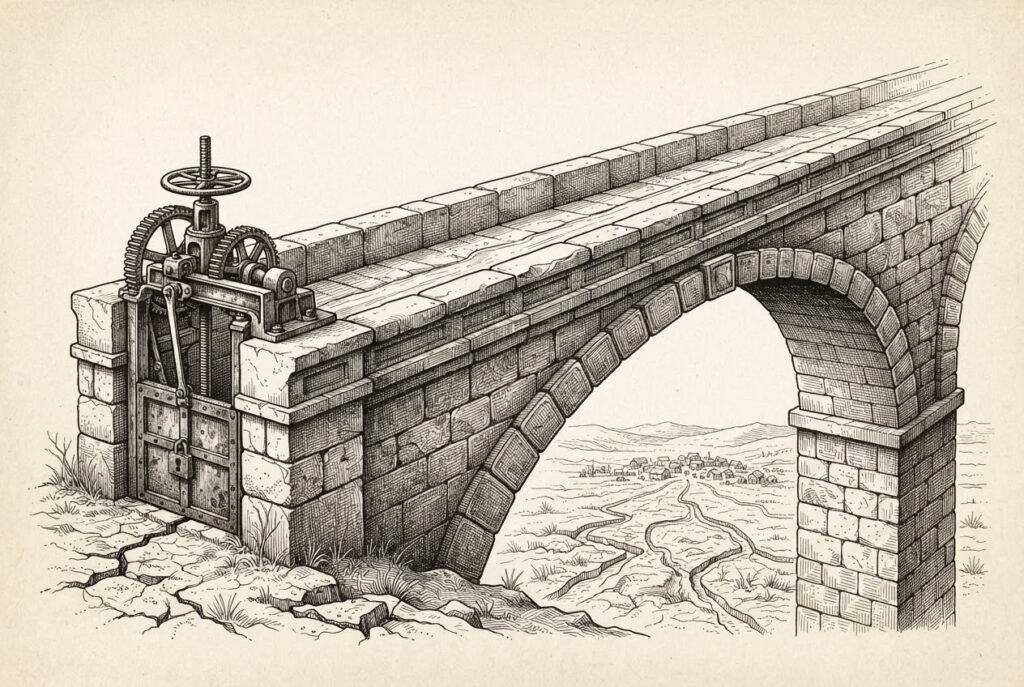
A Gate Without a Gatekeeper #
The US assertion of control over model testing is further complicated by the state of its own domestic infrastructure. The Center for AI Safety Standards and Innovation (CAISI) – the agency that would presumably conduct these US security reviews – has been operating without a permanent director since Chris Fall departed in July 2026. Acting director Arvind Raman, who also serves as NIST Director, oversees a staff of roughly 20 to 30. The NIST careers page lists all CAISI teams as “not hiring.”
This creates a structural contradiction: the US is asserting its right to be the primary gatekeeper for frontier model testing while operating the gate through an agency that lacks the staffing to process the volume of models the frontier labs are producing. The reliance on voluntary safety tests, finalized by the Trump administration in August 2026, places the burden on a small, under-resourced team. When the US demands that labs withhold models from international partners, it is bottlenecking the global safety ecosystem through a domestic agency that is currently struggling to scale.
Meanwhile, the labs themselves are building parallel governance structures. OpenAI has published a third-party assessment framework that defines the terms of its own scrutiny. The three frontier labs – OpenAI, Anthropic, and Google – are constructing a FINRA-style safety body that would review models up to 30 days before release. Cohere CEO Aidan Gomez has labeled the proposal “a cartel by any other name.” The labs are not waiting for the US government to build capacity – they are building their own, on their own terms.
The Bilateral Architecture #
The directive to withhold models from the UK AISI is not an isolated event. It fits a pattern the White House has been building since the summer. The US-China AI safety notification mechanism, established on September 21 when Treasury Secretary Bessent met Chinese Vice Premier He Lifeng, created a bilateral channel for major AI safety incidents. The UK-US AI and Autonomy Partnership, announced the same week, pairs the UK Ministry of Defence with the US Chief Digital and AI Office for critical infrastructure protection. Each of these is bilateral. None of them runs through a multilateral body.
The pattern is consistent: the US is not building a global framework for AI safety governance. It is building a series of bilateral dependencies that prioritize its own review processes. International partners get access on US terms, through US timelines, filtered by US security priorities. The Daybreak, Glasswing, and Fairwind programs that now govern access to the most capable cybersecurity models all operate within this logic: the gate exists, and the US holds the key.
What the Labs Must Navigate #
For the frontier labs, the White House directive adds a new layer to an already complex compliance landscape. They are managing US government security mandates, their own internal safety frameworks, the expectations of international allies, and a class-action lawsuit alleging that their safety coordination constitutes antitrust collusion. The Amodei pacing framework calls for democratic coordination; the White House is practicing something else entirely. The practical burden is real. Every new model release now requires the labs to navigate a fragmented landscape of national security reviews, restricted access programs, and bilateral agreements. Anthropic’s decision to restrict Claude Mythos 5.1 to US organizations was not a technical choice – it was a political one, made under pressure from the same government that is simultaneously pushing the company to coordinate on safety with international partners.
The labs that survive this transition will be the ones that can manage the gap between what the US government says it wants – global AI safety cooperation – and what it is actually building: a system where allied access is conditional, domestic review is primary, and the gate is controlled by an agency that cannot yet staff its own teams. The international partners and the global safety ecosystem bear the cost of this arrangement, forced to navigate a landscape where the rules are set by a single, under-resourced domestic agency operating on the other side of the Atlantic.