The Transformation Edge: Why AI is forcing the CFO and CHRO to rewrite the enterprise together
There was a time when the org chart told you how the company worked. Finance managed capital. Human resources managed people. Information technology managed systems. Operations managed workflows.
AI is blowing that model apart, creating a new discipline of “workforce economics,” where human talent, digital labor, technology investment and productivity increasingly have to be managed as one interconnected system.
The enterprise is becoming a mix of people, agents, data, models and workflows, all consuming capital and all contributing to output. That means the old boundaries between finance and human capital are disappearing fast.
And one of the most important new partnerships in the C-suite is emerging between the chief financial officer and chief human resources officer.
This is bigger than collaboration. It’s becoming a new operating model.
Workforce economics rewrites the C-suite
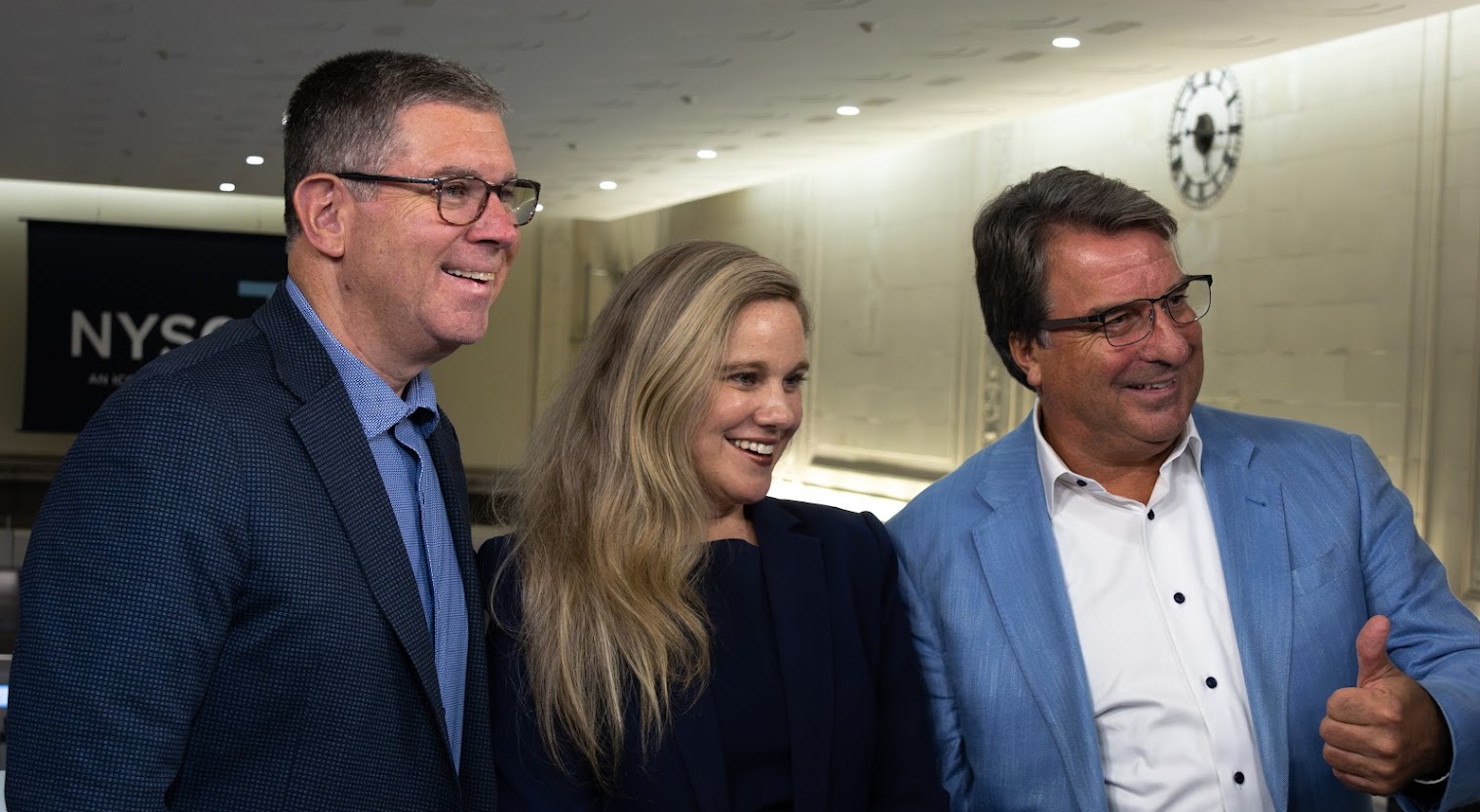
In the latest installment of IBM’s “Transformation Edge: A C-Suite Reinvention Series,” I talked with Jim Kavanaugh (pictured, left), senior vice president and chief financial officer of IBM Corp., and Nickle LaMoreaux (right), senior vice president and chief human resources officer of IBM, at theCUBE’s New York Stock Exchange studio. The conversation quickly landed on something I think every enterprise leadership team should be studying: workforce economics, in the words of Kavanaugh.
Five years ago, the boundaries were obvious, according to Kavanaugh. Finance handled budgets, risk and capital allocation. HR handled people, skills, compensation and culture.
That separation no longer works.
“Today, in the economics of business, technology is forcing the convergence … of the human capital strategy and the financial strategy,” Kavanaugh said.
That is the transformation.
AI creates a new set of resource-allocation decisions. Should a company hire? Reskill? Automate? Build an agent? Buy technology? Partner? Where should productivity gains go? Into margins? Product development? Growth? Workforce development?
Those decisions involve capital and people simultaneously.
“I call it workforce economics,” Kavanaugh said. “It is strategy, business model, financial model, human capital, culture all coming together.”
The org chart now has digital labor
We’ve been tracking this shift across SiliconANGLE.
At IBM Think, IBM Consulting described managing more than 4,000 digital workers across 450 active projects, including agents based on IBM, Anthropic and OpenAI technologies. The model gives IBM visibility into utilization and lets it retire agents that aren’t generating value. As SiliconANGLE reported in May, managing agents is beginning to look surprisingly similar to managing employees.
That doesn’t mean agents are employees. It means enterprise leaders now have to decide which work belongs to humans and which belongs to technology.
LaMoreaux framed the problem simply: “What do you want your human capital to do? Start with that,” she said. “And what do you want the technology to do?”
That distinction matters because enterprises are getting swept up in agent mania. Not every problem needs an agent. Sometimes generative AI is enough. Sometimes traditional automation works. Sometimes the answer is better data.
Start with the workflow, not the technology.
Workflow beats individual productivity
This is where IBM’s Client Zero strategy becomes important.
Companies have spent the last few years giving employees copilots and AI tools to make individual tasks faster. There is value there. But the real enterprise leverage appears when AI changes the workflow.
“We found that the most value capture was in doing it at the workflow level, thinking about enterprise-wide workflows where agents were working alongside human talent, whether it was procurement or finance or HR,” LaMoreaux said.
That lesson is showing up outside IBM as well. The IBM Institute for Business Value’s new global CHRO study, released Sept. 21, found that only 26% of organizations clearly define work across human-led, AI-assisted and AI-executed activities. Organizations that do make those distinctions report stronger quality and risk outcomes, according to the study.
The message is clear: AI transformation isn’t about giving everyone a chatbot. It’s about redesigning how work gets done.
Client Zero gets operational
IBM’s own transformation provides a useful case study.
Kavanaugh described the old shared-services architecture that organized functions vertically across finance, HR, marketing, IT and other departments. That model delivered process standardization and economies of scale for decades.
But it also fragmented workflows.
In IBM’s quote-to-cash process, the company identified 364 interactions across organizational domains, according to Kavanaugh. IBM began redesigning those systems around end-to-end intelligent workflows such as quote to cash, hire to exit and record to report.
The results Kavanaugh cited were substantial: “60% productivity, 75% cycle time velocity improvement and 60% cash conversion cycle improvement.”
The financial context is also significant. IBM entered 2026 targeting $5.5 billion in annual run-rate productivity savings by year-end, up from $4.5 billion at the end of 2025. IBM has said those savings are helping fund increased investment in areas including AI and quantum computing.
This connects directly to the value-creation flywheel we discussed earlier in this series. Productivity creates investment capacity. Investment creates growth. Growth creates enterprise value.
The critical mistake is treating productivity solely as cost reduction.
Skills are future value
That same logic applies to people.
Traditional performance systems reward what an employee has already delivered. AI-era workforce systems increasingly have to account for what an employee will be capable of doing next.
LaMoreaux put it perfectly: “Your business results are what you did for me yesterday. Your skills are what you’ll do for me tomorrow,” she said.
That may be one of the most important lines from this conversation.
IBM’s latest CHRO research found that 60% of employees worry AI is eroding their skills, while critical thinking and human judgment rank among the capabilities CHROs consider increasingly important. So, the workforce problem isn’t simply displacement. It’s capability.
Companies have to continuously determine which skills are appreciating, which are decaying and which can be amplified by AI. That changes compensation. Training. Hiring. Organizational design. Capital allocation.
Again, CFO plus CHRO.
Transparency becomes an operating system
There’s another element that matters: trust. AI moves faster than traditional corporate communication. Leaders often will not have complete answers before employees can already see their jobs changing.
The old leadership model rewarded certainty. The new one requires transparency.
LaMoreaux described IBM’s approach this way: “Tell people what you know, tell people what’s likely and be really clear about what you don’t know yet,” she said.
That is not weakness. It is operational credibility.
IBM learned that lesson firsthand. LaMoreaux acknowledged that in redesigning its hire-to-exit workflow, the company initially did not spend enough time explaining how jobs would change and which skills employees would need.
That became part of the playbook.
“Don’t try to sugarcoat what’s happening, how the work is changing,” she said. “Be clear about what you’re trying to deliver. Just make sure that that transparency and communication is there.”
That may matter more as companies deploy increasingly autonomous systems. Technology can move instantly. Organizations cannot.
People need context to move with it.
The C-suite becomes a system
This is where I think the bigger architecture becomes visible.
We’ve talked extensively on theCUBE about AI becoming a system of intelligence. Recent SiliconANGLE analysis has focused on proprietary data and domain expertise becoming the foundation for enterprise intelligence. But the C-suite itself now has to behave like a system.
Strategy cannot operate separately from technology. Technology cannot operate separately from capital. Capital cannot operate separately from workforce design. Workforce design cannot operate separately from culture.
The feedback loops are too fast.
That’s why the CFO and CHRO relationship is becoming so important. One owns the economics of capital. The other owns the economics of human capability.
AI sits directly between them.
The bottom line
The next enterprise operating model won’t be organized around people versus AI. It will be organized around work.
What work creates value? Who or what should perform it? What skills are required? What technology should support it? What does it cost? Where should productivity be reinvested?
Those are no longer separate finance, HR and technology questions. They are one business question. The companies that understand that will stop treating AI as a collection of tools and start redesigning the enterprise around intelligence, workflows and value creation.
Kavanaugh summed up the leadership requirement simply: “Our job is to provide a foundation to let our people ‘go, drive, win, succeed,’” he said.
That is the Transformation Edge. AI may scale intelligence, but leadership still decides where that intelligence goes.
Here’s the complete video interview, part of SiliconANGLE’s and theCUBE’s coverage of IBM’s “Transformation Edge: A C-Suite Reinvention Series”:
( Disclosure: TheCUBE is a paid media partner for IBM’s “Transformation Edge” interview series. Neither IBM, the sponsor of theCUBE’s event coverage, nor other sponsors have editorial control over content on theCUBE or SiliconANGLE.)*
Photo: SiliconANGLE
Support our mission to keep content open and free by engaging with theCUBE community. Join theCUBE’s Alumni Trust Network, where technology leaders connect, share intelligence and create opportunities.
- 15M+ viewers of theCUBE videos , powering conversations across AI, cloud, cybersecurity and more
- 11.4k+ theCUBE alumni — Connect with more than 11,400 tech and business leaders shaping the future through a unique trusted-based network
Are you an AWS customer? Support SiliconANGLE financially by buying your AWS services from our Marketplace portal page and links: https://siliconangle.com/aws-marketplace/
About SiliconANGLE Media
theCUBE AIand theCUBE SuperStudios — with flagship locations in Silicon Valley and the New York Stock Exchange — SiliconANGLE Media operates at the intersection of media, technology and AI.
Founded by tech visionaries John Furrier and Dave Vellante, SiliconANGLE Media has built a dynamic ecosystem of industry-leading digital media brands that reach 15+ million elite tech professionals. Our new proprietary theCUBE AI Video Cloud is breaking ground in audience interaction, leveraging theCUBEai.com neural network to help technology companies make data-driven decisions and stay at the forefront of industry conversations.