Expert Opinion U.S. carriers should become AI platforms, not just resellers.
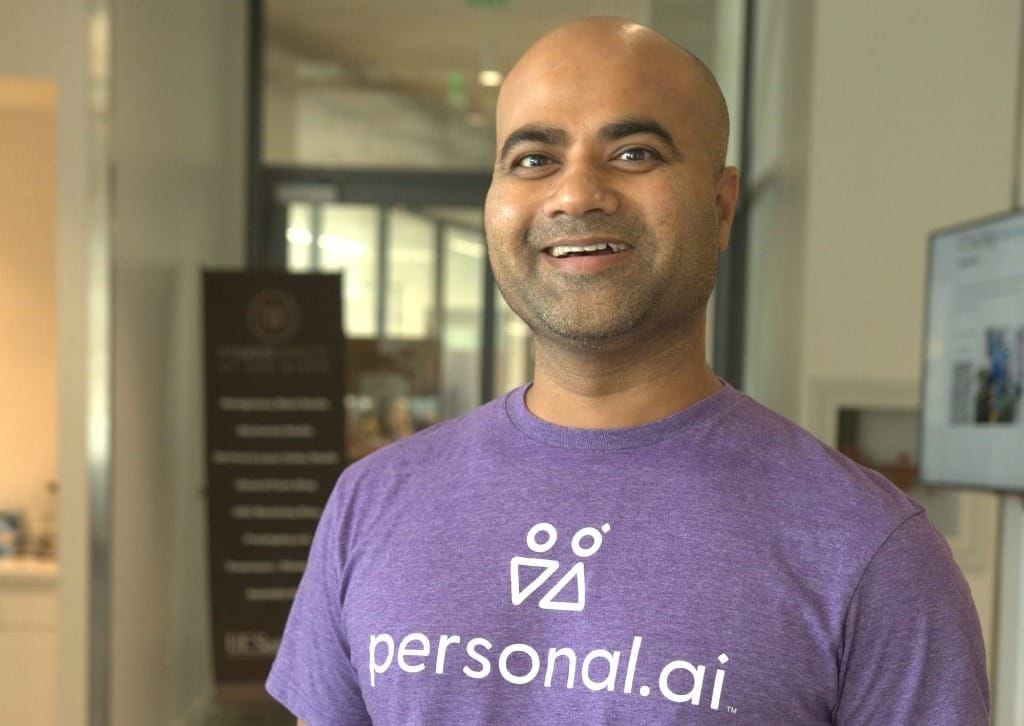
Suman Kanuganti
When China's telecom carriers announced they would start selling AI token plans, I had two reactions in quick succession. The first was validation. The second was a strategic alarm.
What China's carriers are doing is real. They are packaging AI access into consumer plans and routing traffic to large language model platforms. That is a meaningful market signal. But they are acting as a distribution layer, not an aggregation layer. And that distinction is worth hundreds of billions of dollars.
Distribution, at best, captures 10 to 15 percent of revenue. Aggregation lets carriers own the stack: the experience, the economics, and the relationship. For U.S. carriers, the gap between those two outcomes is the difference between being a toll road and being a platform.
The First move is closer than you think
Before carriers even consider aggregating AI platforms, there is a first-order opportunity sitting inside the network right now: call handling, missed call management, and text response. These are the core primitives of the carrier network. Talking and texting. No other technology company has native access to these at the carrier level.
A personal agent that lives at your phone number does not require a new app. It does not require a separate sign-up. It lives at your number. When someone calls or texts, the agent is already there. That is a carrier-exclusive capability. No big tech company can replicate it without the carrier's cooperation.
This is where the conversation should start.
The iPhone moment Was 2007. Tokens are 2026.
In 2007, data plans were metered and premium. Only about 10 percent of mobile subscribers had meaningful data access. Then the iPhone happened and AT&T moved to a $30 unlimited data plan (up from $20) and unlocked 90 percent of the market. Data became the product.
We are now one year away from the 20-year anniversary of that decision. And the parallel is exact. Tokens are today's data. The personal agent is what makes tokens the product, just as the iPhone made data the product.
And the math is straightforward. A personal agent tied to a phone number can expand ARPU by roughly $10 per month per subscriber. For one carrier alone, that is a $12 billion annual revenue opportunity at the base case. Not a projection built on speculation; a conservative floor, in fact.
Three layers of revenue
The architecture I would put in front of every carrier CEO right now has three layers.
The first layer is immediate: a token pool built into the consumer subscription, powering carrier-native AI use cases. Call handling, texting on your behalf, proactive reminders. Revenue from consumers. No third party required.
The second layer is aggregation. Once the native layer is established, carriers aggregate LLM providers (OpenAI, Anthropic, Gemini, Perplexity) for tasks that require deep reasoning or web search. Consider a simple use case: the personal agent knows it is Father's Day weekend, surfaces the idea of recreating last year's dinner reservation, and routes to an LLM for restaurant options. The carrier bills the LLM platform for that access. Revenue from AI providers, not just from subscribers.
The third layer is where it gets generational. Agent-to-agent communication, where the personal agent transacts with enterprise service agents from Uber, OpenTable, or Bank of America, without the user ever opening an app. The carrier becomes the platform. Not unlike the App Store model, but for agents. The carrier takes a share of transaction value. Revenue from enterprises.
The future of the app store could be the agent store that resides with the carriers.
Privacy is a carrier advantage, not a liability
Memory stays on the network. It does not pass through a third-party platform. A phone call on a carrier network is more private than a FaceTime call on Apple's infrastructure. CPNI compliance is already built into how carriers operate. That is an asset in an era when enterprise and consumer trust in AI data handling is eroding fast. Carriers have always been trusted custodians of sensitive communication, and that reputation transfers directly here.
The window is now
This decision will not get made below the CEO level. The gravity is real, and it is the kind of bold move that AT&T made in 2007 when it bet its consumer business on a device from a company that had never made a phone before.
China's carriers moving first is not a reason to follow their model. It is a reason for U.S. carriers to move faster and smarter, becoming the platform. The question is whether they seize the moment.
Suman Kanuganti is Co-Founder and CEO of Personal AI, the AI memory company building carrier-native memory infrastructure that turns every identity on a network into an evolving agent. Since 2020, Personal AI has been developing AI that combines memory with context, making tokens the fourth primitive on carrier rails, alongside Talk, Text, and Data. This Expert Opinion is exclusive to Broadband Breakfast.
Broadband Breakfast accepts commentary from informed observers of the broadband scene. Please send pieces to commentary@breakfast.media*. The views expressed in Expert Opinion pieces do not necessarily reflect the views of Broadband Breakfast and Breakfast Media LLC.*