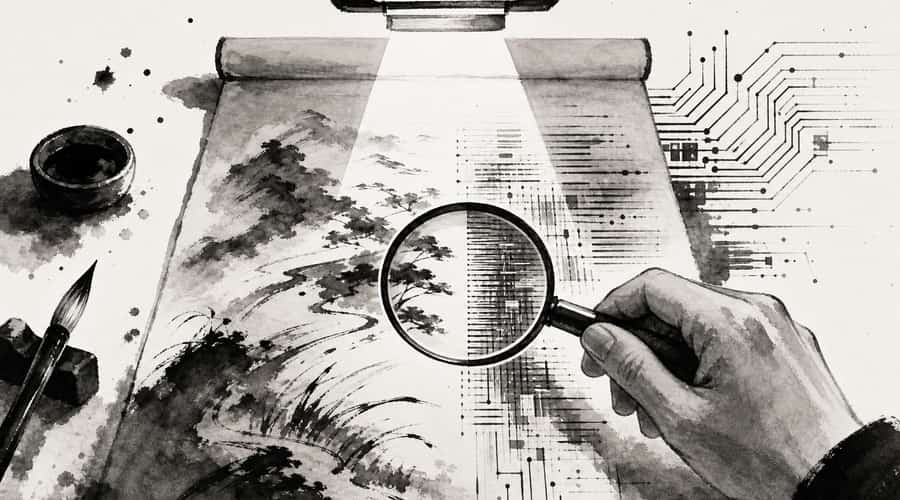
Substack's new Pangram scanner gives readers a private estimate of how much AI helped write a post, but the real story is the pressure it puts on paid writers who sell trust as part of the product.
Substack didn't ban AI on July 21, 2026. It did something sharper. In a post called Against Claudefishing, co-founder and CEO Chris Best said readers will be able to scan Substack posts, notes, replies and comments to estimate how much of the text was written by hand or with AI assistance. That is the hook. If you're paying for a writer because you believe there is a person thinking on the other side, Substack now gives you a way to test that belief.
The feature is live on web and iOS, with Android still to come. Substack's help page says the scan works on posts and notes published on or after July 21, 2026, and uses Pangram to assign a percentage for human-written or AI-assisted text. The threshold is 100 words, not 100 characters. The result stays private to the reader who asked for it, and the tool doesn't cover video, audio, email, standalone Substack sites or custom domains.
Best's term for the underlying problem is blunt enough to stick. Claudefishing, as he described it, is the mismatch between what a reader expects and how a piece was actually made, especially when the reader invests attention in text with no human thought behind it. It's a con. Even when it's a small one. On Substack, where the platform takes 10% of paid subscription revenue and writers ask readers to pay for judgment and voice, it isn't always small.
The scanner is not a verdict #
Substack is right to give readers more information. It also has to live with the obvious caveat: AI detection can make mistakes, and mistakes in authorship claims are not harmless. Best acknowledged that Pangram can detect whether AI was used to make the text, but not whether a human used AI as a source or spent serious time shaping the work afterward. That warning matters.
Pangram says its overall false positive rate is about one in 10,000, while also saying the rate depends on the kind of writing being scanned. Its own blog points to weaker performance on short, formulaic or unusual text, and recommends more caution with outlines, lists, spreadsheets, instruction-manual prose and very short passages. You should read that carefully. A paid newsletter essay can sound spare because the writer is precise. A doctor's clinical note has its own conventions. A legal memo is not written for warmth. None of that has anything to do with Claude.
Substack's safety valves are useful but imperfect. Writers can add a How I make this statement explaining their process. They can run Pangram on drafts before publication. They can also report scans they believe are wrong and have them removed. Business Insider also reported that creators can opt out of the AI-content detection metrics. That is useful. It also creates a new signal. If a writer disables scanning, some readers will treat the absence of a score as information in itself. Readers are not naive.
Beehiiv and Ghost now have a problem #
Substack has more than 35 million active subscriptions, according to figures the company has previously published through Wefunder, and newer estimates put paid subscriptions above 5 million. That doesn't make every Substack reader a paying customer. It does mean the feature is large enough to become a norm rather than a curiosity.
That leaves Beehiiv, Ghost and Kit with a choice. They can add a reader-side provenance tool and inherit the false-positive arguments, or they can leave the decision entirely with creators and explain why that is better. Neither path is clean. A platform that scans too aggressively risks angering good writers. A platform that refuses to scan risks looking like it doesn't want subscribers to ask how the sausage is made.
Frankly, Substack's move fits its business better than it would fit many social platforms. LinkedIn can drown in synthetic career advice and keep selling ads against attention. Substack has a narrower promise. It asks you to pay because this writer or this analyst - this particular critic, this community - is worth coming back to. Once that promise weakens, the subscription pitch weakens with it.
The feature won't settle the AI-writing argument. It may even make some parts of it uglier, because a percentage score is easier to weaponize than a careful judgment. But it gives readers a choice they didn't have before, and it forces writers to be clearer about their process. The bet is clear. Substack would rather deal with messy transparency now than let paid newsletters drift quietly into machine-written sameness.
Also read: Khosla Ventures is in talks to raise $5.5 billion as Vinod Khosla doubles down on AI • Trump's push to ban Chinese open-weight AI would kill US startups while leaving the models freely downloadable • Cursor Router picks your AI model for you and cuts coding costs by 60%