Smaller, less digitized Southeast Asian markets are adopting AI-native systems faster than mature economies—partly because they don’t have to deal with the baggage of legacy infrastructure.
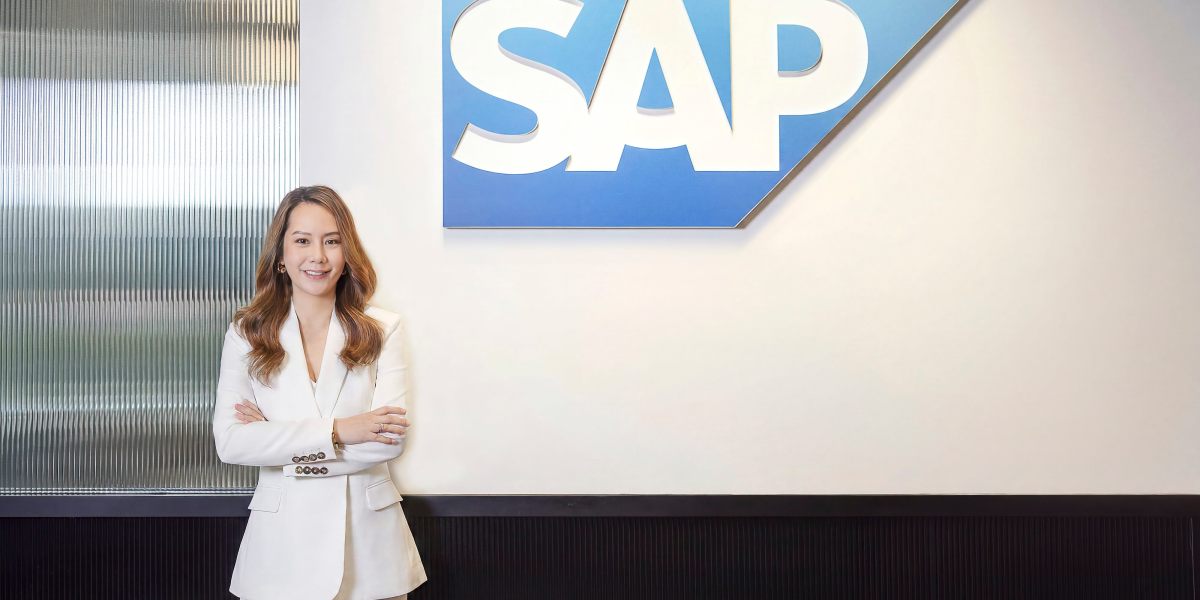
“Southeast Asia holds a lot of market potential because it’s very hungry for innovation,” Verena Siow, SAP’s new APAC chief, tells Fortune in an interview at the firm’s Singapore office. “The economies which had a later start are looking to leapfrog into the latest and greatest tech.”
Southeast Asia, home to young, digitally-savvy populations and a rising middle class, offers fertile ground for leapfrogging, a phenomenon where countries bypass traditional stages of development and move directly towards newer technologies and business models.
For European software giant SAP, this has translated into burgeoning interest in its business AI propositions. “Companies in this region tend to have fewer resources and smaller IT departments, so they’re looking to move straight to the cloud, rather than explore on-premise software, which requires more maintenance,” Siow explains. She points to regional firms like transport conglomerate ComfortDelGro, and carriers like Thai Airlines and Singapore Airlines, as early adopters of AI. (In May, SAP unveiled a new business AI platform, which brings together existing offerings like its business tech platform, as well as AI and cloud services, for firms looking to build and scale their AI use.)
Disputing the SaaS-pocalypse
Despite Siow’s optimism, she admits that AI adoption among APAC firms remains gradual. A research study commissioned by SAP and Oxford Economics last November found that despite spending an average of $14.5 million per year on AI, Singapore firms report an average ROI of just 16%.
“There is still a lot of potential to realize,” Siow says. “Many organizations talk about deploying agents, and while it’s good that they’re moving from pilots towards execution, AI integration is still very piecemeal.” (She adds that the veracity and rigor of data is also a key factor which firms tend to neglect.)
Artificial intelligence—and the breakneck speed at which it’s advancing—has forced ‘legacy’ firms like SAP to re-think their business models.
Analysts and market watchers alike have pointed to the SaaS-pocalypse, or the belief that agentic AI will render SaaS platforms obsolete, as one of the greatest challenges to software companies today.
Siow, however, pushes back against this notion.
“You still very much need applications and processes in place to get the best outcomes from AI,” she argues. “Vibe-coded apps can maybe serve ten people, but for large enterprises, you still need platforms like SAP to ensure that security and governance measures are in place.”
SAP’s yearly earnings show that the Germany-founded software firm isn’t on the decline. In 2025, the firm raked in an annual revenue of 36.8 billion Euros, or $41.8 billion, up 8% from the year before. Its cloud business also grew, bringing in 21 billion Euros, or $23.9 billion, in yearly revenue, up 23% from 2024. (Despite this, SAP’s software revenue has taken a hit, falling 34% year-on-year to just 0.45 billion Euros.)
The software company’s shares are down 25% for the year thus far.
SAP’s first female APAC lead
Siow was appointed as SAP’s APAC lead on July 2, after rotating through six roles over a 14-year tenure at the firm. She joined SAP in 2011, heading Asia-Pacific Japan sales for the firm’s education software. In 2018, she was elected as SAP’s managing director of Indochina, and in 2020, the president and managing director for Southeast Asia.
“When I was first appointed as Southeast Asia president, it was during the COVID pandemic when we worked in isolation in our own rooms,” Siow says. “I had a bit of imposter syndrome, since there was no one to talk to, and wondered whether I was right for the job.”
Siow eventually settled into her role, and grew to appreciate the unique business needs of the APAC region’s firms. “In APAC, although over 90% of Fortune 500 companies use SAP, 80% of our customer base is actually small and medium sized enterprises,” she adds. “These firms often look to immediately leverage business AI solutions, as compared to larger companies which focus more on modernizing their existing platforms.”
Siow is the first woman to lead SAP’s APAC operations, taking over from predecessor Simon Davies, who stayed in the role for just over a year. She’s cognisant of the weight on her shoulders as the firm’s first female regional head, and wants not just to lead by example, but also pave the way for other women to scale the corporate ladder.
“Many female colleagues told me that my appointment proves that gender truly doesn’t matter,” Siow, who has two daughters, says. “It’s important not to let yourself be held back, or think that just because you’re Asian and female, that you can’t achieve your dreams.”
Subscribe to Fortune Gulf Brief. Every Tuesday, this new newsletter delivers clear-eyed, authoritative intelligence on the deals, decisions, policies, and power shifts shaping one of the world’s most consequential regions, written for the people who need to act on it.