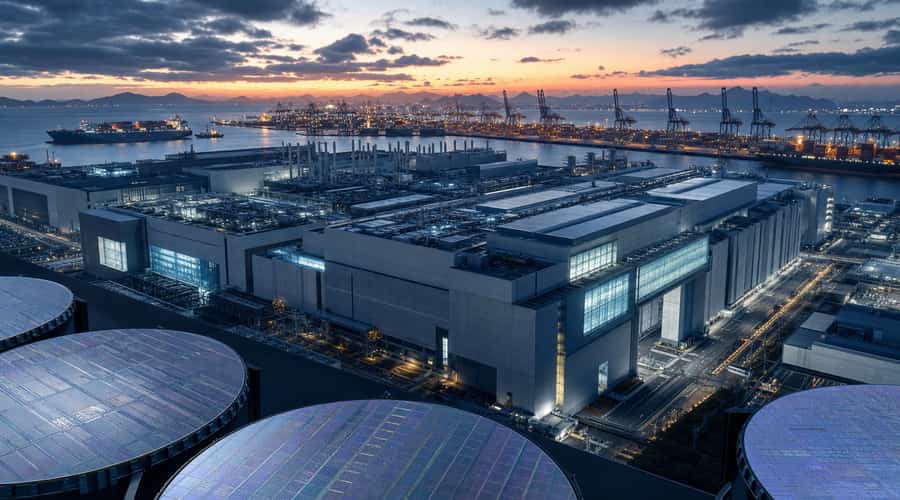
South Korea's export record is real, but it isn't a broad economic miracle. It is a memory chip boom with Samsung and SK Hynix sitting at the center of the AI buildout.
South Korea shipped $29.8 billion of goods in the first ten days of July, according to Korea Customs Service data reported by Yonhap and KBS World. That was the largest 10-day export figure the customs agency has recorded. Semiconductor shipments did the real work, nearly tripling from a year earlier to $11.2 billion and making up 37.6% of total exports for the period.
So be careful with the headline number. A 53.9% jump sounds like the whole economy is moving at once. It isn't. Cars rose 5.7% in that July 1 to July 10 window. Ships rose 75.1%, petroleum products 22.7% - but the scale is different. Chips were worth almost six times the auto export total for the same period. If you're trying to understand Korea's trade balance right now, start with memory.
This isn't a one-month blip. In June, South Korea became the fourth country after Germany, China and the United States to cross $100 billion in exports in a single month, according to figures from the Ministry of Trade, Industry and Resources. Total exports hit $102.25 billion, up 70.9% year over year. Semiconductors did the heavy lifting again, rising about 200% to $44.82 billion, the first time Korean chip exports had topped $40 billion in a month.
Look at what's actually inside those chip numbers and the story narrows further. High bandwidth memory, the stacked DRAM used in AI accelerators and data center systems, brought in about $12.68 billion in June, according to trade data cited by TradingKey. Counterpoint Research data reported by Yonhap put SK Hynix at 62% of the global HBM market in the second quarter of 2025 - miles ahead of Samsung's 17% and Micron's 21%. Two Korean companies still dominate the supply chain. That is the point.
The central bank moves too #
On July 16, the Bank of Korea raised its base rate by 25 basis points to 2.75%, its first increase since January 2023. The central bank's own statement said growth had strengthened, led by exports and investment, while inflation was expected to stay above target for a considerable time. You don't need to dress that up. Korea's chip cycle is now strong enough to shape monetary policy.
Governor Shin Hyun Song also made the growth call plain. UPI reported that Shin told reporters the bank's previous 2.6% growth forecast for 2026 was "far too low" and could be revised substantially higher when the next outlook lands in August. The official Bank of Korea remarks said Korea is benefiting as a key player in the global AI value chain, with semiconductor prices feeding into corporate profits, investment, wages and tax revenue.
That is a big shift from treating chips as one export category among many. When a memory boom changes the inflation outlook, the GDP forecast and the rate path, it has moved out of the earnings-call corner of the market. It is national policy now.
The risk inside the record #
The supply constraint cuts both ways for Korea. It helped produce a June trade surplus of $36.15 billion, the first time the monthly surplus had topped $30 billion, according to the trade ministry. But it also leaves the country more exposed to a small group of customers and products than the record export figure suggests. If AI infrastructure spending cools, there isn't an obvious second engine ready to replace HBM.
Frankly, that's the risk hiding inside a genuinely good number. South Korea's non-semiconductor exports also rose in June, so this isn't a story of total weakness outside chips. But the force is uneven. Semiconductor exports alone accounted for roughly 44% of all exports that month, and HBM is the part investors care about most because it sits closest to Nvidia, Google, AWS, Microsoft and the rest of the AI server buildout.
For now, the investment keeps coming. Yonhap reported that an industrywide 392 trillion won, or about $252.5 billion, plan will put new AI and semiconductor investment into Korea's central Chungcheong region, including HBM fabs and packaging facilities tied to Samsung Electronics and SK Hynix. That is a real bet, not a slogan. Whether it pays off depends on how long hyperscalers keep buying memory at this pace, and whether the AI infrastructure boom can survive its own cost. Also read: A federal judge just approved Anthropic's $1.5 billion settlement with authors • Oracle Sues Wisconsin Over A $7 Billion Data Center Collateral Bill • A Judge Just Capped Sony's Copyright Case Against Udio at 333 Songs