SK Hynix's planned Nasdaq ADR listing is not just a big financing event. It's a public bet that AI memory demand has moved beyond the old boom-and-bust memory cycle.
SK Hynix is coming to Nasdaq because the AI trade has finally found the part of the stack that investors were still making too hard to buy. On June 24, parent company SK Square said about 45.4 trillion won, roughly $29.7 billion, worth of SK Hynix American depositary receipts would list on Nasdaq on July 10, according to MarketWatch. That size would put the deal in rare company, bigger than Alibaba's $21.8 billion New York listing in 2014 and close enough to Saudi Aramco's 2019 IPO to make the comparison unavoidable.
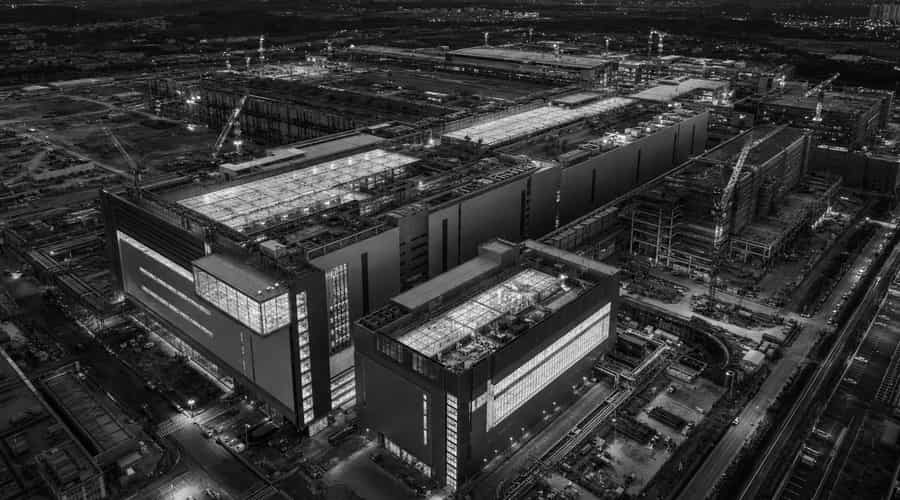
But don't stop at the headline number. The real story is what SK Hynix says it needs the money for: new fabrication capacity, EUV lithography tools, and the factory base needed to keep feeding Nvidia-style AI systems with high-bandwidth memory. If you want to understand where AI infrastructure is going, look at the boring physical things first. Cleanrooms. Packaging plants. EUV scanners from ASML. Those are the places where the story either becomes real or runs out of supply.
SK Hynix already knows what running out of supply looks like. In April, Tom's Hardware reported that SK Hynix had warned demand for AI-related memory was stretching years ahead, with Samsung making similar comments about shortages lasting into 2027. Customers are reserving supply before the fabs can produce it. That is not a pitch deck forecast. That's a queue.
The company's first-quarter numbers show why it can make such a large move now. SK Hynix reported record quarterly revenue of 52.6 trillion won and operating profit of 37.6 trillion won in Q1 2026, helped by booming HBM sales for AI infrastructure. It was supposed to be a seasonally weak quarter for memory. Instead, it looked like a company sitting in the narrowest part of the AI supply chain and charging accordingly.
Frankly, this is what market power looks like when the product is genuinely scarce. Nvidia can design the accelerator, hyperscalers can order the racks, and data center operators can sign the power contracts, but the system still needs stacked memory close enough and fast enough to keep the processors fed. SK Hynix, Samsung, and Micron dominate that market. SK Hynix has the lead in advanced HBM supply, with Tom's Hardware putting its share at more than 60%, and Nvidia is the customer everyone else watches.
Why Nasdaq matters #
The odd part is that SK Hynix has not been valued like the company sitting in that position. Its Seoul-listed shares have traded at a discount to US chip names, partly because investors still remember the old memory business: brutal cycles, too much capacity, falling prices, then another recovery. You can see why that habit exists. DRAM has punished optimism for decades.
This time, the habit may be wrong.
A Nasdaq listing gives US investors a cleaner way into the company without buying directly in Seoul or using a memory-focused fund. MarketWatch noted that US investors currently have to go through the South Korean exchange or vehicles such as the Roundhill Memory ETF. That friction matters when the buyer base is already trained to pay up for Nvidia, TSMC's ADR, and ASML. SK Hynix wants to be priced as an AI infrastructure supplier, not as yesterday's commodity memory stock.
The timing helps. Two days before the ADR news, The Wall Street Journal reported that SK Hynix briefly overtook Samsung Electronics to become South Korea's most valuable company. Its market capitalization reached 2.080 quadrillion won, about $1.36 trillion, against Samsung's 2.067 quadrillion won based on common shares outstanding. Samsung later pointed out that including preferred shares still left it ahead, and a global tech selloff quickly hit both names. Even so, the moment landed. A company that nearly collapsed two decades ago had become valuable enough to challenge South Korea's corporate giant.
That tells you something useful about the market's current judgment. Investors are no longer treating HBM as a side product inside the memory industry. They are treating it as a core AI input, alongside GPUs, advanced packaging, lithography equipment, and power. The Yongin and Cheongju investments fit that view. So does SK Hynix's 11.9 trillion won EUV order from ASML, disclosed earlier this year and reported by Bloomberg and Tom's Hardware as one of the largest publicly disclosed EUV equipment deals.
There is still a risk here, and it is not small. Memory companies have overbuilt before. AI spending can slow. A few large customers can change plans faster than a fab can be completed. You shouldn't pretend a $29.7 billion listing makes those risks disappear.
But the stronger point is simpler. SK Hynix is not raising this money because it needs a better story for investors. It already has the numbers, the customers, and the supply shortage. The Nasdaq move is about getting capital markets to price the company in the same world its factories are already operating in.
Also read: Agility Robotics is going public via SPAC at a $2.5 billion valuation and the deal is more credible than most • ASE Technology raises its 2026 capex to $8.5 billion as AI chip packaging demand overwhelms supply • AIP and Brookfield are both bidding for Stack Infrastructure's Asia operations and the $30 billion price tag explains exactly what AI has done to data center valuations