Predicting earthquakes has been an impossible dream for seismologists practically since the discipline first emerged over 150 years ago. To this day, in fact, the U.S. Geological Survey’s official FAQ states unequivocally, “No. Neither the USGS nor any other scientists have ever predicted a major earthquake […] and we do not expect to know how any time in the foreseeable future.”
But don’t lose hope yet. Researchers have trained machine-learning tools on subtle tectonic strain data collected near California’s San Andreas Fault, discovering previously unknown “slow-slip events,” which they report “may influence the timing and occurrence” of low-frequency earthquakes (LFEs). Some geoscientists have already called the field’s growing understanding of these slow tectonic shifts, effectively imperceptible on Earth’s surface, nothing short of a “revolution” in earthquake science given “the fact that they can trigger catastrophic large earthquakes.” By understanding how slow slips become LFEs, in other words, the new study has brought seismologists closer to understanding the true early warning signs that could one day help predict major quakes.
“We wanted to know if important slow displacement processes might be hidden in years of continuous deformation measurements,” the new study’s lead author, geophysicist & seismologist Zahra Zali, said in a statement translated via Google. “Artificial intelligence enabled us to recognize their patterns, which would otherwise have gone unnoticed.”
An ‘aseismic’ shift #
Faults can release the pressure that builds up due to stress on tectonic plates either quickly, via a seismic event, or slowly, via an “aseismic” slip. These latter slow slips, as Zali and her coauthors wrote in Nature Communications, “can last from minutes to months.” But, given that these events generate none of the rumbling waves recorded by seismometers, the phenomenon has been poorly understood until recently.
“These events are difficult to identify using conventional methods because they are small and often hidden within complex background signals,” Zali said. (In fact, as Penn State geoscientist Chris Marone noted in 2019, LFEs and slow slips were both considered “non-existent and theoretically impossible not long ago.”)
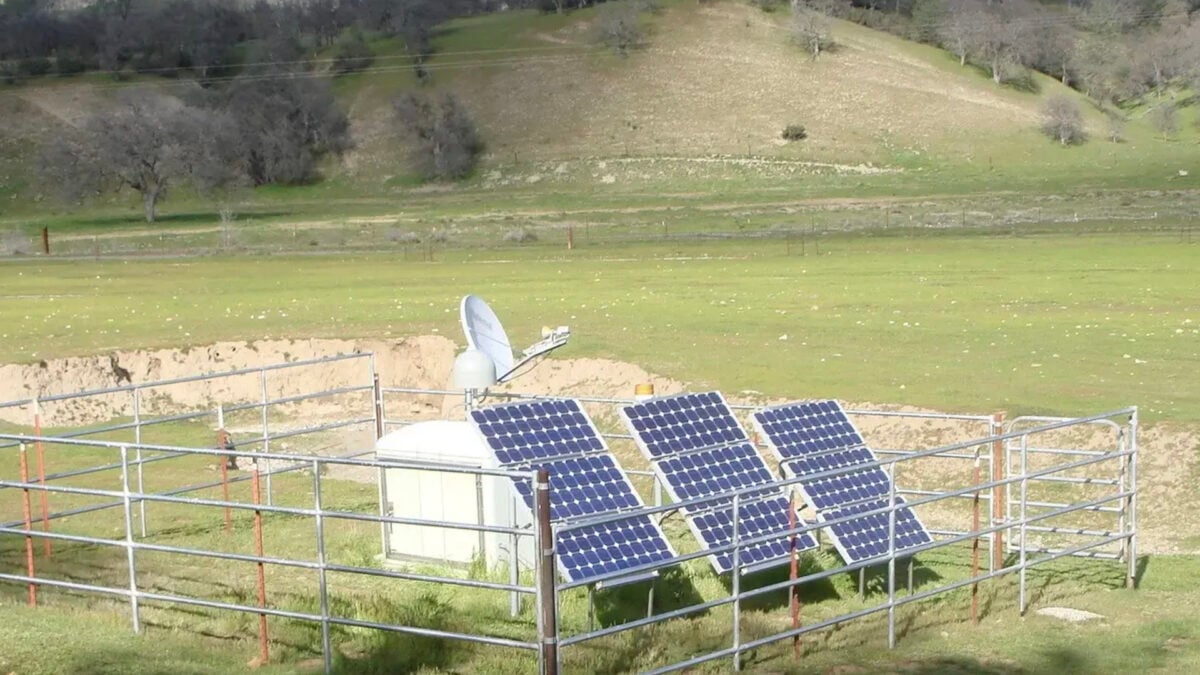
Zali and her colleagues in Germany and the United States collected a continuous daily feed of measurements via boreholes along California’s San Andreas Fault near Parkfield. They used sensitive strainmeters capable of capturing subtle deformations in these deep rocks—across mere seconds to multiple weeks—filling a data gap in between what seismometers and high-precision global positioning sensors (GPS) can currently collect.
The team had roughly eight years of this data to work with, taken from four strainmeters along the Parkfield section of the fault between 2009 and 2016: exactly the kind of overwhelming torrent of information one might want a dedicated deep learning AI to comb through for patterns. Zali and her colleagues found that these slow-slip events were often matched in time to LFEs locally, which they defined as within 6.2 miles (10 kilometers) nearby and under 12.4 miles (20 km) deep.
“Our results show that these ‘earthquakes in slow motion’ are not isolated phenomena […] suggesting that slow sliding plays an important role in the development of stress conditions along active faults,” as Zali’s coauthor Patricia Martínez-Garzón, a professor of applied seismology at GFZ, explained in a statement translated via Google.
Robot rock #
Zali and her coauthors hope to do more AI analysis on fault lines beyond the San Andreas to more thoroughly corroborate this apparent link between slow slips and more significant seismic activity. That work would help clear up the rather tricky reality that they had much more data on California LFEs, approximately 500,000 mini-quakes over their time period, compared to the only 92 slow-slip events they managed to identify near Parkfield.
Detecting these quiet preambles to major seismic activity, according to Zali, will be essential to understanding how fault lines build up into stress that can crack as natural disasters later on.
“Many important faulting processes occur without causing damaging earthquakes,” Zali noted. “By detecting these hidden signals, we can gain a more complete picture of how faults behave between earthquakes and how stress is transmitted through the Earth’s crust.”