For AI/ML practitioners, academic programmes that explicitly combine technical training with domain knowledge - here, Sanskrit and Indian languages - often produce two practical outcomes: curated, high-quality domain datasets and graduates with cross-disciplinary skills who can work on OCR, transliteration, and language-model fine-tuning for low-resource languages. These outcomes reduce friction for building production NLP pipelines applied to manuscript digitisation and cultural-heritage search, while also creating new evaluation sets for language models.
What happened
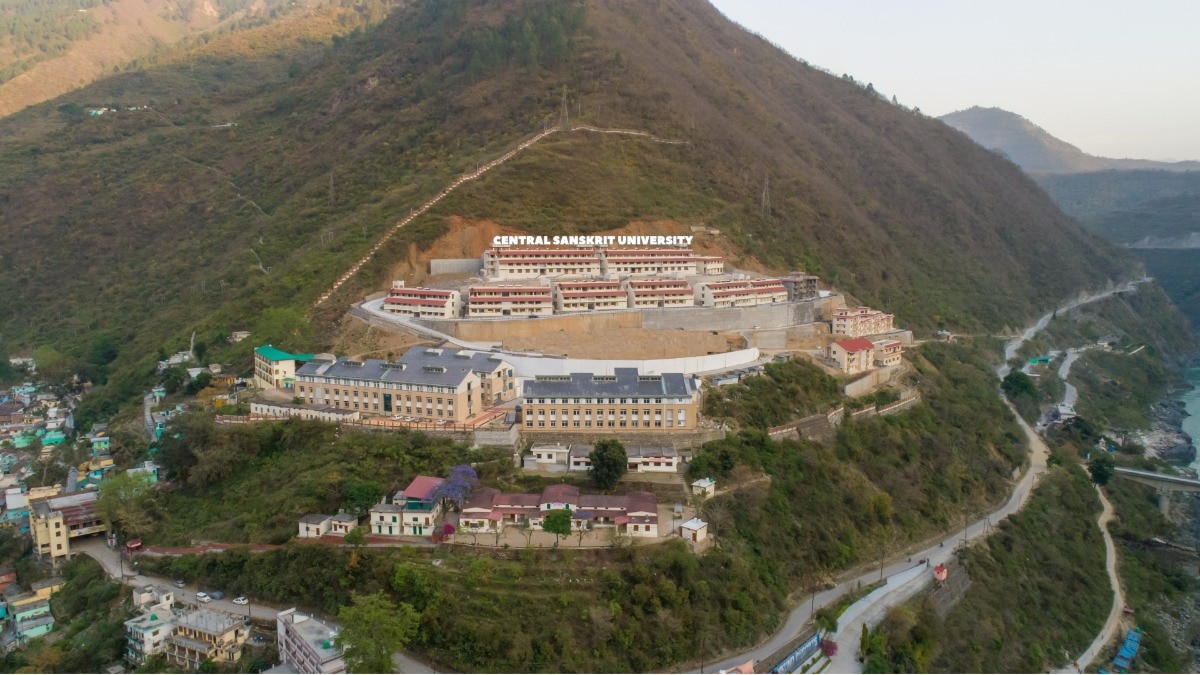
According to India Today and the Central Sanskrit University prospectus, Central Sanskrit University has launched an AICTE-approved B.Tech in Artificial Intelligence & Data Science at its Nashik campus for the 2026-27 academic session. Admissions have already begun. The prospectus lists a seat matrix of 66 seats (60 regular and 6 supernumerary). India Today also reports that Prime Minister Narendra Modi referenced the programme on his Mann Ki Baat broadcast. Tribune India and Times of India both confirm the launch; India Today frames it as the first AICTE-approved engineering programme offered by a Sanskrit university in India.
Program details
The prospectus defines the programme as a B.Tech in AI & Data Science with a specialisation involving Sanskrit and Indian languages, covering eligibility, entrance routes, reservation, and seat distribution. The programme runs at the Nashik campus of Central Sanskrit University, which is a centrally funded institution under the Ministry of Education.
Technical context
Combining engineering curricula with domain-specialist content creates concrete technical requirements that practitioners should anticipate. Projects around manuscript digitisation typically need robust OCR pipelines for non-Latin scripts, normalisation and encoding strategies for historical orthography, custom tokenisation, and annotation schemas that capture semantic relations in source texts. When universities embed language-specialism in AI degrees, useful assets often follow: annotated corpora, domain lexicons, and evaluation tasks for translation and information retrieval.
Context and significance
The programme sits at the intersection of two concurrent trends: expansion of AI education in India and a national push to digitise cultural heritage. For researchers and platform engineers working on low-resource NLP, the programme could be a source of collaborators and datasets. For policy and applied-research teams, university-led efforts can lower the academic barrier to obtaining well-documented corpora, depending on licensing and release policies.
What to watch
Track three indicators:
- •course catalogues and syllabi that show practical lab work (OCR, dataset curation, model fine-tuning)
- •partnerships or MOUs with libraries, archives, and digitisation centres that would enable access to manuscripts
- •research outputs or dataset releases from the Nashik campus. These signals will show whether the programme yields reusable technical artifacts or primarily delivers classroom instruction
Key Points #
- 1Academic programmes combining AI and language scholarship often produce domain datasets and skilled practitioners for low-resource NLP tasks.
- 2An AICTE-approved B.Tech at a Sanskrit university lowers barriers to manuscript digitisation projects, enabling practical OCR and transliteration work.
- 3Track course syllabi, archival MOUs, and dataset releases to judge whether the programme yields reusable technical artifacts for practitioners.
Scoring Rationale #
A notable, regionally significant development at the intersection of AI education expansion in India and low-resource NLP needs; meaningful for practitioners tracking Sanskrit/Indian-language dataset pipelines, but not a global paradigm shift.
Practice interview problems based on real data
1,625 SQL & Python problems across 15 industry datasets — the exact type of data you work with.