Tech giant says split computing facilitates comfort as it prepares launch with Google, Gentle Monster, Warby Parker
LONDON — Samsung Electronics is betting that a lighter design and all-day comfort will help its first Galaxy AI glasses challenge Meta in the fast-growing smart eyewear market.
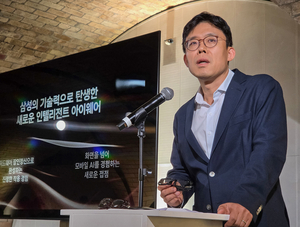
“Meta and other competitors already have glasses on the market, but Samsung is taking a different approach,” Choi Jae-in, head of the extended reality research and development team at Samsung Electronics’ Mobile eXperience division, said at a product briefing at Old Billingsgate in London on Thursday.
“We believe Samsung has an advantage in making the product lighter and more comfortable to wear for long periods.”
Samsung unveiled its Android XR-based intelligent eyewear at Galaxy Unpacked 2026 on Wednesday, integrating Google’s Gemini artificial intelligence and global eyewear brands Gentle Monster and Warby Parker.
The company showed four designs, including two unveiled at the London event, and plans to launch the products later this year.
Samsung has not disclosed detailed specifications, including the exact weight, but Choi suggested the glasses would compare favorably with rival products such as the Ray-Ban Meta.
The latest Ray-Ban Meta glasses weigh about 50 grams and offer up to eight hours of battery life. Samsung said its Intelligent Eyewear can run for up to nine hours on a single charge.
Choi said the figure was based on a mixed-use scenario that includes power-intensive features such as video streaming and Gemini Live, rather than music playback alone. The charging case provides up to seven additional full charges.
Samsung said it was able to reduce the weight by distributing computing tasks between the glasses and a connected smartphone, a system it calls “split computing.”
Some camera data is processed on the glasses, while heavier post-processing tasks draw on the smartphone’s memory and processing power.
“The glasses can remain light because they are closely connected to the smartphone,” Choi said. “We developed this concept with Google from the beginning. Split computing is one of the biggest technological strengths of Samsung’s AI glasses.”
The first-generation product will also work with other Android smartphones and Apple’s iOS devices.
Galaxy users, however, will receive deeper integration with Samsung smartphones, watches, wireless earbuds and Samsung Health, including controls for taking photos, making calls and playing music, as well as access to exercise information.
Samsung said it secured around 200 patents while developing the glasses.
The technologies include an ultraslim hinge that carries electrical signals between the front of the frame and the temples, as well as a frame structure designed to improve weight balance, heat management and comfort.
The company has also developed speakers designed to remain reliable despite repeated exposure to sunscreen and cosmetics around the face.
Samsung plans to gradually introduce some of the patented technologies in later products as it expands its AI eyewear lineup.
The company did not disclose pricing, initial launch markets or sales targets, but Choi said the glasses would likely be positioned in the premium segment.
“Considering the technologies involved and the quality of the finish, the product needs to be in the premium category,” he said.
Samsung will select its major launch markets after reviewing regional demand and the retail networks of Gentle Monster and Warby Parker. The partnerships are also expected to help the company draw younger consumers, particularly those in their 20s.
The company is considering selling the glasses primarily through eyewear stores rather than mobile carriers, as fittings and in-person trials are expected to be an important part of the purchasing process.
Consumers who need prescription lenses will be able to have them fitted at optical shops. Tinted and photochromic lenses will also be supported.
“Before talking about what technology or AI is inside the glasses, our goal was to make a pair of glasses that people would want to wear the moment they saw them,” Choi said.
“We want to offer designs attractive enough that even people who do not normally wear glasses might consider trying them.”
The AI glasses market is expanding rapidly as cameras, voice assistants and generative AI make the devices more useful in everyday life.
According to market researcher Omdia, global shipments of AI glasses reached 8.7 million units in 2025, up 322 percent from a year earlier, fueled by a surge of interest in the emerging device category. Shipments are expected to surpass 15 million units this year.
Samsung sees intelligent eyewear as the starting point for a broader device platform rather than a single product category.
“Samsung has helped set the standard for new form factors in the past,” Choi said. “We hope AI glasses can also become a new industry standard.”
yeeun@heraldcorp.com