Welcome to Runtime! Happy Halloween! Today on Product Saturday: Microsoft customers will soon have access to an AI harness used internally at GitHub, former GitHub CEO Thomas Dohmke sheds more light on his GitHub-killer startup, and more.
Please forward this email to a friend or colleague! If it was forwarded to you, sign up here to get Runtime for free every week, or level up here.
Ship it
Lost and Foundry: Microsoft CEO Satya Nadella has spent a lot of time this year warning enterprises about the dangers of relying too heavily on the foundation model companies for their enterprise AI stack, which is a little funny given how instrumental a role he played in elevating the foundation model companies to the heights they enjoy today. Still, it's an age-old argument about lock-in that resonates with many tech leaders.
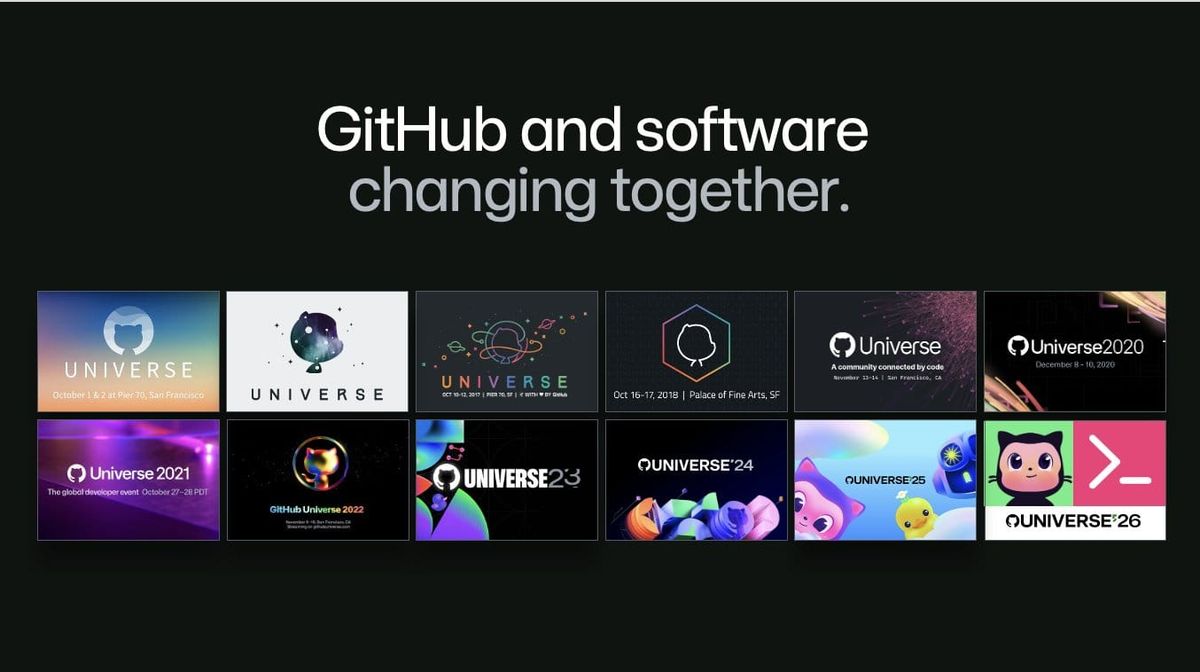
The harness has emerged as one of the most important pieces of that enterprise AI stack, a middleware-layer-of-sorts that allows companies to interact with AI models with more control over how those models connect to corporate data. This week at GitHub Universe, Microsoft and GitHub announced that the AI harness GitHub developed internally to manage services like Copilot Code and Copilot studio will soon be available to anyone using Microsoft Foundry.
The Microsoft Copilot harness "gives developers and enterprise customers a fully managed way to build agents that reason, use tools, and complete complex, long-running tasks," the company said in a blog post. It can route agent requests across multiple models and is fully managed by Microsoft, which means customers (theoretically) don't have to worry about securing it.
While Nadella is right that putting all your eggs in one model provider's basket is probably a bad idea given how quickly model performance has been advancing, running all your enterprise AI through one hyperscaler's harness might not be the answer if you're truly worried about lock-in. The truth is the enterprise AI stack is far from settled, and just about every enterprise software company on the planet is hoping that companies will bet on their technology as the management layer.
Delivery, continued
Git up to git down: After Microsoft decided to fold GitHub into the broader Azure engineering organization last year, former CEO Thomas Dohmke decided it was time to try something else. This week his new startup, Entire, launched its first product, which it described as "the first Git forge built specifically for agent-human collaboration."
Entire was designed with a new visual interface for tracking code changes called "The Trail," a "new source control server compatible with Git, which pushes up to 89x faster than GitHub and 6x faster than Cursor Origin," and a new way to sync data so that it is always available to agents, it said in a blog post. It's available today, and Entire made it clear that it wants to convert GitHub users who are tired of the numerous outages the company has put them through this year: "Welcome to the rebellion."
Open for business: One way to escape model provider lock-in is to use open models and serve inference from companies like Baseten or Fireworks AI. This week Akamai threw its hat into that ring with the launch of Akamai Inference, which has 12 open models available for customers to use at the heart of their agents or applications.
The new service "gives enterprises managed access to open-weight and custom models through OpenAI-compatible APIs, so existing applications move without rewrites," Akamai said in a press release. Akamai also launched Akamai Agent Sandbox this week as a new secure method for keeping agents contained, and at this point the value of a good AI sandbox is pretty widely understood.
Don't trust; verify: While agents can't go "rogue" in the sense that we commonly use the term to define a rebellious act, they certainly can take unexpected paths in service of their goals that might cause more problems than they solve. Agent observability is going to be a big part of any successful deployment of agents in the enterprise, and data observability company Monte Carlo released a new tool this week for helping companies monitor the situation.
Bayes "rapidly learns the unique landscape of a customer’s data and AI environment and deploys appropriate monitoring strategies," the company said in a press release. It can also take action to fix agents that are failing or stuck in a loop, which Monte Carlo said would help improve the performance of those agents over time.
The rest of The Stack
Agents as code: One way to prevent agents from taking unexpected turns is to build them from scratch with strictly defined parameters enforced in code as opposed to prompts, which are far harder to scale. "Knowing that when you fix something it stays fixed is important for maintaining velocity in a complex project,” Rasa co-founder and CTO Alan Nichol told The Stack. Delivered in partnership with Rasa.
Four-comma club: Set a calendar reminder for this one: Amazon CEO Andy Jassy thinks AWS can produce $1 trillion in yearly revenue in the next five to ten years, he told analysts on AWS's earnings call Thursday. AWS would need to grow nearly 40% a year for the next five years to hit that target on the early side, and that seems ambitious even with the AI boom in full swing.
More like Bye-nance: Anyone who has ever been hacked should take comfort in the fact that whatever security mishap happened on your watch, it probably didn't cost your company more than $6 billion. A single compromised laptop belonging to a Binance DevOps engineer appears to have been the initial vehicle for what appears to be the largest single theft ever recorded, although Binance later described the hack as "a complex attack" with "additional points of breach."
Quote of the week
“Winners have power, contracts, and flexible capital; everyone else consolidates or dies on the debt clock." — Terence McMenamin, co-founder of Techdollar, describing the likely fate of the neocloud industry to The Stack as debt financing starts to dry up and power starts to become really hard to find.
We're also reading:
Intel Suffers Worst Stock Thrashing in Decades on Weak Forecast: In its desperation to catch up to Nvidia in the GPU market, Intel failed to realize that shifting AI workloads would spur demand for CPUs, and memory shortages are damaging its PC business.
Thanks for reading — see you Tuesday!