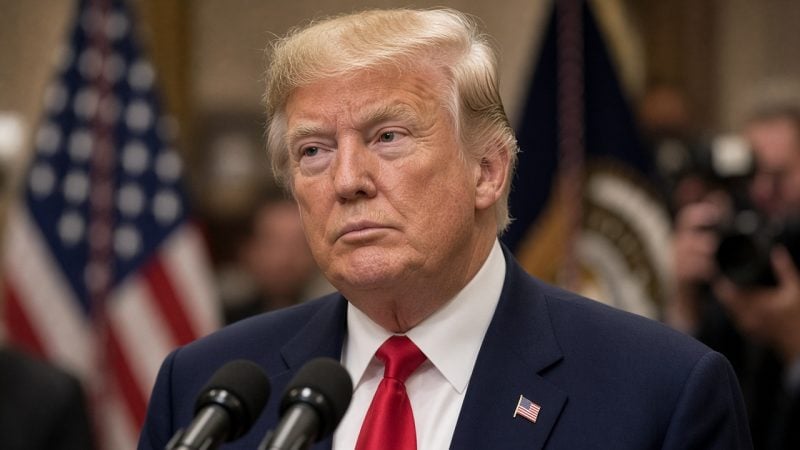
The bipartisan pair called the White House pact a step forward, then made clear Congress still wants a law with teeth
President Trump got a rare bit of bipartisan applause for his new AI safety pact this week. It came with a polite footnote, though: the people clapping still plan to write their own rules.
On October 1, 2026, Representatives Jay Obernolte (R-CA) and Lori Trahan (D-MA) called the White House Accord on Super Intelligence a significant advance toward responsible AI development. In the same breath, they said they will keep working to pass their own bipartisan framework, the FRONTIER Act.
What the accord actually does #
Trump unveiled the agreement on September 29, 2026, at a White House luncheon with leaders from major AI companies. The pact is voluntary and targets the most advanced AI systems.
The signatory list reads like a tech conference keynote lineup. Dario Amodei of Anthropic, Greg Brockman of OpenAI, Sundar Pichai of Google, Mark Zuckerberg of Meta, Elon Musk of xAI and Jensen Huang of Nvidia all signed alongside the president.
The accord sets up four layers of oversight. These include internal monitoring teams and independent auditors.
The focus is on specific, high-stakes risks, chiefly cybersecurity and biosecurity.
Trump described the agreement as morally binding and compared it to a constitution.
He also signed an executive order alongside it. The order requires federal agencies to use the term “super intelligence” instead of “artificial intelligence,” effective September 29, 2026.
AI, tech, and the markets they move—in one daily briefing.
Daily. Free. Join 34,000+ readers across crypto, finance, and policy.
Why Congress is not ready to stand down #
Obernolte and Trahan said the accord lines up with principles in their FRONTIER Act.
Where they differ is enforcement. The FRONTIER Act would create a statutory framework requiring independent evaluations of high-risk frontier AI models.
It would also grant authority to pull a model from the market if it poses an imminent risk.
Detractors have already called the White House deal a “fancy pinky-swear.” The criticism centers on its non-binding nature and limited enforcement capability.
The accord leans on external evaluators and board-level oversight rather than legislation.
What this means for AI companies and investors #
In the near term, the accord’s voluntary design likely limits its direct effect on the market for AI products and services. No company faces a fine for skipping an audit, and no model gets pulled off the shelf by the agreement itself.
The more important variable is legislative. Bipartisan support behind the FRONTIER Act raises the possibility that the voluntary framework becomes a preview of mandatory rules down the line.
If that happens, firms building frontier systems could face higher operating costs. Independent evaluations, compliance staff and the risk of market removal all carry a price tag that investors would need to factor in. Obernolte and Trahan appear to see it the other way. Their framing treats the accord as proof that the principles are sound, which makes codifying them easier to justify.
Disclosure: This article was edited by Diego Almada Lopez. For more information on how we create and review content, see our