Support CleanTechnica's work througha Substack subscription,on Patreon, oron Stripe. Help us produce all of thehigh-quality, original content we publish week after weekdespite the challenges of content-scraping AI, antisocial media, inflation, and other hurdles.How electrification can lead our transport transition away from polluting fuel imports in the EU post-2030 Renewable Energy Framework.
With the recurrent energy crisis affecting Europe’s energy supply, Europe’s post-2030 Renewable Energy Framework must do more than just increase the share of renewables in transport.
It must also rethink its dependency pathways on imported fuels.
One way to do so is to cut the amount of energy the sector needs, which will inevitably reduce fuel imports and will make the transport system less exposed to oil and bio-feedstocks supply shocks.
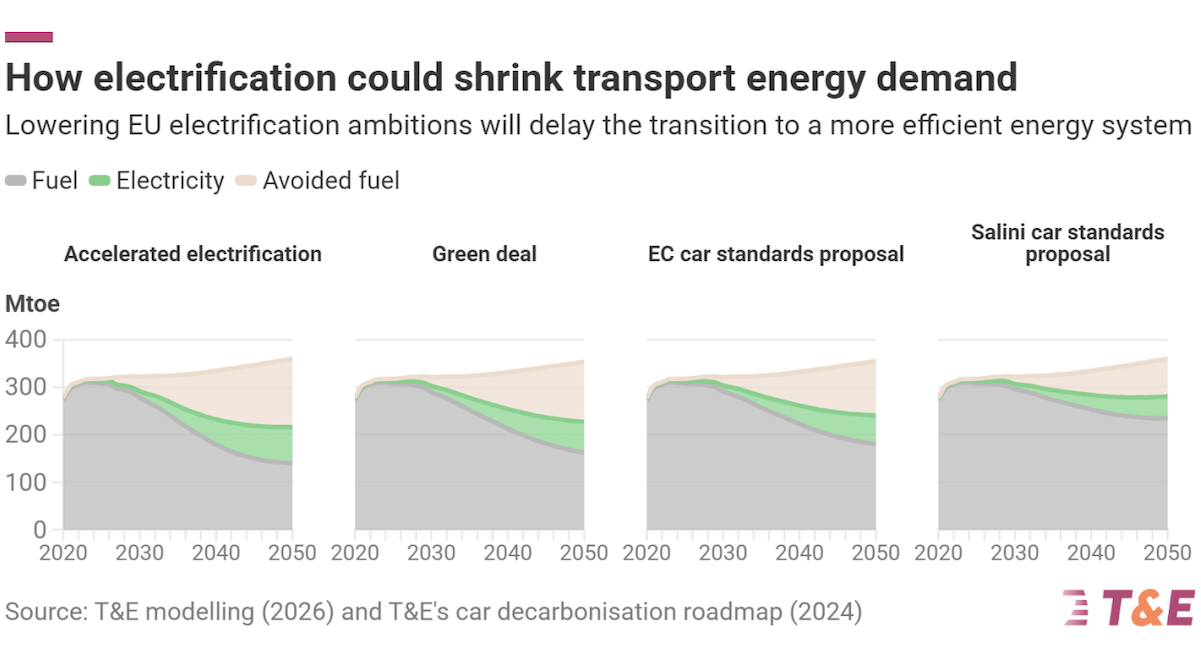
Reflected in AccelerateEU and the Electrification Action Plan, this year we have seen a paradigm shift resulting from the energy crisis. Direct electrification is increasingly recognised as the clearest and more ambitious way to cut energy demand, while allowing higher competitiveness, security of supply, and lower energy prices.
In transport, every electric car, van and truck reduces demand for imported fuels, making electrification primarily an economic and energy security policy with emissions reduction a co-benefit. By combining much greater energy efficiency with increasingly domestically produced renewable electricity, electrification offers the most direct route to European transport energy sovereignty.
Weakening the current car CO2 standards would slow electrification and increase fuel demand, requiring greater use of fossil fuels, Annex IX advanced and waste biofuels, and e-fuels. Faster EV uptake, on the other hand — driven by corporate fleet standards and scrappage schemes, for example — would cut overall fuel demand and reduce reliance on imports.
A higher headline transport renewable energy target cannot, on its own, deliver greater energy sovereignty. Without ambitious electrification measures, the target could be met through greater reliance on scarce and imported fuels, while leaving Europe exposed to volatile global energy markets.
To ensure the future Renewable Energy Framework becomes an energy security and sovereignty tool, policymakers must look beyond the headline renewable energy transport target. What matters is not only how high the target is, but how it is met. A higher RES-T target must therefore be accompanied by ambitious electrification measures and a correspondingly higher contribution from renewable electricity.
All in all, the 2040 RES-T must power sovereignty by accelerating the shift towards cleaner and more efficient transport, anchored in domestically produced energy.
Here’s what the EU must prioritise in the upcoming Energy Union Framework for the decade ahead:
- Put direct electrification at the core of the EU’s post-2030 Renewable Energy Framework and energy sovereignty strategy by requiring renewable electricity to account for at least half of the total RES-T target in 2040.
- Preserve the 4x multiplier renewable electricity but apply it across all transport modes and ensure that any increase in the RES-T target is matched by a higher electricity contribution, rather than greater reliance on scarce biofuels.
- Set a transport fossil oil demand phase out target and KPI in the post-2030 energy union framework for cutting import dependencies from 93% in 2025 to less than 75% in 2040, thereby reducing Europe’s exposure to oil shocks and strengthening energy security.
- Defend credible and robust car CO 2standards as proposed under the European Green Deal, rejecting loopholes that allow a high share of biofuels and e-fuels to substitute for direct electrification in road transport. - Make the crediting mechanism in RED Article 25 mandatory across transport segments, covering public and private EV charging, depot charging for heavy-duty vehicles, rail, shore-side electricity and electric ships, as well as electric and hybrid aircraft to reward the use of renewable electricity.
- Allow operators of charging infrastructure connected directly to renewable power generation via Power Purchase Agreements (PPAs), to claim full renewable-electricity use above the national grid average for renewable electricity (RES-E).
- Reflect the limited role of Annex IX biofuels in the post-2030 Energy Framework, by factoring constrained availability and the cascading-use principle, maintaining strict sustainability safeguards, such as Annex IX list and caps, and avoiding a surge in imports that heighten traceability and fraud risks.
Download the full briefing. Article from T&E.
Sign up for
CleanTechnica's Weekly Substack for Zach and Scott's in-depth analyses and high level summaries, sign up forour daily newsletter, andfollow us on Google News!Have a tip for CleanTechnica? Want to advertise? Want to suggest a guest for our CleanTech Talk podcast?
Contact us here.Sign up for our daily newsletter for 10–15 new cleantech stories a day. Or sign up forour weekly one on top stories of the weekif daily is too frequent.
CleanTechnica uses affiliate links. See our policy
here.CleanTechnica's Comment Policy